

Victorian Silver Albert Chain
A victorian silver albert chain is a robust nineteenth-century watch chain built for a waistcoat, offering substantial metalwork that doubles easily as a necklace today.
The Form
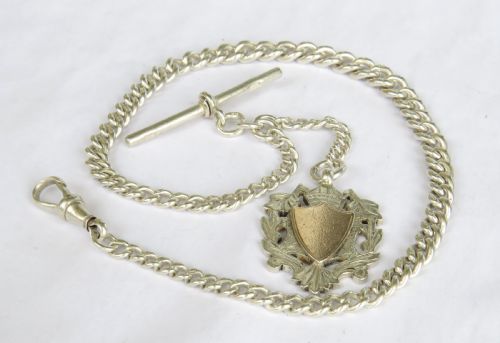
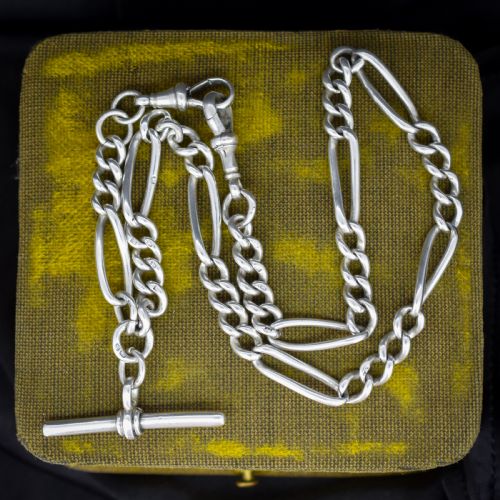
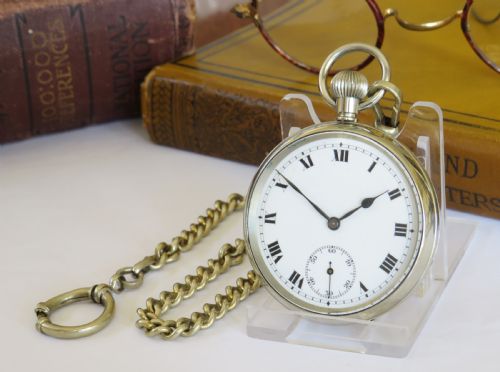
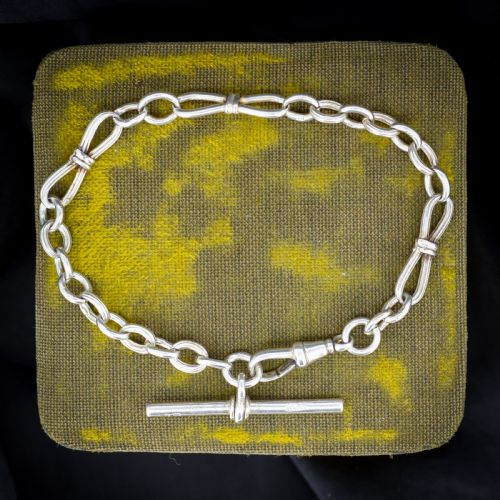
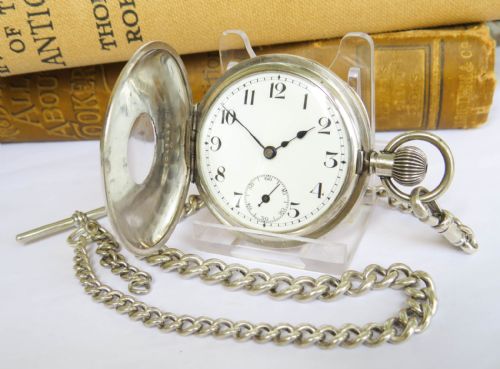
A victorian silver albert chain is primarily a pocket watch chain designed during the nineteenth century to secure a timepiece to a gentleman's attire. Surviving examples encompass single and double formations, alongside longuard and albertina variations.
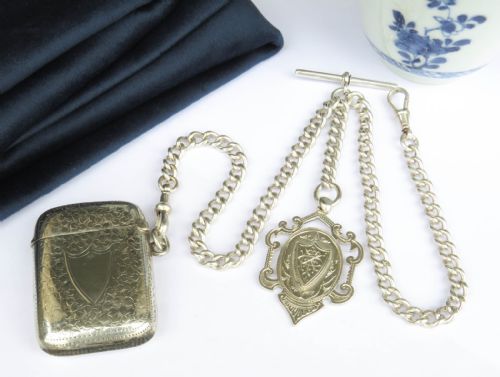
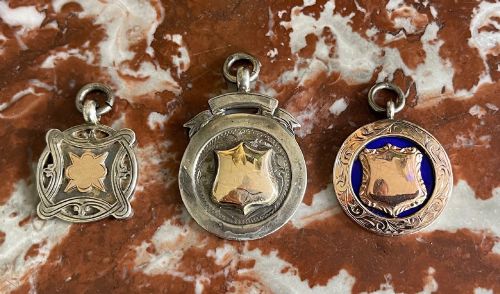
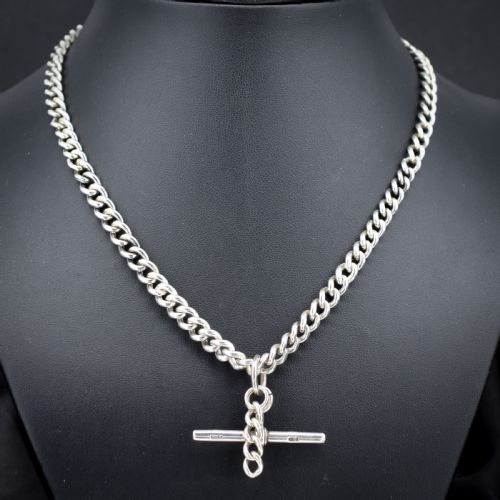
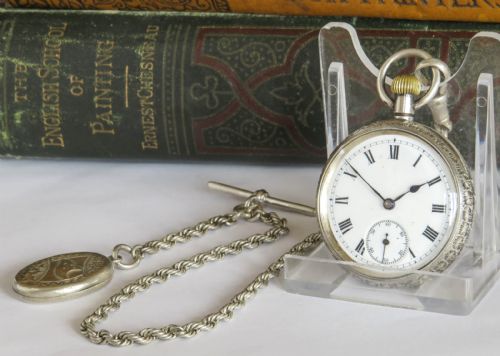
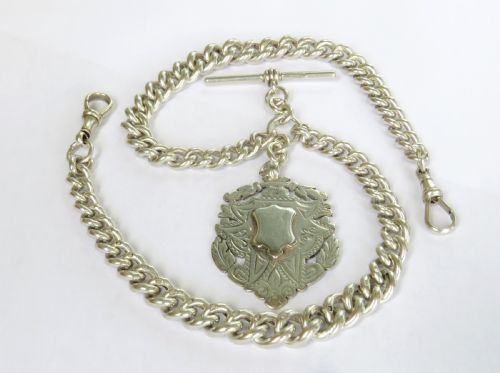
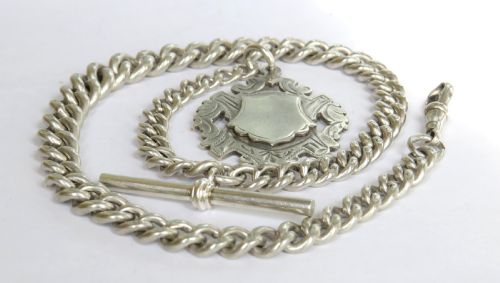
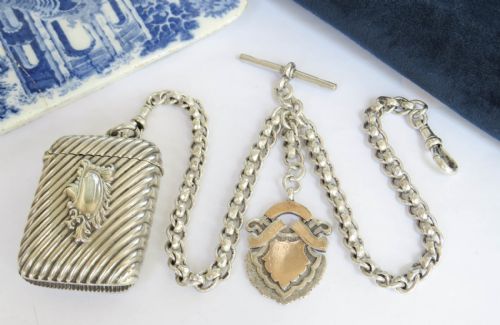
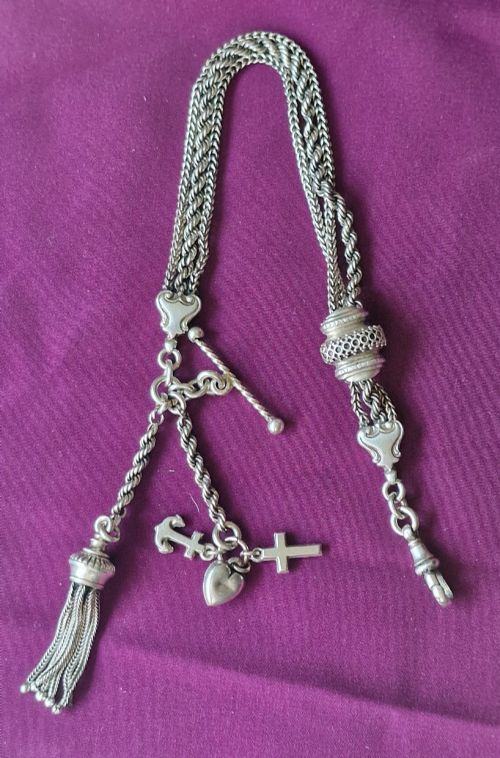
Makers fashioned these pieces to carry useful attachments, and today you frequently encounter chains complete with silver fobs, dog clips, T-bars, watch keys, and tassels. Many examples span lengths suitable for wearing directly as necklaces or chokers.
The material record shows solid sterling silver throughout, occasionally paired with gold accents or niello decoration. While single strands remain common, heavyweight double versions and long guard chains feature prominently in historical and current selections.
Construction and Materials
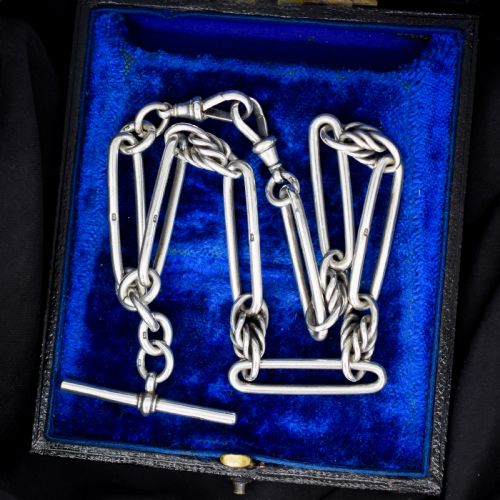
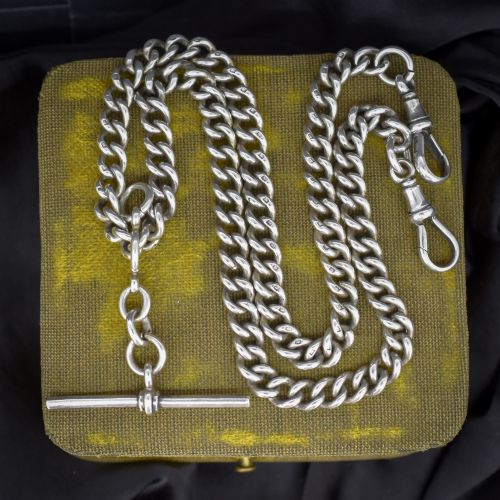
Silversmiths utilised solid sterling silver to form characteristic links such as heavy curb, trombone, and complex decorative patterns. Individual links connect securely to bear the daily weight of pocket watches and suspended fobs.
Functional components include swivelling dog clips, T-bars designed to pass through buttonholes, and large bolt rings. These components demonstrate robust nineteenth-century engineering intended for constant practical use.
Retail Price Guide 2026
Typical UK retail prices for victorian silver albert chain, calculated from the Sellingantiques database of over a million retail prices indexed since 2003. This retail price guide relies exclusively on Sellingantiques data; no external sources or auction records are used, so the figures do not describe the wider market.
Some chains incorporate miniature whistles that actually work, ensuring the wearer could summon assistance or a stray hound at a moment's notice.
Distinctions in Quality
The physical heft of a piece dictates its presence, with exceptionally heavy gauge silver chains standing apart from lighter counterparts. Substantial weight reflects the original utility required to secure expensive pocket watches securely.
The completeness and originality of associated attachments define desirability. Chains retaining matching hallmarks, original T-bars, dog clips, and functional fobs or lockets represent the highest standard of survival.
The Victorian Silver Albert Chain Glossary
- Albert chain
- A pocket watch chain named after Prince Albert, worn across a waistcoat and secured with a T-bar.
- T-bar
- The short transverse bar attached to the centre of an albert chain designed to anchor it through a buttonhole.
- Dog clip
- A spring-loaded swivel clasp used to attach a pocket watch or pendant fob securely to the chain.
- Double albert
- A chain featuring two parallel strands that meet at a central drop from which a fob or pendant hangs.
- Albertina
- A finer, more decorative variation of the albert chain, frequently designed as a bracelet or shorter necklace with tassels.
Frequently Asked Questions
How do I wear an albert chain today?
You can wear a shorter albert chain directly around the neck as a choker or necklace, utilising the original dog clip and T-bar as fastening elements.
Heavier double chains provide a substantial layered look when clasped together or worn doubled around the throat.
Can I attach charms to these chains?
Original pieces often include dog clips or bolt rings that readily accept antique fobs, lockets, or modern pendants without modification.
The robust sterling silver links provide a secure foundation for additional charms.
How do I date a nineteenth-century silver chain?
Dating relies heavily on legible silver hallmarks stamped on the links, T-bars, and clips, which indicate assay offices and specific years of production.
Stylistic link patterns such as trombone or curb designs also offer strong indicators of the manufacturing decade.