
Vintage Pocket Watch Chain
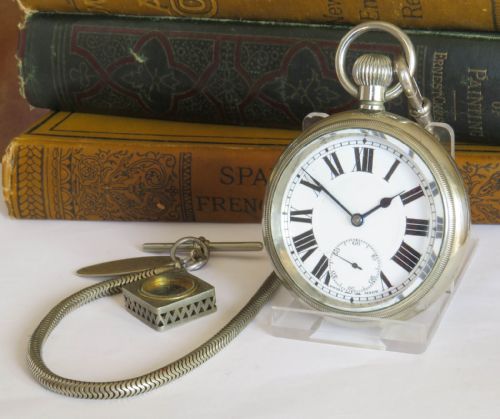
A vintage pocket watch chain secures a timepiece while adding a distinct structural weight to dress or jacket.
Vintage Pocket Watch Chain
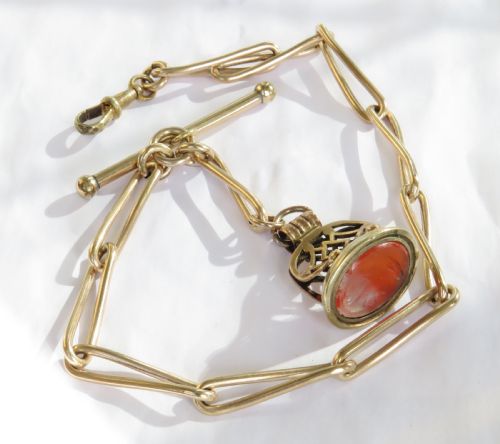
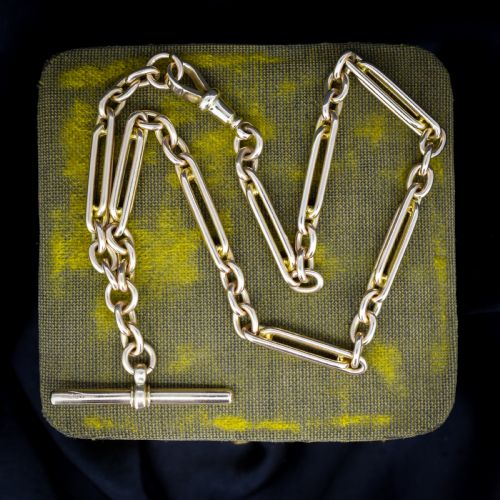
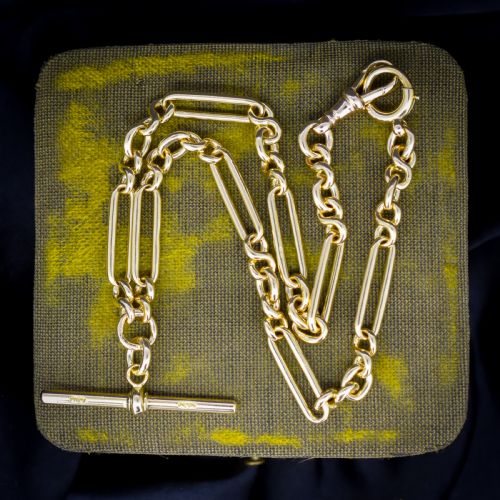
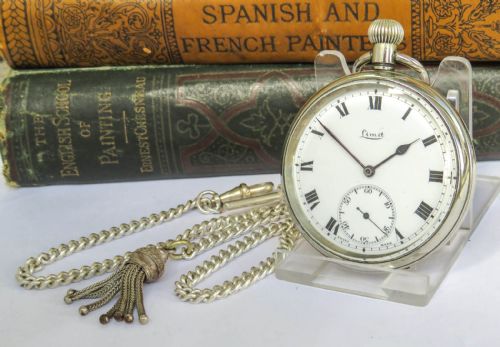
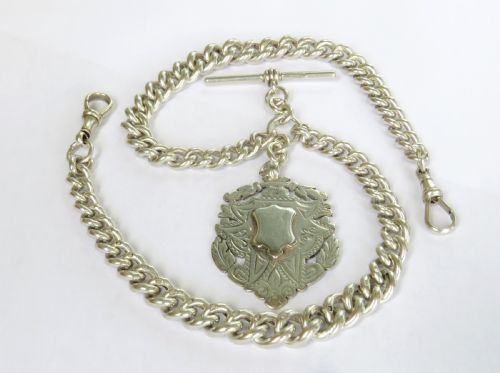
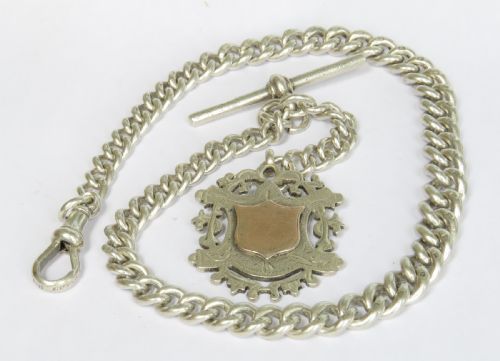
A vintage pocket watch chain encompasses substantial metal links, often called albert chains, designed to suspend a timepiece from a waistcoat buttonhole via a T-bar. These pieces originate primarily from the Victorian, Edwardian, and Art Deco periods, spanning the late nineteenth century into the 1930s.
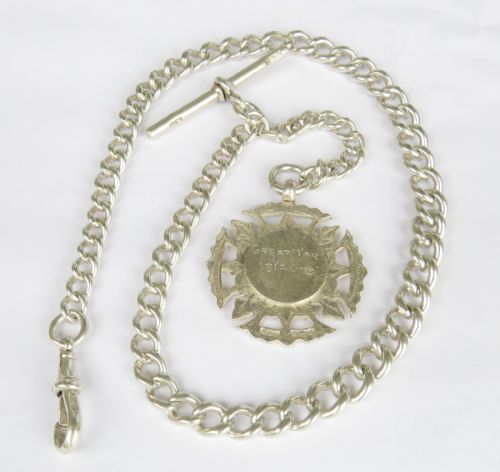
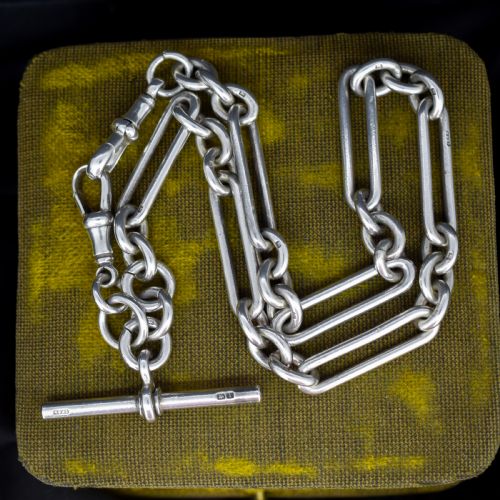
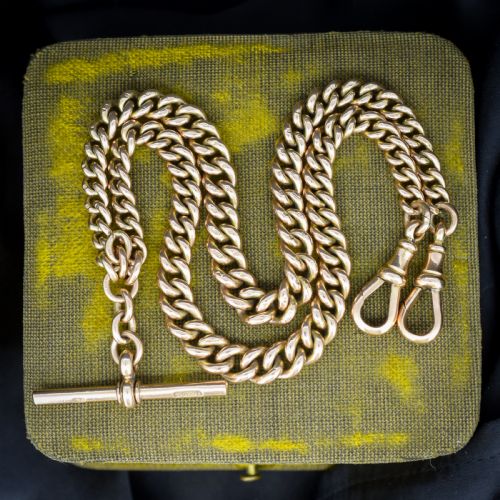
The most common versions met on this page include sterling silver and various carats of gold curb or trombone link chains. Many pieces retain original dog clips, swivel clasps, and commemorative fobs issued for civilian or military milestones.
Metals and Link Construction
Metals span sterling silver, nickel, brass, and rolled or solid gold in nine, fifteen, and eighteen-carat variations. Enamel and glass components occasionally appear within attached fobs or charms.
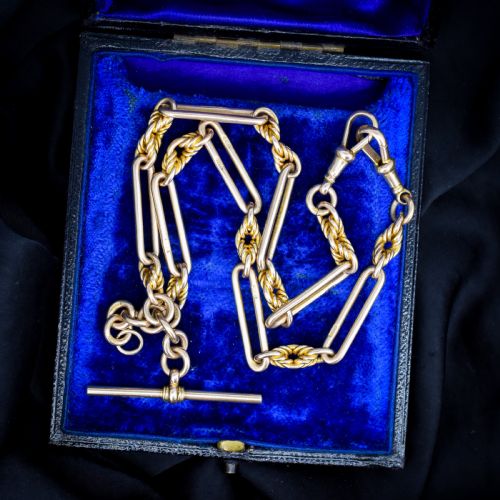
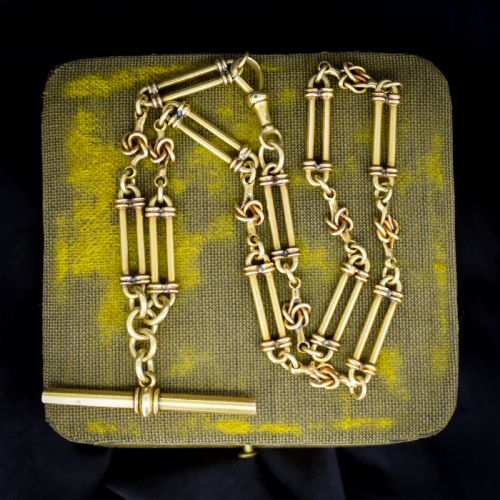
Links are shaped by hand or machine into distinct profiles such as uniform curb, graduated curb, trombone, figaro, and love knot patterns. Individual segments connect through soldered jump rings, terminating in swivel dog clips for secure attachment.
Vintage Pocket Watch Chain Retail Price Guide 2026
Typical asking prices for vintage pocket watch chain among the pieces listed under this phrase on Sellingantiques today, from the lower quarter to the upper quarter. They describe what is for sale here now, not the wider market.
Some chains double as miniature compasses or secret locket fobs, ready to guide a lost gentleman or conceal a tiny portrait.
Subtleties of Build and Wear
The distinction between tiers rests upon the density of the metal, the integrity of each link's soldering, and the original hallmarks stamped onto individual segments. Substantial weight, crisp link definition, and matching hallmarks across the T-bar and dog clips indicate higher workshops.
Surface preservation affects the overall character, where minimal stretching in the chain and spring tension within the swivel clips separate well-maintained examples from those showing heavy friction wear.
The Vintage Pocket Watch Chain Glossary
- Albert chain
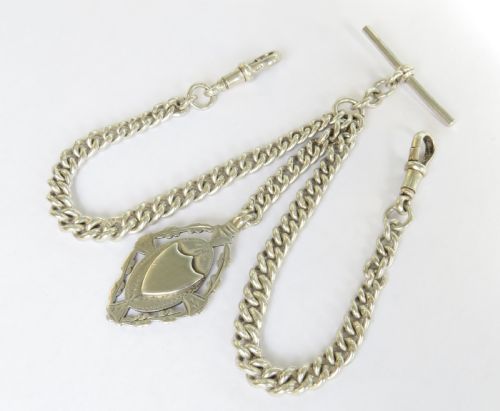
- A heavy watch chain designed to pass through a waistcoat buttonhole, featuring a T-bar at one end and a swivel clasp for a timepiece at the other. Double albert variants feature two drop strands suspended from the central bar.
- T-bar
- A short crossbar attached to the centre of the chain that anchors the piece through a buttonhole. It typically bears hallmarks on silver and gold iterations.
- Dog clip
- A spring-loaded swivel clasp attached to the end of the chain for securing a pocket watch or fob. The spring mechanism allows quick attachment and detachment.
- Trombone link
- An elongated rectangular metal link interspersed with smaller circular or oval connecting rings. This pattern appears frequently in Edwardian and early twentieth-century examples.
- Fob
- A decorative medallion, seal, or compass suspended from the chain by a short pendant loop. These items often commemorate specific clubs, regiments, or dates.
Vintage Pocket Watch Chain: Frequently Asked Questions
How do I wear a pocket watch chain?
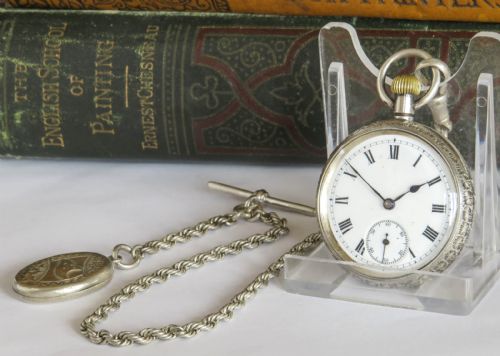
The T-bar fastens through a central waistcoat buttonhole, allowing the chain to drape across the front. The pocket watch rests in the lower pocket, while fobs or charms hang from a secondary drop.
Shorter chains secure within a single pocket, whilst double albert variants span both sides of the garment with symmetrical balance.
How can I date my watch chain?
Dating relies on official assay office hallmarks stamped onto individual links, the T-bar, and the dog clips. These tiny symbols indicate the specific year of manufacture and metal purity.
Stylistic shifts, such as heavy Victorian curb links transitioning into geometric Art Deco patterns, also narrow down the era of production.
Can these chains be worn as necklaces?
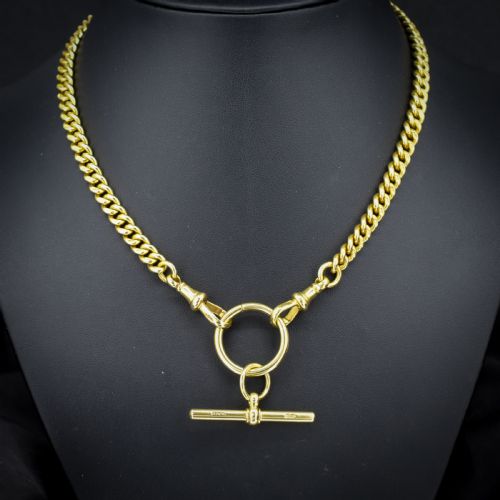
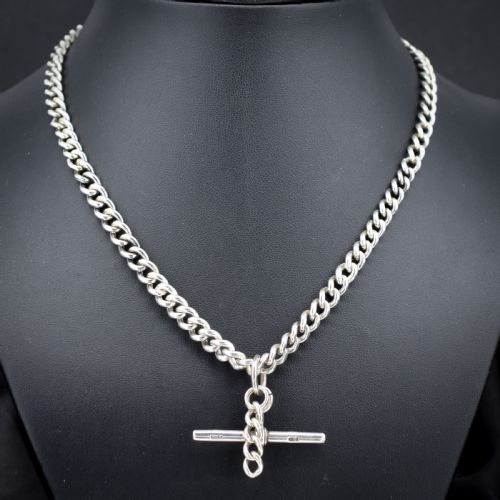
Many shorter lengths adapt easily as neckwear when fastened around the throat. The integration of dog clips and T-bars allows the clasps to function as modern necklace closures.
Original lengths typically range between thirteen and twenty inches, fitting standard necklace dimensions.