
9ct Rose Gold Chain
A 9ct rose gold chain brings together the warm copper hue of nineteenth and early twentieth century metalwork in substantial link configurations.
9ct Rose Gold Chain
When searching for a 9ct rose gold chain, buyers encounter objects originating from the Victorian, Edwardian, and early twentieth century periods, spanning roughly from the nineteenth century through the 1920s.
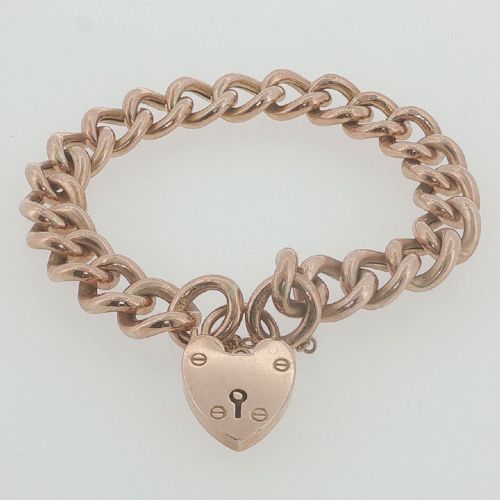
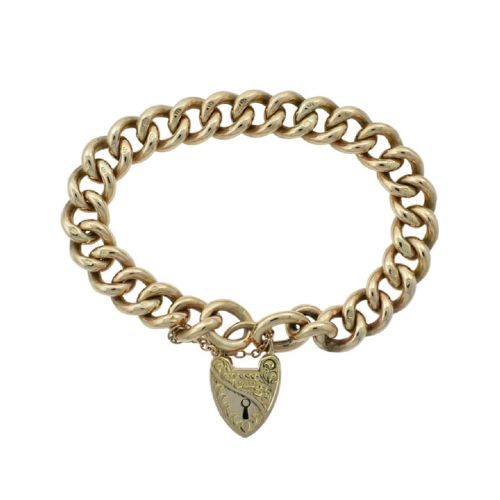
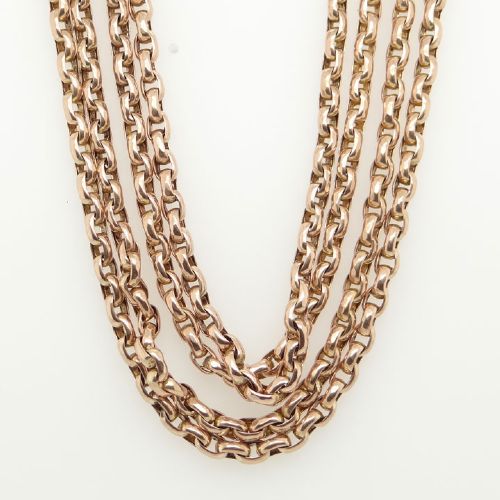
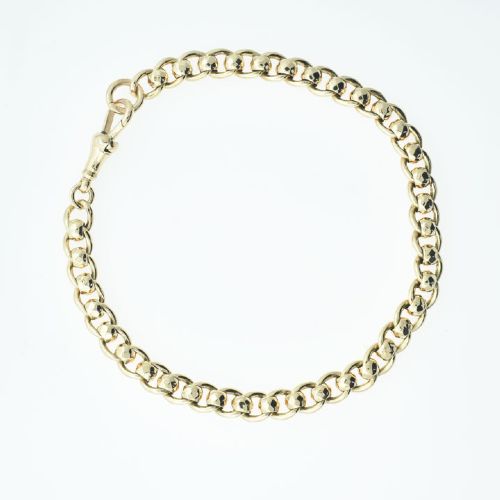
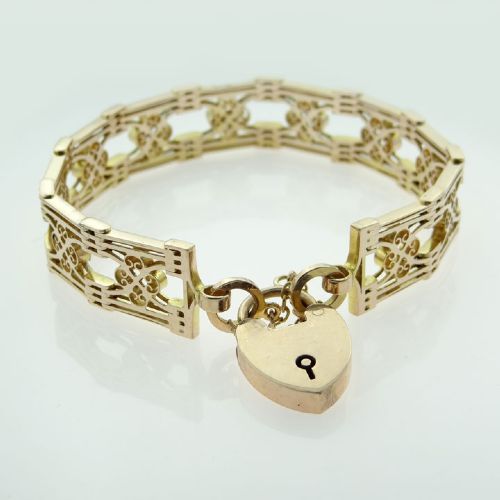
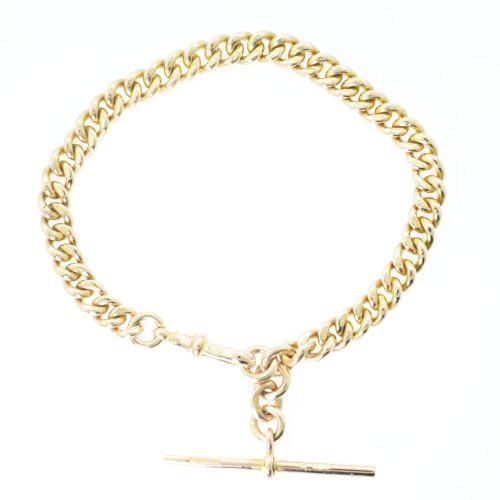
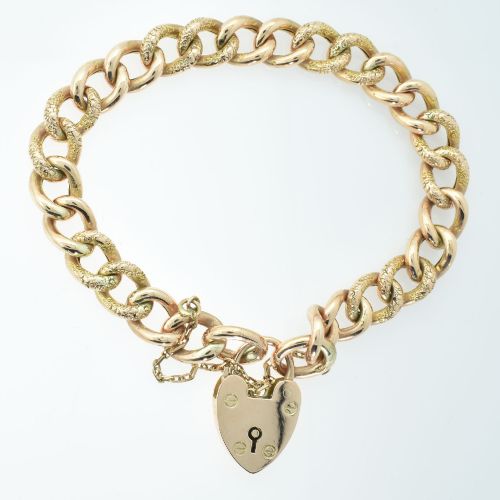
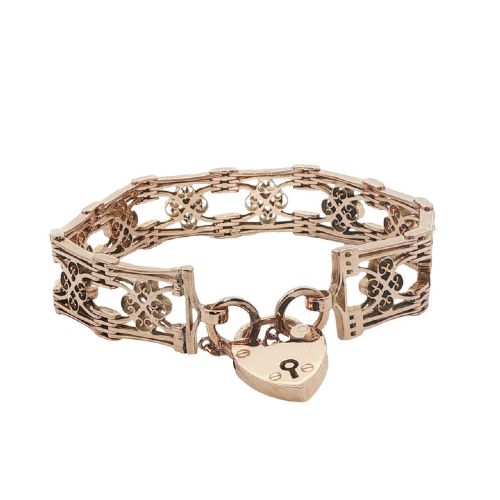
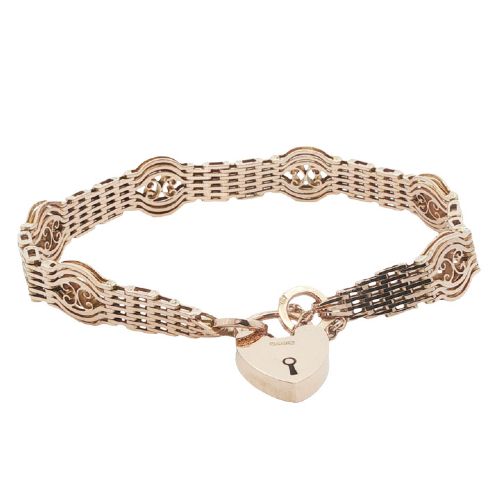
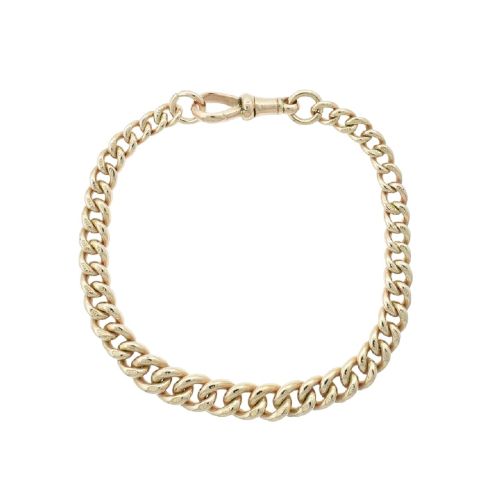
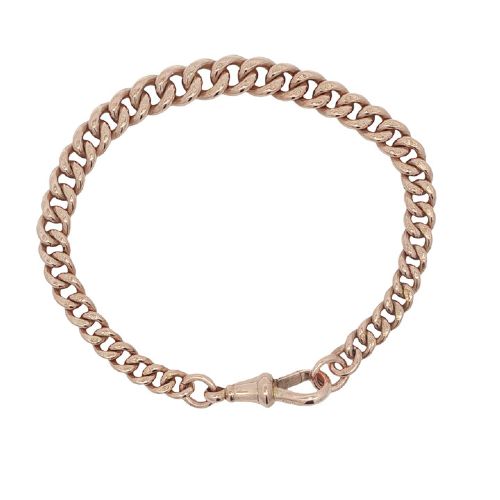
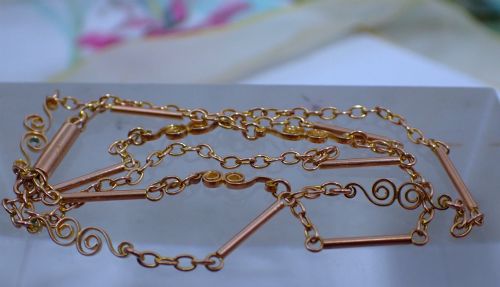
The selections on this page appear predominantly as longer guard chains, pocket watch chains adapted for neck wear, and shorter link bracelets secured with heart padlocks or dog clips.
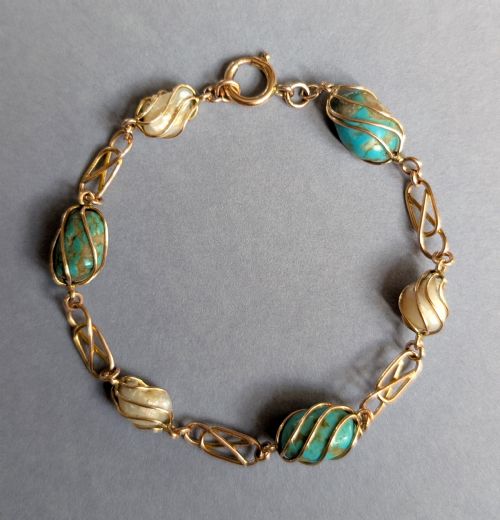
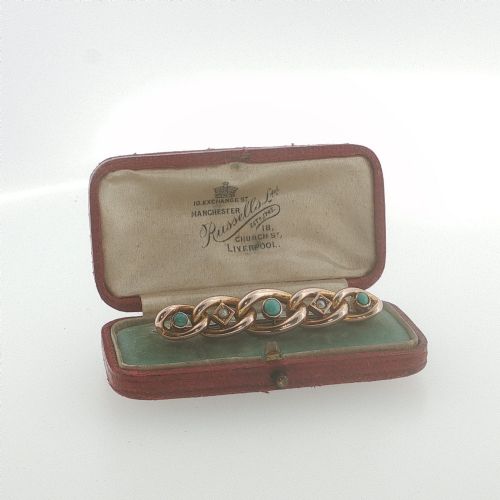
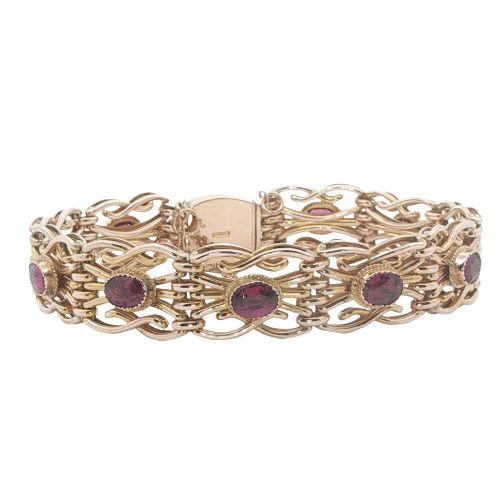
Many examples incorporate regional hallmarks from assay offices such as Birmingham or Chester alongside stones like turquoise, seed pearls, almandine garnets, and sapphires.
How they were made
The construction relies on 9ct rose gold, an alloy containing gold combined with copper to achieve its characteristic pinkish warmth, sometimes joined by yellow or white gold components.
Link formations recorded in the inventory include standard curb links, fancy gate designs, trombone patterns, paperclip links, fetter and knot arrangements, and stars and bars motifs.
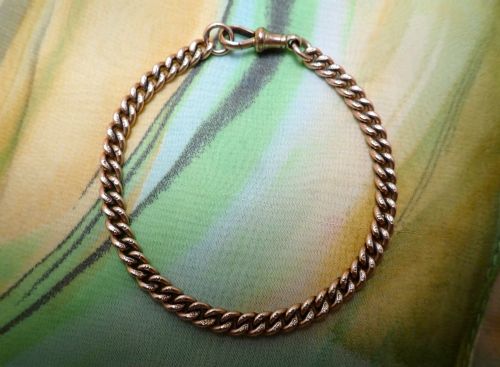
Individual links frequently display hand engraving, half engraving, or hollow and solid tubular assembly, fitted with functional elements like T-bars, dog clip swivels, and heart padlocks.
9ct Rose Gold Chain Retail Price Guide 2026
Typical asking prices for 9ct rose gold chain among the pieces listed under this phrase on Sellingantiques today, from the lower quarter to the upper quarter. They describe what is for sale here now, not the wider market.
Object forms recorded in the inventory range from heavy pocket watch chains and guard chains to gate bracelets and gem-set rings.
What varies in quality
Differences across the range stem from the density and physical weight of the gold used, moving from lightweight daily wear pieces to heavier pocket watch chains exceeding forty grams.
The integrity of decorative hand engraving on curb links and the preservation of original components, such as matching dog clips or stamped assay marks, elevate specific examples.
The inclusion of integrated gemstones like garnets, turquoise, or seed pearls, alongside complex link geometry like graduated curb or fancy gate formations, distinguishes standard production from more elaborate surviving items.
The 9ct Rose Gold Chain Glossary
- Albert chain
- A pocket watch chain designed to be worn across a waistcoat or adapted as a necklace, often featuring a T-bar at one end.
- Curb link
- A chain pattern composed of uniform interlocking links that have been twisted to lie flat against the skin.
- Dog clip
- A spring-loaded swivel clasp used to secure watch chains and bracelets, functioning similarly to a modern trigger clasp.
- Heart padlock
- A secure clasp shaped like a padlock, commonly stamped with hallmarks and attached to Victorian and Edwardian bracelets.
- T-bar
- A short transverse bar attached to a watch chain, originally used to secure the chain through a buttonhole.
9ct Rose Gold Chain: Frequently Asked Questions
How do I wear a guard chain?
Guard chains are extra-long necklaces originally intended to secure pocket watches or eyeglasses over garments. Today, they are typically doubled around the neck to create a layered look.
The considerable length allows the chain to slip easily over the head without operating the clasp, though original dog clips and swivel clasps remain functional for adding pendants.
What is an Albert chain used for today?
Albert chains were historically attached to pocket watches and secured across a waistcoat with a T-bar. Modern wearers often remove the T-bar or tuck it discreetly into the links when wearing the chain around the neck.
These pieces offer robust links and substantial weight, making them versatile for daily wear as choker necklaces or wrapped bracelets.
How can I date my rose gold chain?
Dating relies on a combination of link style, clasp mechanisms, and stamped hallmarks. Victorian pieces often feature heavy hand-engraved curb links and heart padlocks, while Edwardian examples introduce fancy gate patterns and lighter construction.
Assay office marks and date letters stamped onto the links or padlocks provide specific verification of the year and location of manufacture.
What makes rose gold different from yellow gold?
Rose gold achieves its distinct warm colour through the alloying process, which blends pure gold with a higher proportion of copper. This creates the reddish-pink tone seen across nineteenth and early twentieth-century jewellery.
The metal tone varies subtly depending on the exact ratio of copper used in the 9ct alloy, shifting from a pale blush to a deeper copper hue.