
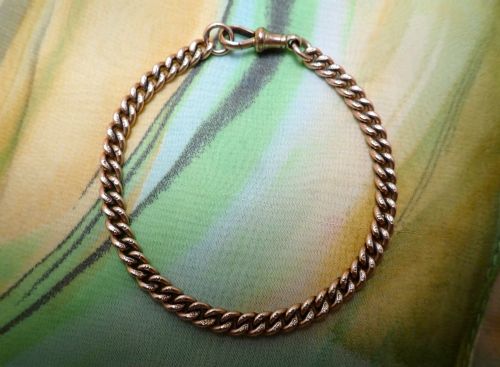
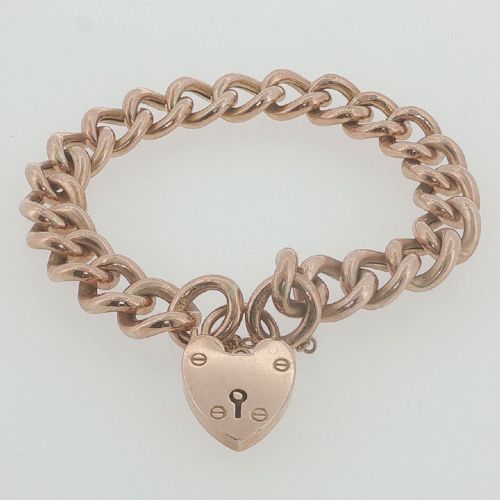
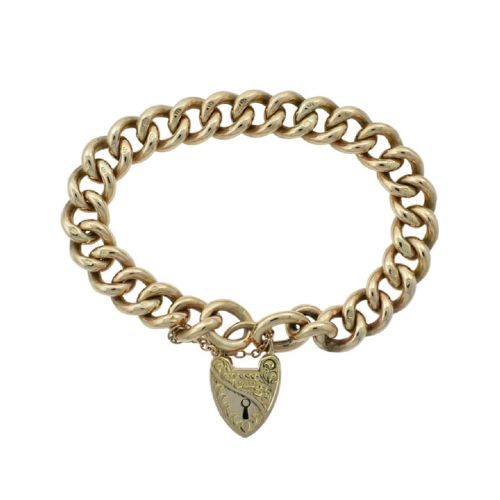
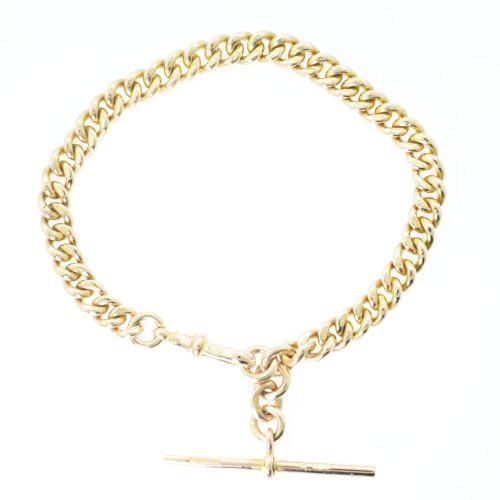


Rose Gold Curb Bracelet
A rose gold curb bracelet is a substantial wrist chain offering warmth of hue and historical charm that draws daily wearers.
What a rose gold curb bracelet is
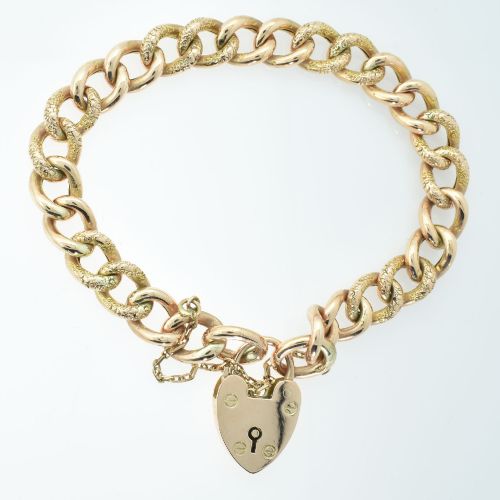
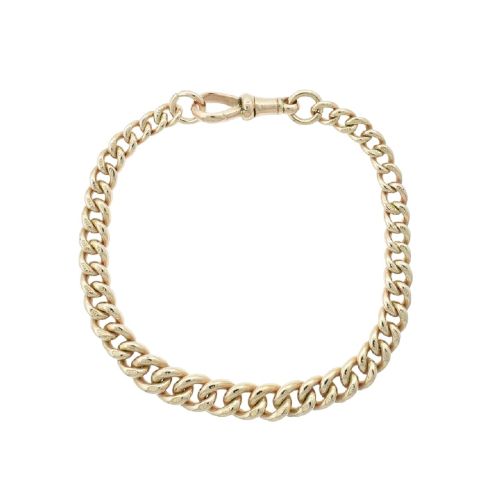
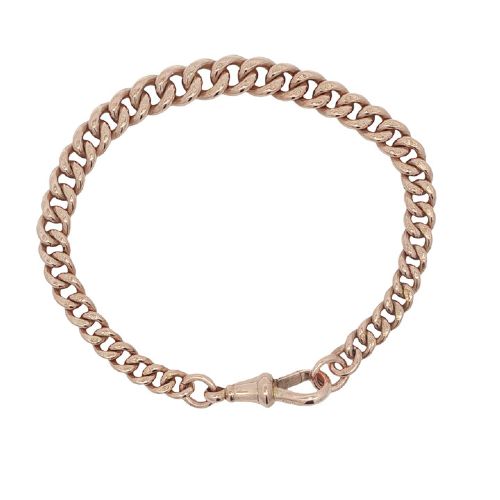
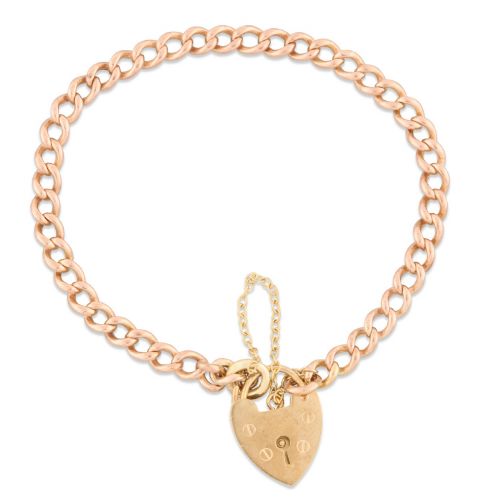
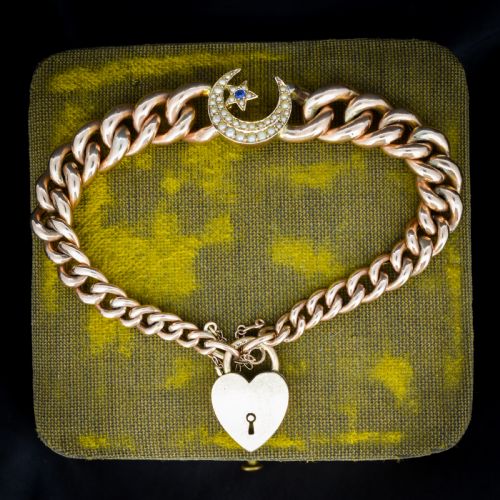
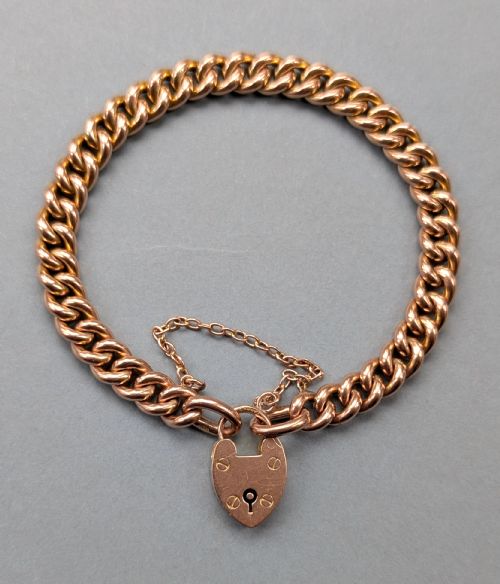
A rose gold curb bracelet consists of interlocking uniform links designed to lie flat against the wrist. The pieces gathered under this phrase span the Victorian, Edwardian, 1900, and 1910 periods.
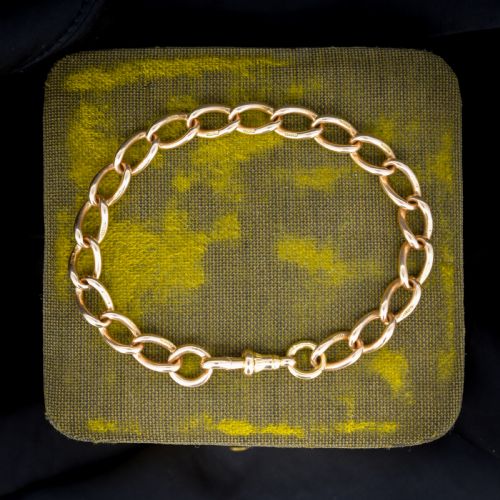
The version most commonly met on this page is the 9ct rose gold curb bracelet, often fitted with a heart padlock or a dog clip. Variants include half-engraved links, graduated links, double curb chains, and pieces accented with turquoise and pearl.
Originating as practical watch chains or pocket watch alberts, these items were repurposed as wrist ornaments. They combine durable link construction with decorative clasps typical of late nineteenth and early twentieth-century jewellery.
How they were made
The material used is predominantly 9ct rose gold, with occasional pieces formed in 15ct gold. Links were fashioned as solid or hollow structures, shaped into interlocking curb patterns and finished with secure clasps such as heart padlocks or dog clips.
Decoration on these bracelets frequently involves hand engraving across the face of the links. Some examples incorporate natural pearls and turquoise stones set into specific motifs like lovers knots.
Retail Price Guide 2026
Typical UK retail prices for rose gold curb bracelet, calculated from the Sellingantiques database of over a million retail prices indexed since 2003. This retail price guide relies exclusively on Sellingantiques data; no external sources or auction records are used, so the figures do not describe the wider market.
Listings show items spanning the Victorian, Edwardian, 1900, and 1910 periods, fashioned primarily in 9ct rose gold with occasional turquoise and pearl additions.
What varies in quality
The distinction between tiers of quality rests on whether the links are solid or hollow, alongside the heft of the metal. Heavier gram weights and solid construction command greater presence and structural longevity.
The Rose Gold Curb Bracelet Glossary
- Curb link
- A type of chain link that has been twisted or flattened to lie flat against the skin. This interlocking pattern forms the primary structure of the bracelet.
- Heart padlock
- A heart-shaped clasp commonly used on antique bracelets to secure the ends together. It often bears hallmarks or decorative engraving.
- Dog clip
- A spring-loaded swivel clasp attached to the end of a chain. It was originally designed to clip onto a pocket watch or charm.
- Graduated
- Describing a chain where the links increase in size towards the centre. This proportioning technique creates a balanced visual weight.
- Lovers knot
- A decorative motif formed by two interlaced strands tied in an overhand knot. It symbolizes affection and connection in Victorian jewellery.
Frequently Asked Questions
What is a curb bracelet?
A curb bracelet is a wrist chain made of interlocking links that sit flat against the skin. They are typically secured with a clasp such as a heart padlock or dog clip.
These pieces date primarily from the Victorian and Edwardian eras, utilising 9ct rose gold for a warm reddish tone.
How do I wear an antique bracelet?
Antique bracelets with secure fastenings like heart padlocks or dog clips can be worn as standalone daily wristwear. Their flat link construction ensures comfort against the wrist.
Care should be taken with older clasps to ensure the spring mechanisms remain secure during regular use.
What is 9ct rose gold?
Nine-carat rose gold is a gold alloy containing copper, which gives the metal its characteristic pink or reddish hue. It was widely used for durable jewellery in the Victorian and Edwardian periods.
This alloy provides the structural strength needed for heavy daily-wear chains without sacrificing warmth of colour.
What are heart padlocks used for?
Heart padlocks serve as both functional clasps and decorative focal points on antique bracelets. They snap shut to secure the two ends of the chain together.
Many of these padlocks feature hand-engraved patterns or hallmarked stamps indicating the date and metal purity.