
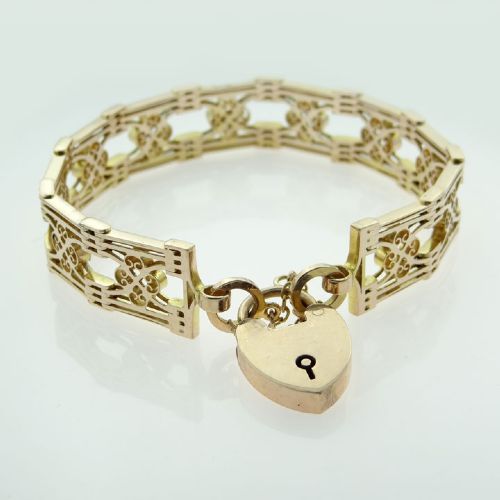
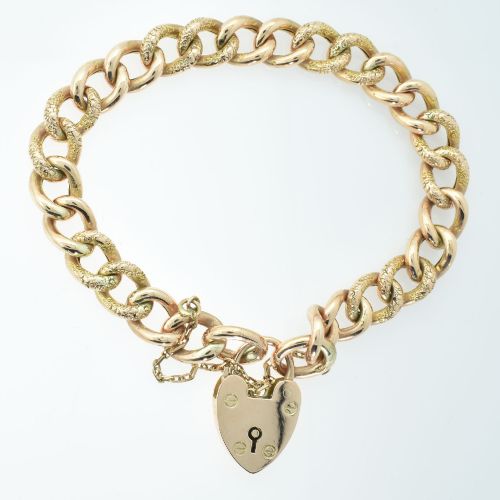
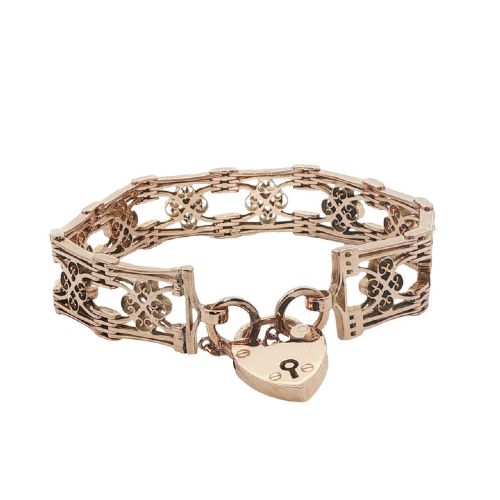
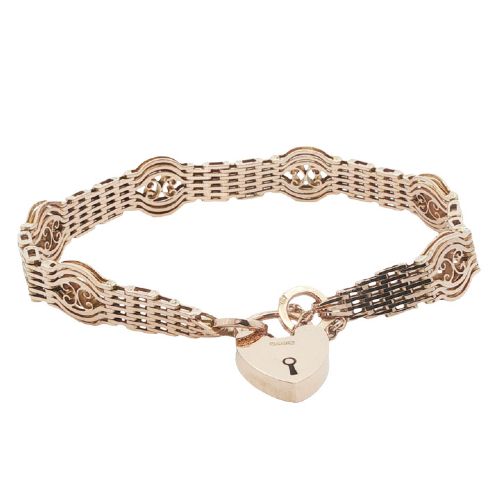
Heart Padlock Bracelet
A heart padlock bracelet fastens sentiment to the wrist through solid links and a secure clasp.
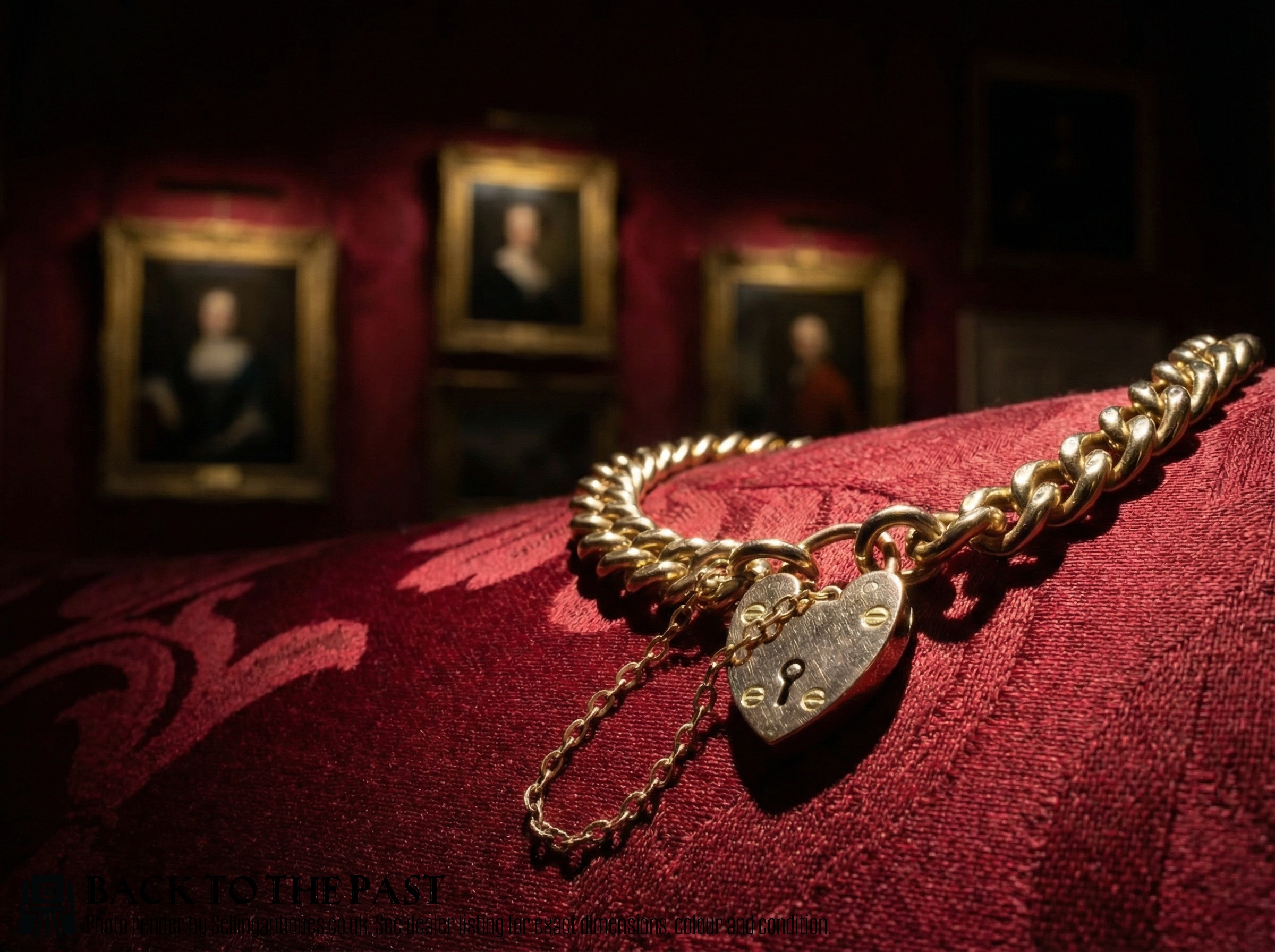
Heart Padlock Bracelet Forms
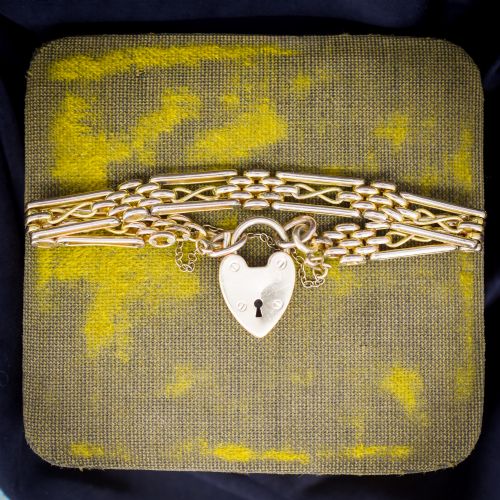
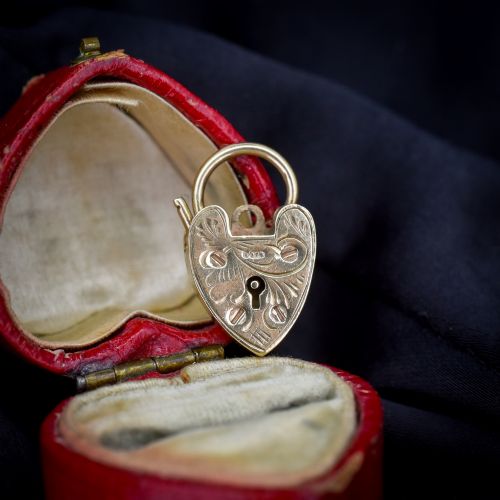
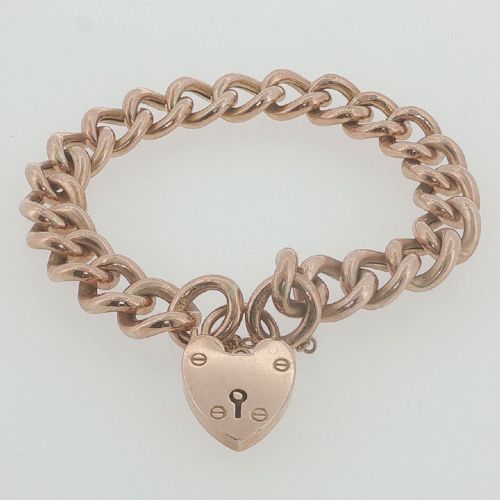
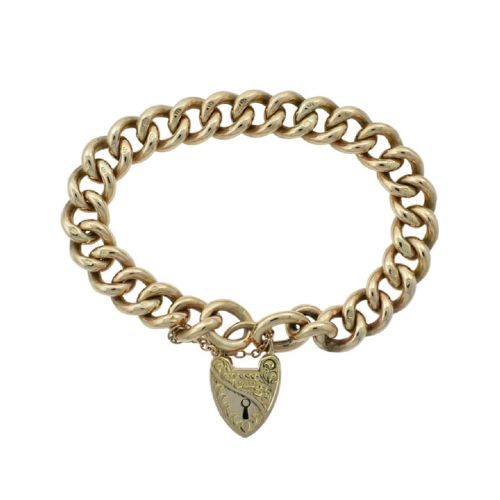
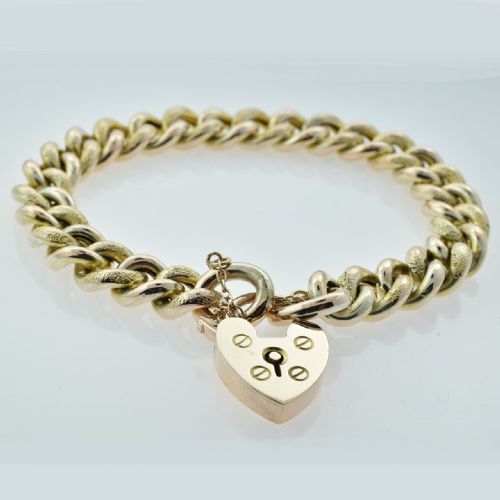
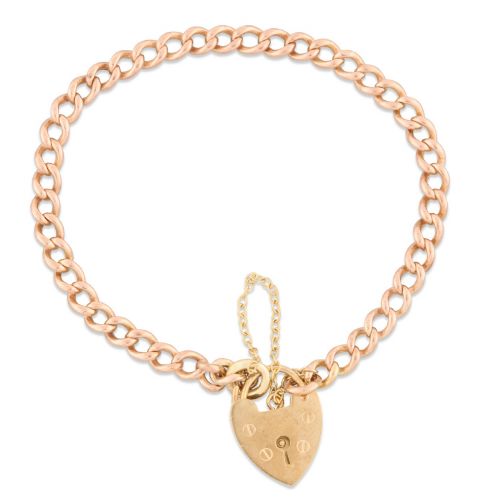
A heart padlock bracelet combines a substantial link chain with a functional or symbolic heart-shaped padlock clasp. These pieces span the Victorian, Edwardian and later eras, reflecting changing tastes in sentimental jewellery.
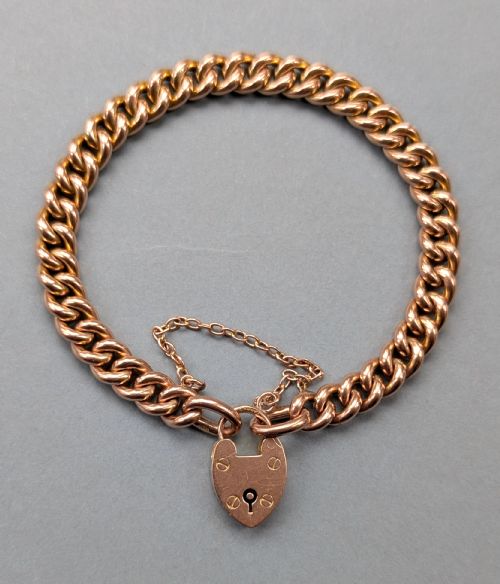
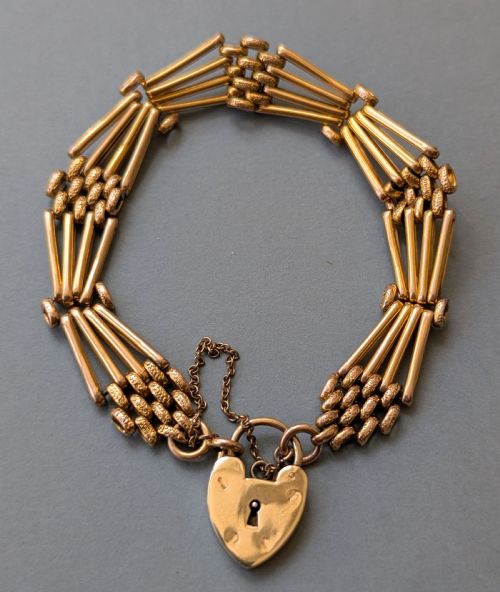
The curb chain format appears most frequently on this page, often paired with rose gold links and a secure padlock. Other variations include gate link designs, fancy links, and fetter trombone patterns.
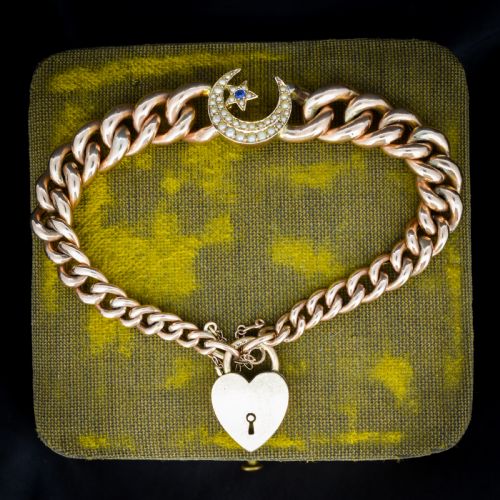
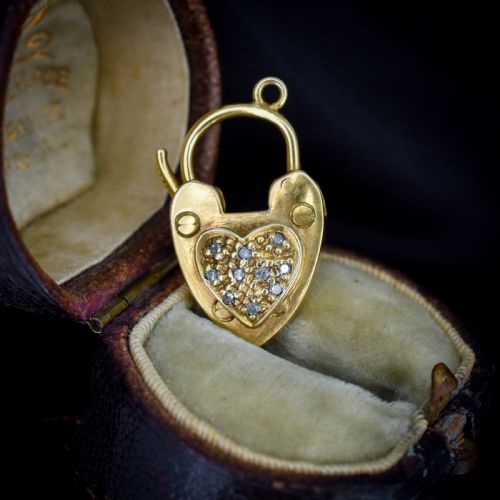
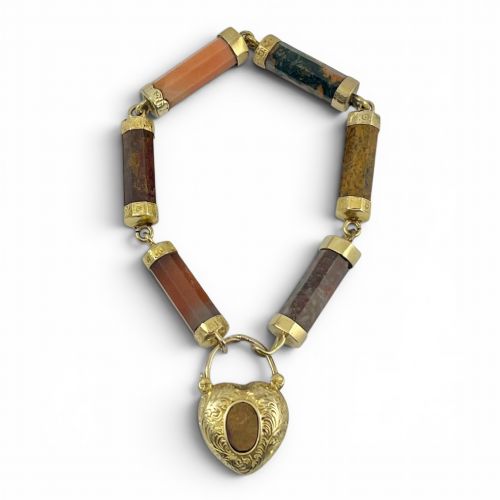
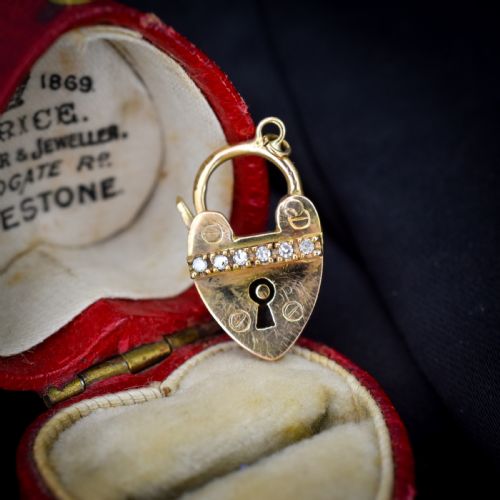
Many examples incorporate decorative elements directly onto the links or the padlock itself, such as half-engraving, seed pearls, sapphires, amethysts, rubies, opals, and agate stones.
Materials and Construction
Metals span solid 9ct gold, 9ct rose gold, yellow gold, 15ct gold, and rolled gold. Construction techniques involve interlocking links such as heavy curb chains, hollow curb chains, gate links, and fancy links.
Gemstones including seed pearls, diamonds, amethysts, rubies, opals, and Scottish agates are set into the metalwork or integrated into padlock designs. Engraving adds surface detail to the gold links and padlocks.
Retail Price Guide 2026
Typical UK retail prices for heart padlock bracelet, calculated from the Sellingantiques database of over a million retail prices indexed since 2003. This retail price guide relies exclusively on Sellingantiques data; no external sources or auction records are used, so the figures do not describe the wider market.
Materials documented in the collection include seed pearls, amethysts, opals, and Scottish agates.
Assessing Quality
Weight and metal density dictate the substance of the piece, distinguishing hollow link constructions from solid gold or heavier gauge chains. The thickness of the gold and the integrity of the links determine durability.
The refinement of the hand-engraving and the quality of gemstone settings, such as seed pearl crescents or set amethysts and opals, separate standard productions from finer examples.
The Heart Padlock Bracelet Glossary
- Curb link
- A type of chain formed by interlocking, slightly flattened links that lie flat against the wrist. This style provides the foundation for many traditional padlock bracelets.
- Gate link
- A construction style resembling a series of small metal gates connected vertically by parallel bars. This form often appears in Victorian and Edwardian bracelets.
- Rolled gold
- A material made by mechanically bonding a thin layer of gold to a base metal core. It offers the appearance of solid gold at a different material weight.
- Seed pearl
- A very small natural or cultured pearl used in clusters or crescents to decorate jewellery. These delicate pearls add subtle texture to the gold surface.
- Padlock clasp
- A small, functional or decorative lock shaped like a heart that secures the bracelet ends together. It often functions as the central focal point of the piece.
Frequently Asked Questions
What periods do these bracelets come from?
The pieces originate primarily from the Victorian and Edwardian eras, extending into the mid-twentieth century.
Craftsmanship and materials shift across these periods, moving from heavy ornate gold links towards alternative configurations.
How do you open the heart padlock?
Most padlocks function with a push mechanism or a small internal spring loaded clasp.
Some padlocks serve purely as decorative charms while a separate clasp secures the bracelet.
What metals are used in these bracelets?
The selection relies heavily on 9ct gold and 9ct rose gold, alongside 15ct gold and rolled gold.
Colour variations in the gold arise from the alloy mixtures used during different periods.
Are gemstones common on padlock bracelets?
Stones such as seed pearls, amethysts, rubies, opals, sapphires, and agates appear across various designs.
Gemstones are frequently flush set into the padlock or arranged in crescents along the chain links.