
Vintage Gold Bracelet
Discover a vintage gold bracelet spanning Victorian, Edwardian, and mid-century designs, offering lasting craftsmanship and classic character for daily wear.
Vintage Gold Bracelet
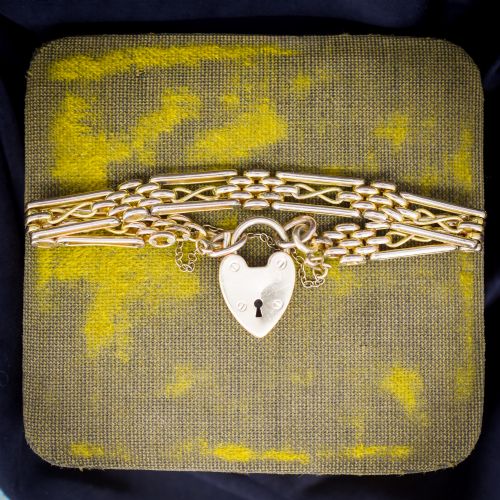
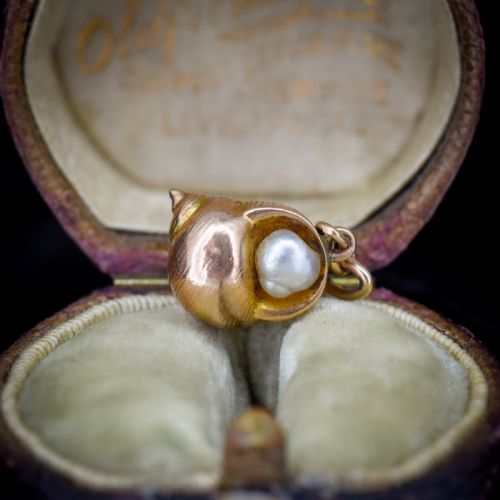
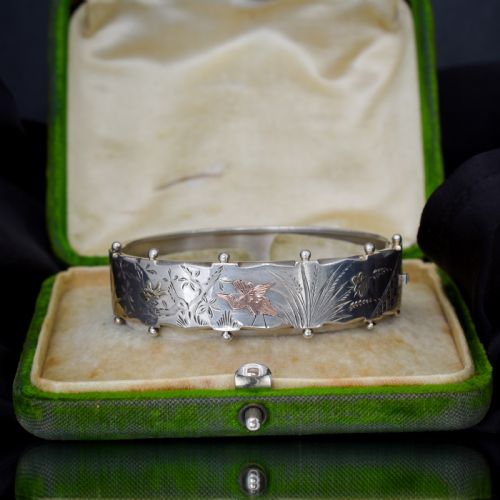
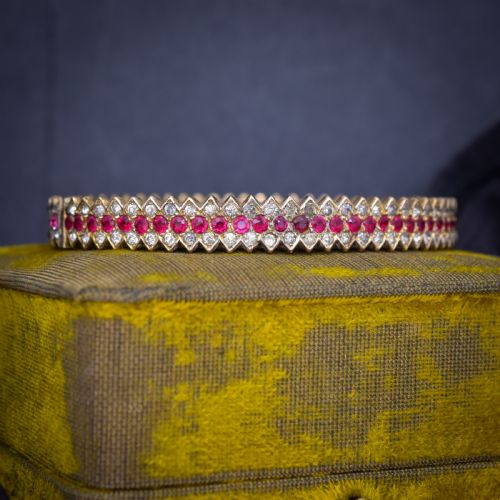
The selections recorded on this page heavily feature 9ct gold and 19th-century to mid-20th-century periods, particularly the early 1900s and the 1950s or 1960s. Gate links, heart padlocks, and charm-laden link chains appear frequently alongside tailored diamond and ruby clusters.
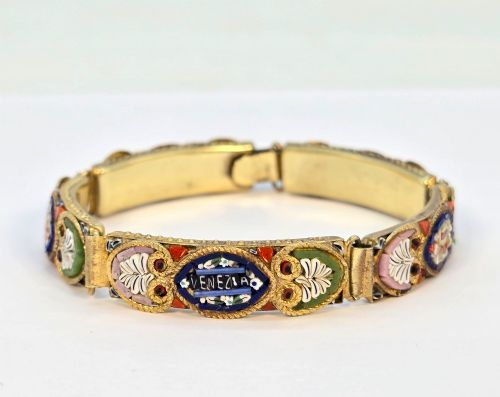
Originating across Britain, continental Europe, and beyond, these items reflect changing aesthetic movements from Grand Tour micro-mosaics to retro tank links. Each era contributes distinct structural mechanisms, such as dog clips, concealed clasps, and safety chains.
How they were made
Metals such as 9ct, 14ct, and 18ct gold - frequently encountered in yellow and rose hues - form the structural foundation of these bracelets, complemented by silver settings in older combination pieces. Goldsmiths utilised hollow-tube forming, hand-engraving, and solid casting to achieve both lightweight everyday chains and heavy statement bangles.
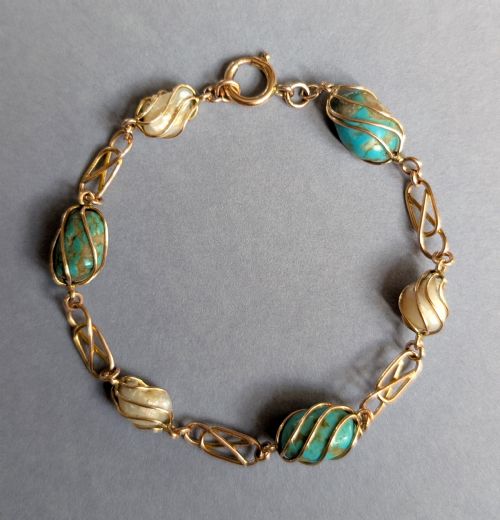
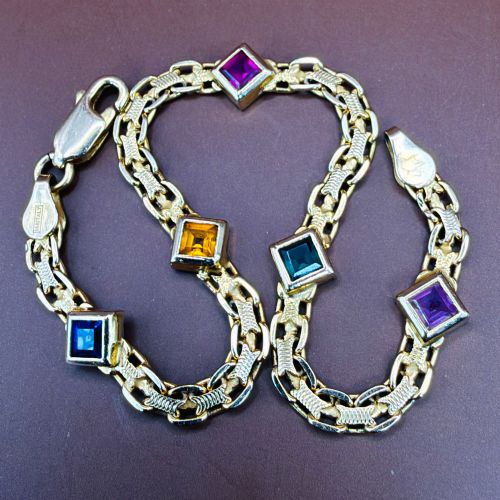
Gemstones including diamonds, garnets, turquoise, pearls, and sapphires are flush-set, bezel-set, or secured in clustered configurations using traditional hand-tooling methods. Link assemblies involve soldered jump rings, robust curb links, and intricate gate structures designed for sustained articulation.
Vintage Gold Bracelet Retail Price Guide 2026
Typical asking prices for vintage gold bracelet among the pieces listed under this phrase on Sellingantiques today, from the lower quarter to the upper quarter. They describe what is for sale here now, not the wider market.
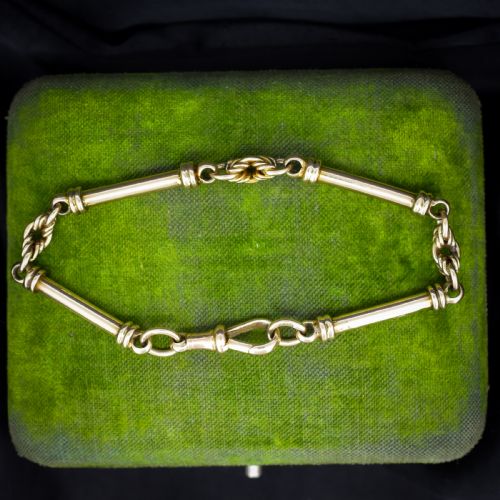
Form variations on this site include rigid hinged bangles, flexible curb chains, and charm-laden gate bracelets.
What varies in quality
The standard of a piece is determined by the weight of the metal, the integrity of the links, and the crispness of hand-engraved surface details. Substantial weight, fully intact safety mechanisms, and well-preserved hallmarks separate heavy, durable examples from lighter or worn alternatives.
Gemstone selection and setting security also dictate grade, with matching natural stones and tight, flush mountings representing higher tiers of goldsmithing. Original components, such as matching safety chains and functional heart padlocks, preserve the structural completeness expected in finer specimens.
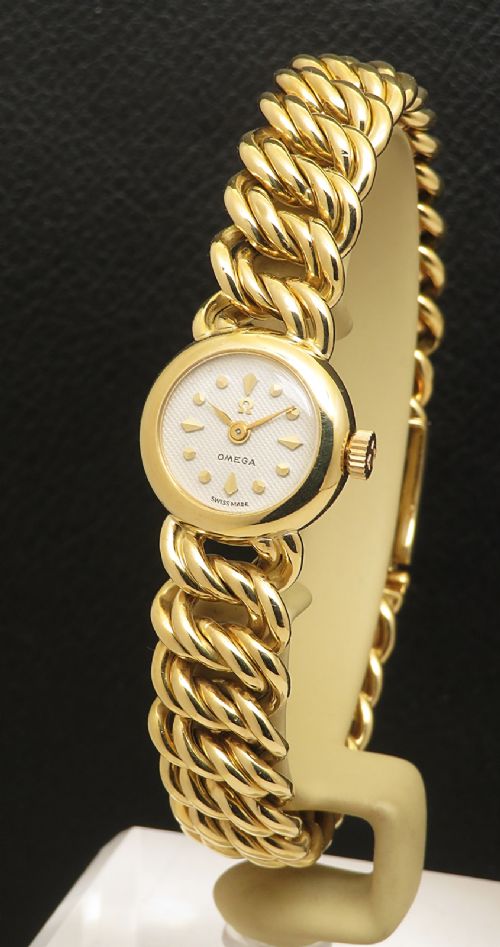
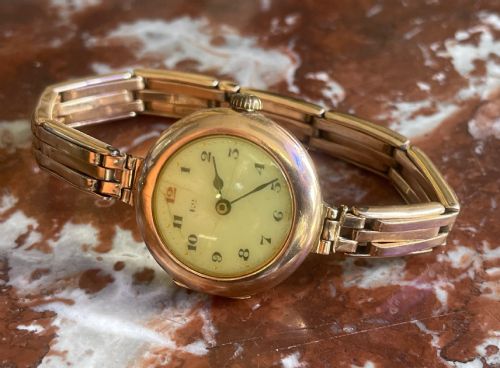
Smith and Pepper·Omega·Rolex Wilsdorf and Davis·Baume and Mercier·Jaeger-LeCoultre·Theo Fennell·Givenchy·Donnagemma
The Vintage Gold Bracelet Glossary
- Gate bracelet
- A linked design inspired by traditional Victorian garden gates, featuring multiple parallel bars joined by vertical connectors. This style frequently incorporates a heart padlock clasp.
- Dog clip
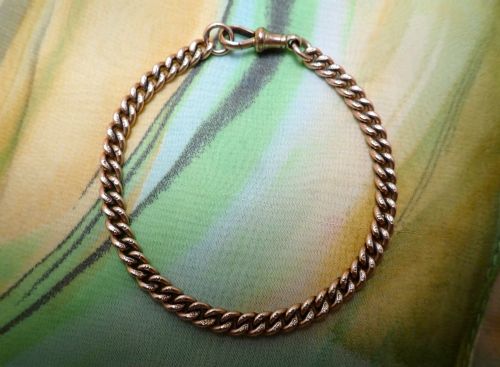
- A spring-loaded snap hook used to secure watch chains and charm bracelets, functioning with an internal lever mechanism. It provides a reliable fastening point for heavier links.
- Padlock clasp
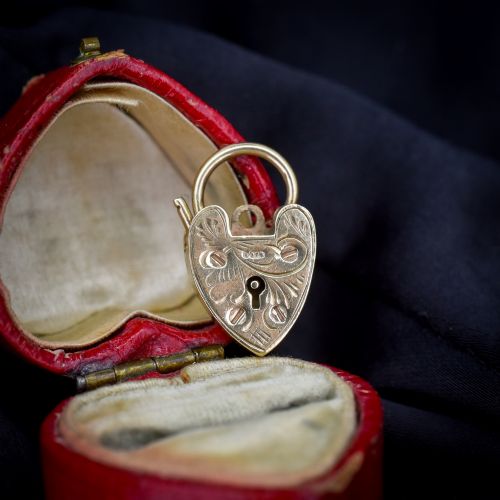
- A miniature lock-shaped fastening device often used on Victorian and Edwardian charm and gate bracelets. Many open via a small operational spring mechanism.
- Albert bracelet
- A sturdy chain style originally designed to secure pocket watches to waistcoats, later adapted into wristwear. These pieces often feature graduated links and a T-bar.
- Curb link
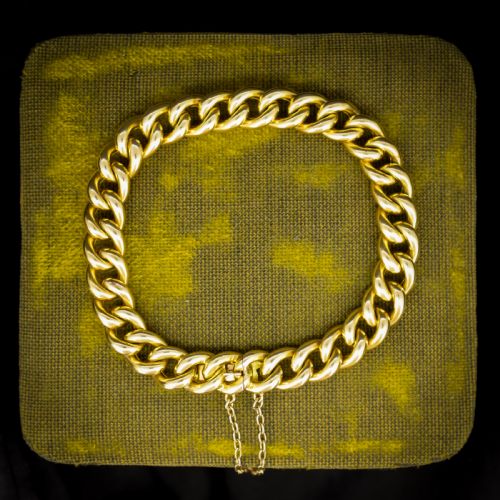
- An interlocking chain pattern with flattened, twisted links that lie flush against the wrist. This foundational link type offers high flexibility and strength.
Vintage Gold Bracelet: Frequently Asked Questions
How do I care for a vintage gold bracelet?
Clean your gold jewellery gently using warm soapy water and a soft cloth to remove everyday oils and debris. Avoid abrasive cleaners and harsh chemical dips that can damage softer gemstones like pearls or turquoise.
Store each piece individually in a lined box or pouch to prevent scratching between items. Periodically check clasps, safety chains, and stone settings to ensure they remain secure.
Are these bracelets suitable for daily wear?
Many solid gold curb and gate link styles are robust enough for regular daily use. Lighter hollow forms or antique items set with delicate organic gems require more mindful handling.
Consider removing your bracelet before engaging in strenuous physical activities, gardening, or swimming. This protects vulnerable hinges, padlocks, and ancient setting claws from accidental impacts.
How can I tell the period of my bracelet?
Examine the piece for official hallmarks, maker's marks, and structural clues that indicate its manufacturing era. Victorian and Edwardian pieces often showcase rose gold, hand-engraving, and padlock clasps, while mid-century examples lean towards structured yellow gold links and abstract stone clusters.
Consulting assay office date letters and historical styling cues helps narrow down the exact decade of production. Certain mechanisms, like spring-loaded dog clips and safety chains, also correspond to specific historical periods.
What is the difference between a bangle and a bracelet?
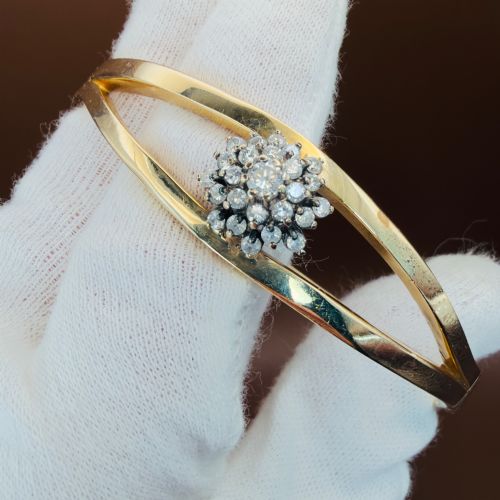
A bangle is a rigid, circular or oval band that slips over the hand or opens via a hinged mechanism with a tongue clasp. They maintain their fixed shape during wear.
By contrast, a bracelet is flexible, constructed from articulated links, chains, or woven strands that drape smoothly around the wrist. Both forms have served as prominent jewellery formats across different historical eras.