


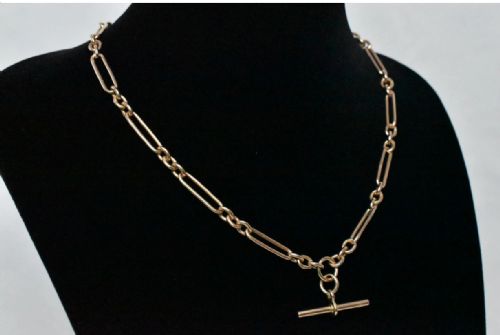


Rose Gold Albert Chain
A rose gold albert chain brings rich warmth and clever modular engineering to the wrist or neckline, originating as a functional pocket watch tether.
Rose Gold Albert Chain
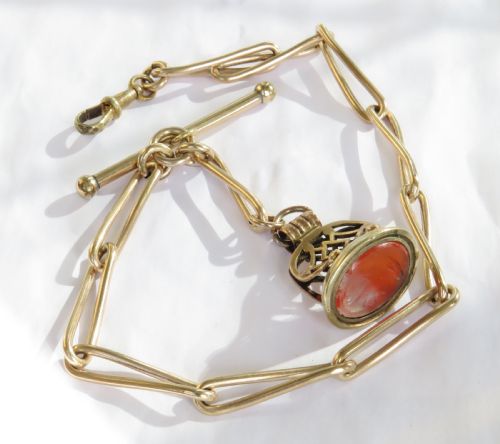
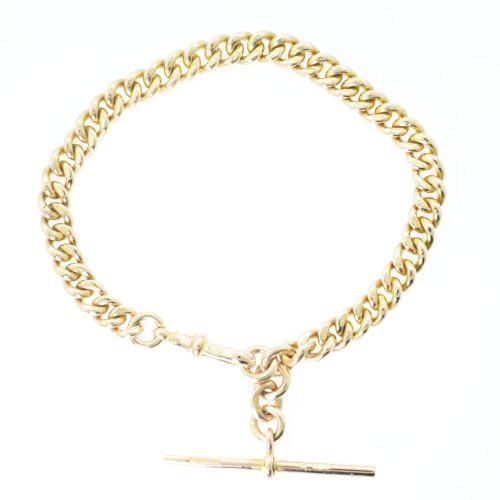
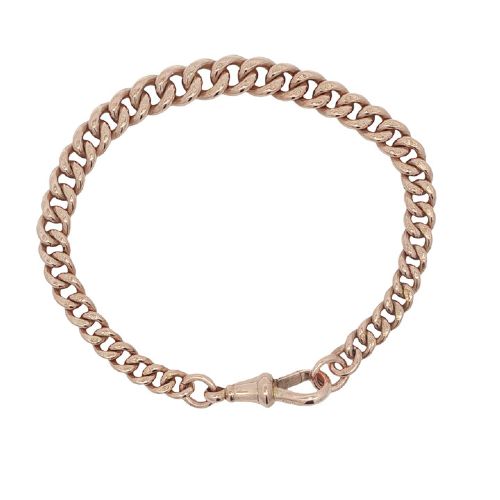
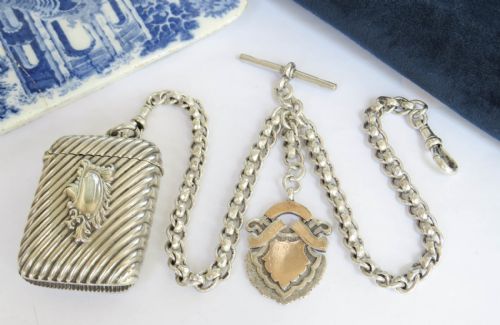
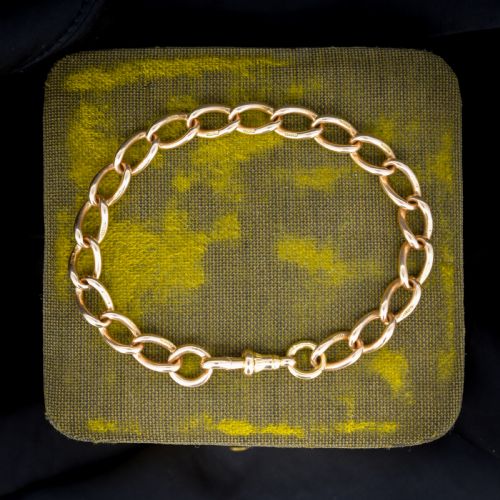
A rose gold albert chain represents a distinct category of antique jewellery originally designed to secure pocket watches to a waistcoat through a transverse bar. Today, collectors frequently encounter these pieces adapted as substantial necklaces, chokers, or multi-wrap bracelets.
The material record spans the Victorian, Edwardian, and Art Deco eras, alongside specimens from the 1900s, 1910s, 1920s, and 1930s. The listings demonstrate a dominance of 9ct rose gold, alongside variations in rolled gold and sterling silver.
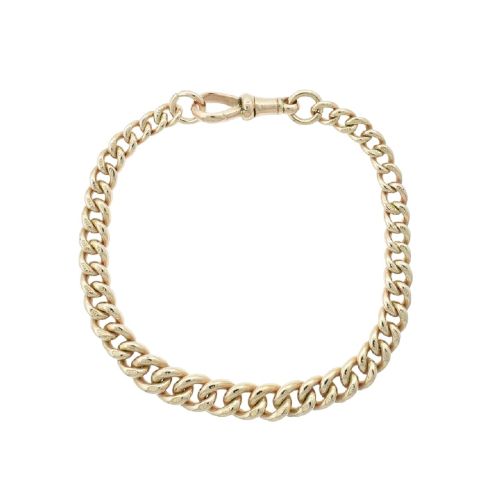
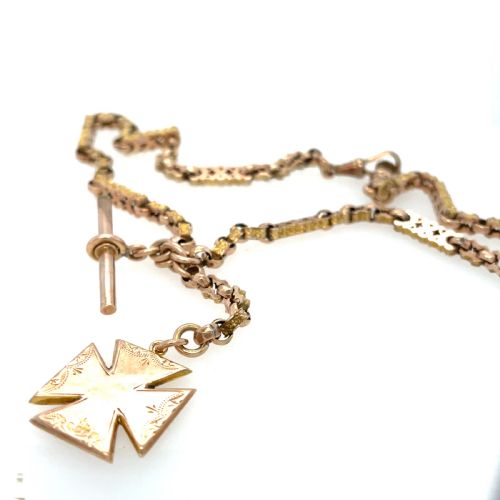
Structural forms vary from classic single and double albert configurations to heavier curb links, graduated strands, and ornate fancy links such as trombone, fetter and knot, stars and bars, and paperclip patterns.
Judgments of Quality
Quality rests upon the integrity of the individual links and the gauge of the gold wire used in construction. Substantial weight and consistent graduation across the span indicate superior craftsmanship.
The resilience of the mechanical components, particularly the springs within the dog clips and swivel clasps, dictates the everyday practicality of the piece. Intricate link patterns, such as fancy trombone or stars and bars variations, demand greater labour and elevate the distinction of the chain.
Rose Gold Albert Chain Retail Price Guide 2026
Typical asking prices for rose gold albert chain among the pieces listed under this phrase on Sellingantiques today, from the lower quarter to the upper quarter. They describe what is for sale here now, not the wider market.
Many of these chains still carry their original T-bars, once pushed through stiff woollen waistcoats by gentlemen who checked the hour dozen of times a day.
W H Wilmot
The Rose Gold Albert Chain Glossary
- T-bar
- A short transverse bar attached to the centre or end of an albert chain. This bar slipped through a waistcoat buttonhole to anchor the watch securely.
- Dog clip
- A spring-loaded snap hook used to secure pocket watches, fobs, or charms to the chain. It allows the wearer to attach and detach items swiftly.
- Graduated chain
- A design where the individual links increase in size progressively toward the centre. This construction creates a balanced visual taper.
- Trombone link
- An elongated rectangular link alternating with smaller circular or oval connectors. It mimics the geometry of musical instrument tubing.
Rose Gold Albert Chain: Frequently Asked Questions
How do I wear an albert chain today?
These chains transition easily from traditional pocket watch attachments to contemporary necklaces and wrap-around bracelets. Many owners wear them at shorter lengths as chokers or doubled around the wrist.
The inclusion of dog clips and T-bars makes adding charms, lockets, or watch fobs straightforward. Their substantial weight allows them to sit comfortably as standalone statement pieces.
How do I date these antique gold chains?
Dating relies heavily on hallmarks stamped onto the individual links, T-bars, and dog clips, which indicate the assay office, metal purity, and year of manufacture. Stylistic markers such as curb links versus intricate fancy patterns also point toward specific decades.
Victorian and Edwardian pieces often display distinct hallmarks from offices like Birmingham or Chester. Rolled gold variations typically reflect early twentieth-century manufacturing methods.
What makes rose gold different from yellow gold?
Rose gold achieves its characteristic pinkish or coppery tone through an alloy mixture that includes a higher proportion of copper alongside gold and silver. The exact shade varies depending on the specific metal ratios used by the maker.
This warm tone became particularly fashionable during the Victorian and Edwardian periods for both chains and rings. It complements various skin tones and pairs well with antique silver or yellow gold.