
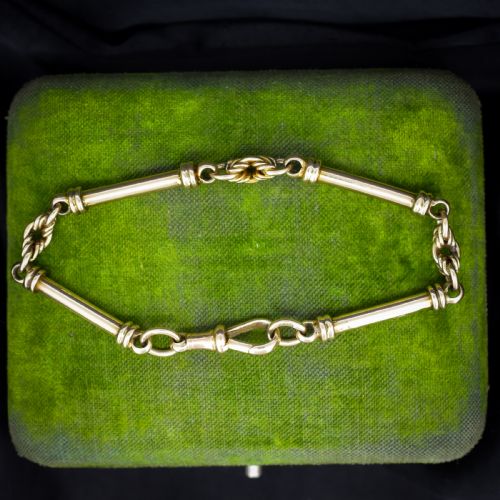
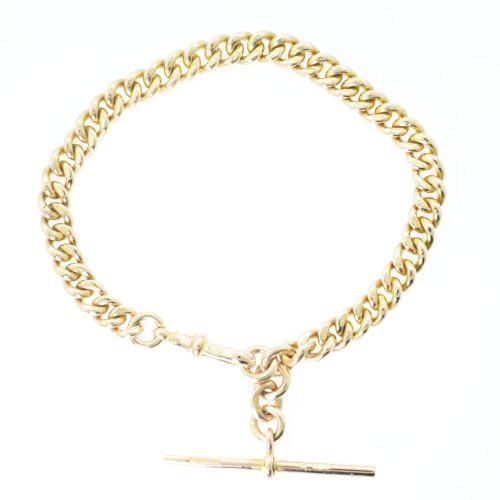
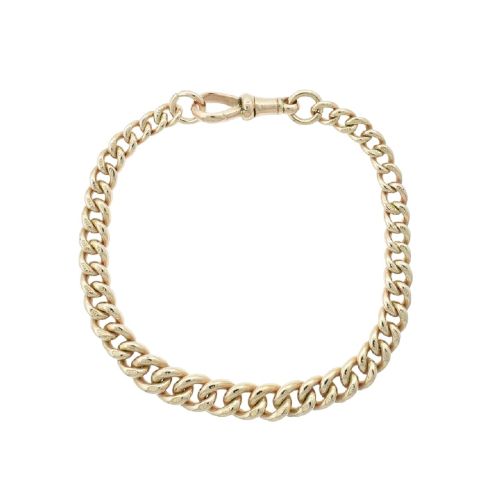
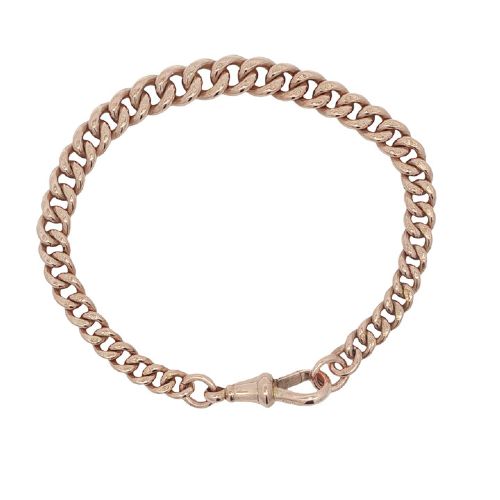
Victorian Gold Watch Chain
A victorian gold watch chain is a tactile piece of historic jewellery, prized today as a versatile necklace or bracelet.
Identifying the Victorian Gold Watch Chain
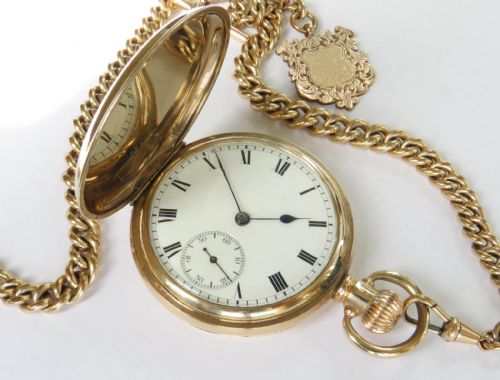
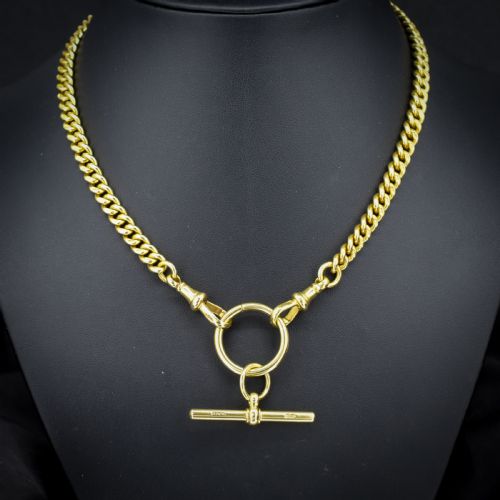
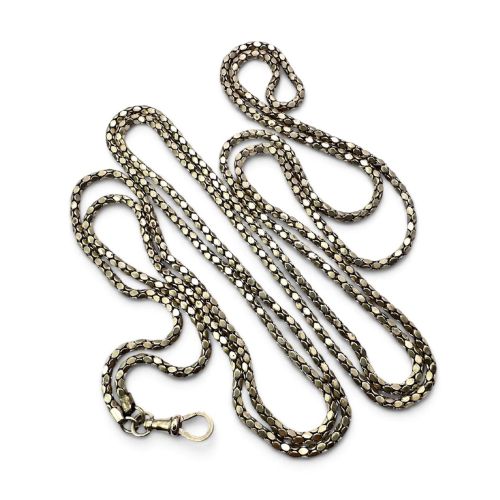
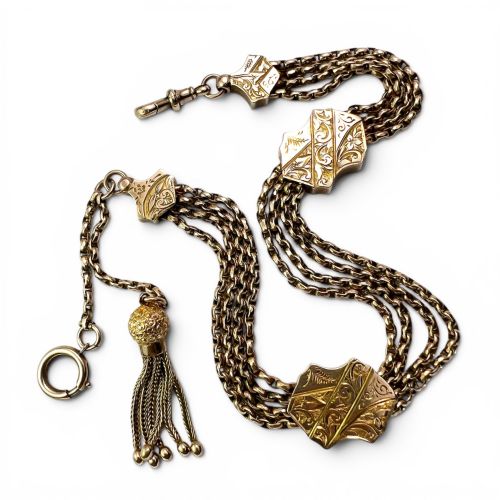
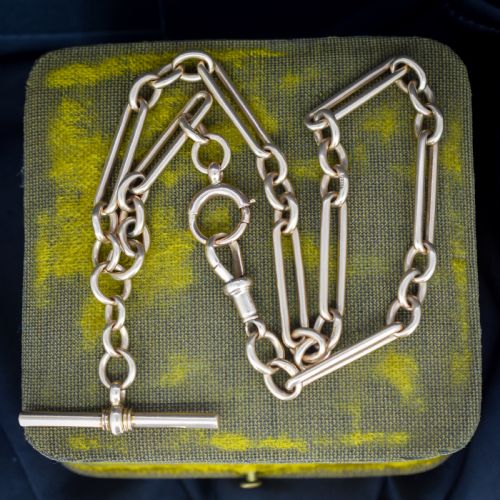
A victorian gold watch chain connects the wearer to the nineteenth century, originating as a functional accessory for pocket watches before finding new life as a necklace or bracelet. You will frequently encounter robust Albert chains, double Alberts, and longer Longuard variations across these listings.
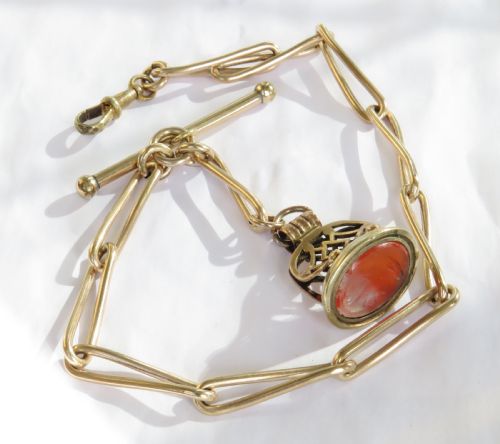
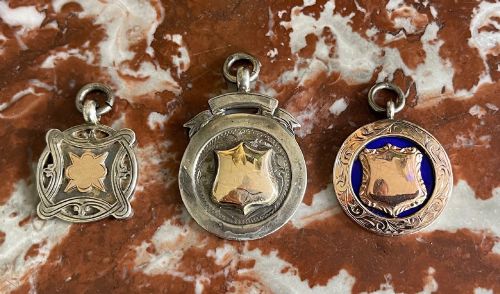
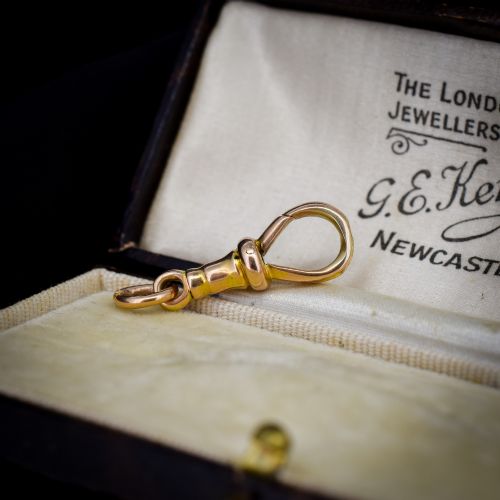
The material palette spans from 9ct rose, yellow, and white gold up to 18ct yellow gold, alongside occasional rolled gold and platinum elements. Pieces frequently incorporate characteristic components such as dog clips, swivel clasps, T-bars, and fob pendants.
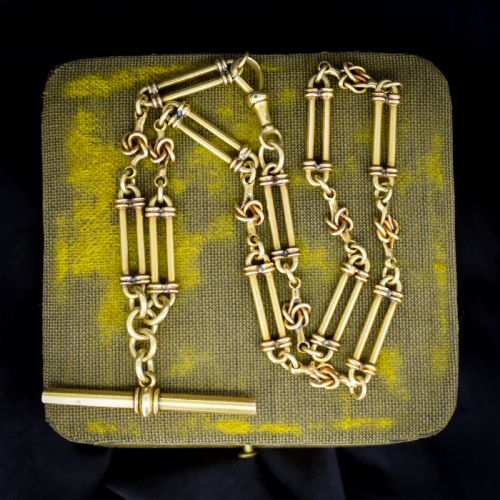
Originating largely within the Victorian era, these items also bridge into Edwardian and early twentieth-century designs, with occasional French antique pieces appearing. Forms range from heavy curb and trombone links to intricate stars and bars patterns.
Materials and Construction
Goldsmiths constructed these chains using solid 9ct, 15ct, and 18ct gold alloys, resulting in distinct colour variations from deep rose to bright yellow. Rolled gold techniques appear in specific examples, layering gold over a base metal core.
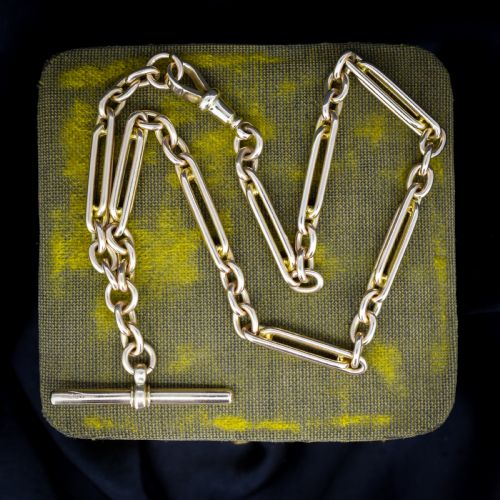
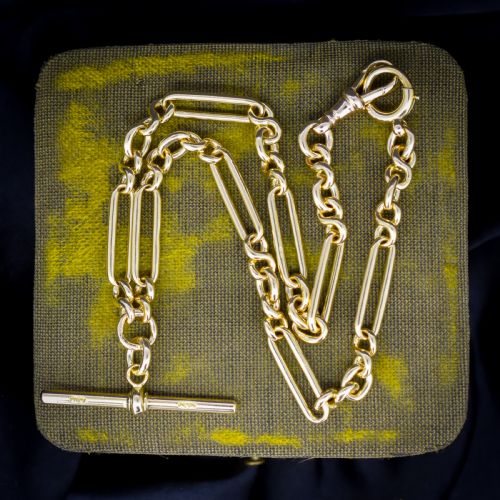
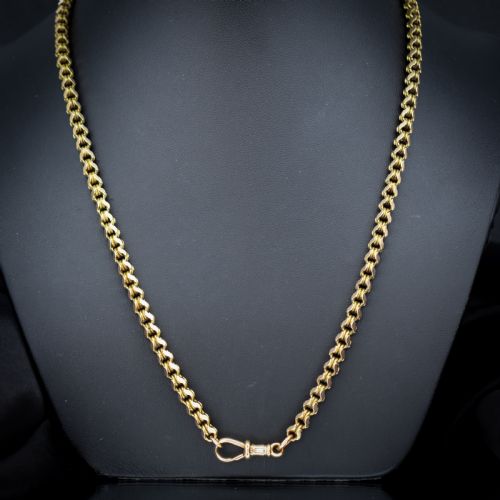
Individual links were hand-assembled and soldered, creating robust structures like curb, fancy faceted, and trombone formations. Secure mechanical closures such as dog clips, bolt rings, and swivel clasps were integrated directly into the design.
Retail Price Guide 2026
Typical UK retail prices for victorian gold watch chain, calculated from the Sellingantiques database of over a million retail prices indexed since 2003. This retail price guide relies exclusively on Sellingantiques data; no external sources or auction records are used, so the figures do not describe the wider market.
Current listings feature materials ranging from 9ct rose and white gold to solid 18ct yellow gold and platinum.
Evaluating Quality and Substance
Substance and weight define the upper tier of these pieces, separating hollow or lighter constructions from substantial solid gold specimens. Heavier examples retain their structural integrity and link definition over generations of daily wear.
The refinement of the link work and the inclusion of original components like fully matched T-bars, fobs, and functional dog clips elevate an item. Finer examples display crisp detail in fancy links such as stars and bars or faceted curbs.
W H Wilmot
The Victorian Gold Watch Chain Glossary
- Albert chain
- A pocket watch chain named after Prince Albert, designed to attach to a waistcoat buttonhole via a T-bar.
- Dog clip
- A spring-loaded snap hook used to secure pocket watches, charms, or pendants to the chain.
- T-bar
- The crossbar attached to the centre of an Albert chain, originally slotted through a buttonhole to anchor the watch.
- Trombone link
- A distinctive watch chain link shape consisting of elongated rectangular loops alternating with smaller round links.
- Longuard
- An extra-long single watch chain designed to be looped twice around the neck.
Frequently Asked Questions
How do I wear a pocket watch chain as jewellery?
These chains adapt easily to modern wardrobes by being worn doubled around the neck as a choker or fastened to full length as a substantial necklace. You can attach the existing dog clips to each other or hang historical fobs and pendants from the centre points.
The original T-bar often hangs as a decorative feature at the front, adding distinct period character to the piece.
How can I tell if the gold is solid?
Examine the individual links for hallmarks or stamp marks indicating gold purity such as 9ct, 15ct, or 18ct. Solid chains carry a noticeable physical heft relative to their physical dimensions.
Rolled gold variations utilise a base metal core beneath a gold skin, which lacks traditional purity hallmarks and feels lighter in the hand.
Can I attach modern charms to these chains?
The integrated dog clips and bolt rings function precisely like modern clasps, allowing you to easily attach charms, lockets, or pendants. Ensure the jump rings on your charms match the scale of the antique links.
The robust nature of curb and trombone links supports everyday pendant wear without straining the structure.
What does rose gold indicate about the age?
Rose gold tone is particularly characteristic of nineteenth-century British jewellery due to the higher proportion of copper alloyed with the gold. This warm hue frequently points towards Victorian production.
Similar rose gold shades continued into the early twentieth century before yellow and white gold gained wider favour.