




Trombone Link Chain
A trombone link chain brings together elongated geometric links and smaller connecting loops, offering a distinct structural rhythm suited for daily wear.
Trombone Link Chain
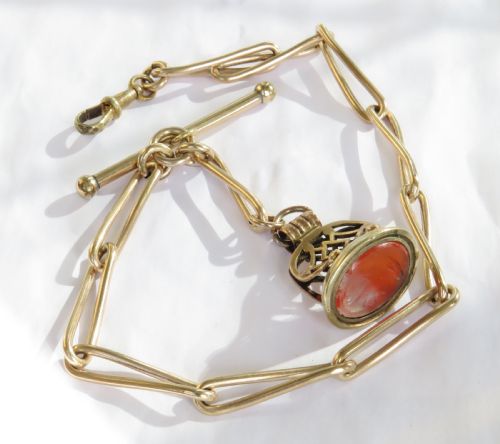
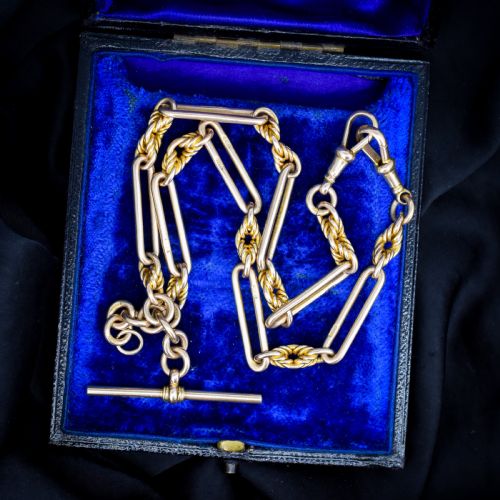
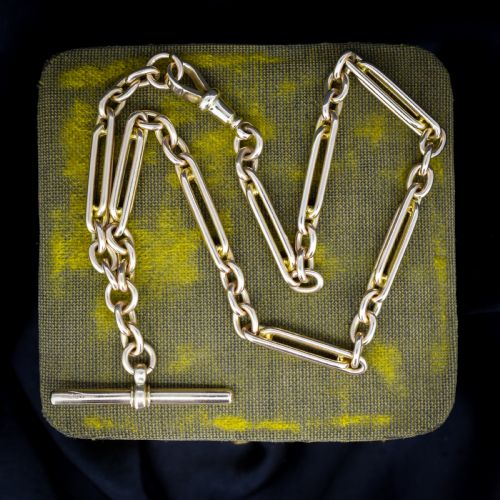
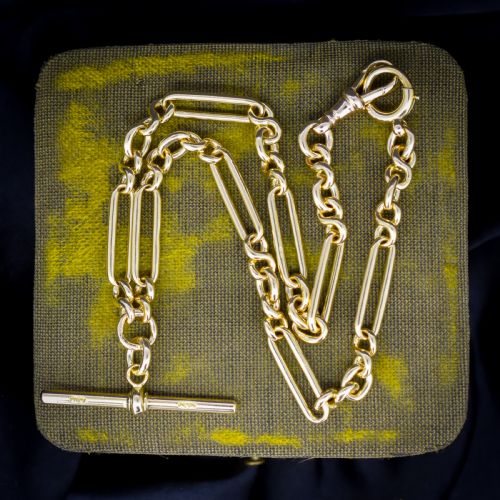
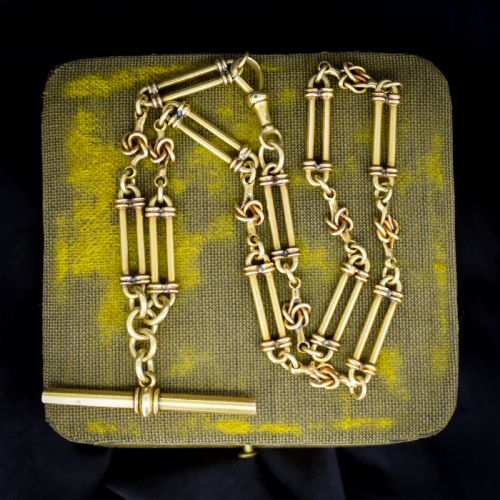
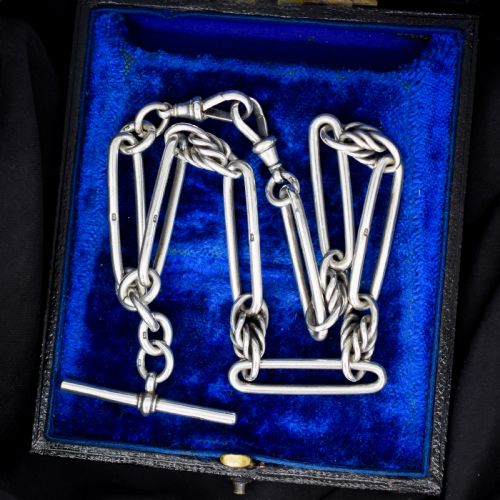
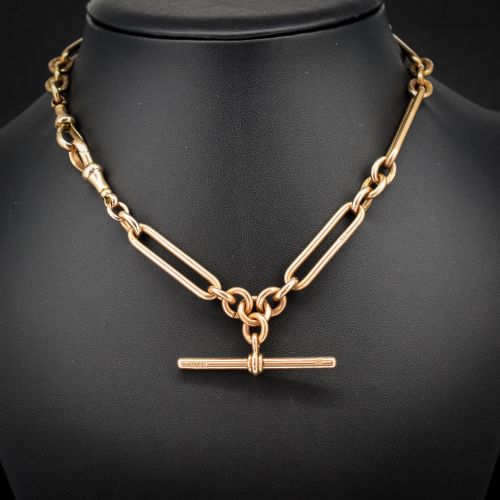
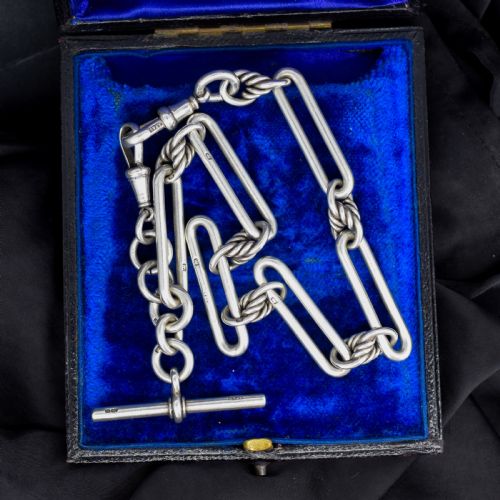
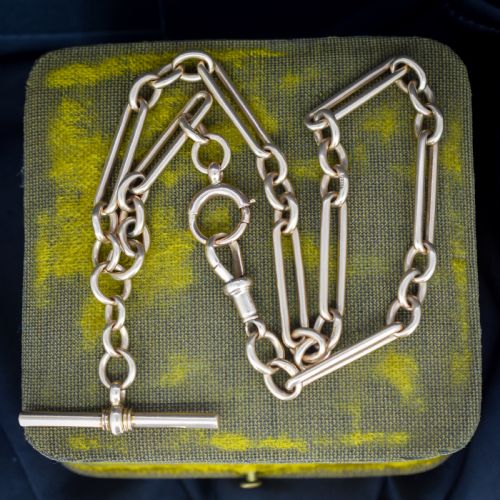
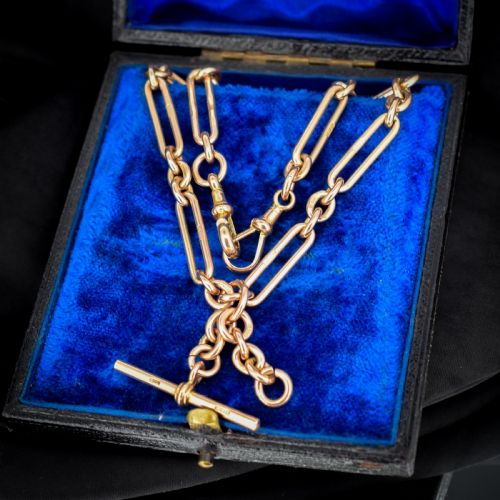
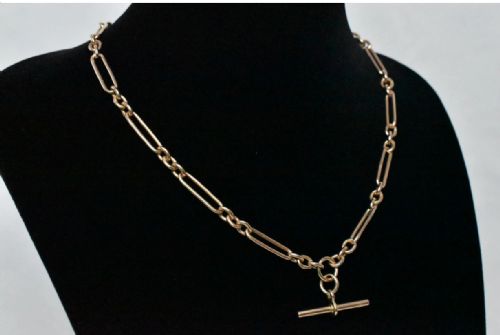
When you examine a trombone link chain, you encounter a specific design featuring long, rectangular or slightly rounded wire links alternating with smaller circular or ribbon-like connectors. These pieces frequently appear in the records as watch chains, pocket watch chains, and albert chains, often adapted into necklaces.
The pieces on this page originate predominantly from the Victorian, Edwardian, and Art Deco periods, spanning the late nineteenth century through to the nineteen-twenties. You will regularly find them paired with traditional components such as dog clips, t-bars, bolt rings, and fob pendants.
In practical terms, many of these items began life securing pocket watches in waistcoats before being transitioned into neckwear. The survival of such items reflects a period when utility and ornamentation combined standard hardware into personal adornment.
Materials and Construction
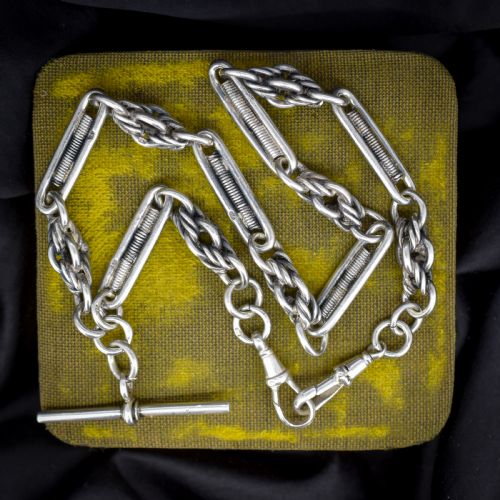
Metals form the core of these pieces, utilising sterling silver alongside various tones of gold including yellow gold, rose gold, and white platinum alloys. The evidence shows solid constructions in nine-carat, ten-carat, fifteen-carat, and eighteen-carat standards, alongside rolled gold variants.
Constructing a trombone link chain involved drawing wire to precise gauges, forming the long rectangular links, and joining them with smaller connecting rings, love knots, or fetter links. Many examples integrate mixed metals, such as platinum combined with gold or silver paired with gilt highlights, demonstrating deliberate contrast in manufacture.
Listings feature items from the Victorian, Edwardian, and Art Deco periods, utilising sterling silver and gold ranging from nine to eighteen carats.
Assessing the Workmanship
Quality rests upon the gauge of the wire and the integrity of the individual link joints. Substantial gauge wire prevents the elongated trombone links from bending or collapsing under tension, whereas thinner gauges show deformation from historical use.
The execution of supplementary components like dog clips, swivel connectors, and t-bars dictates the overall standard of the piece. Well-made examples retain crisp hallmarks, secure spring mechanisms within the clasps, and proportional harmony between the long links and their connecting knots.
The Trombone Link Chain Glossary
- Trombone link
- A jewellery link shaped like a long, narrow rectangle with rounded corners, resembling the slide of a trombone. It is also historically known in certain trades as a paperclip link.
- Albert chain
- A short watch chain designed to secure a pocket watch in a waistcoat pocket, typically featuring a t-bar at one end and a swivel or dog clip at the other.
- Dog clip
- A spring-loaded snap hook attached to the end of a chain for securing a pocket watch, fob, or pendant. It allows for quick fastening and removal.
- T-bar
- A short transverse bar attached to the centre or end of a watch chain, designed to slip through a buttonhole to anchor the chain securely.
- Love knot
- A decorative connector formed by interwoven or twisted loops of wire, frequently interspersed between the long links of a chain.
Trombone Link Chain: Frequently Asked Questions
What is a trombone link chain?
A trombone link chain is a specific style of jewellery constructed from elongated rectangular wire links alternating with smaller connecting rings. The design draws its name from its visual similarity to the slide of a musical trombone.
Historically utilised to secure pocket watches, these chains now commonly function as necklaces. Their geometric construction gives them a flat, flexible drape against the skin.
How do I wear an antique albert chain?
Antique albert chains were originally made to anchor pocket watches through a waistcoat buttonhole using a t-bar. Today, many people wear them as necklaces by fastening the dog clip directly to a link or an opposing ring.
You can also suspend pendants, lockets, or original fobs from the centre drop where the t-bar hangs. This allows you to style the hardware as a deliberate decorative feature rather than a hidden fastener.
How can I date my chain?
Dating relies primarily on official hallmarks stamped onto the metal links, dog clips, or t-bars. Assay office marks and date letters reveal the exact year and location of manufacture.
Stylistic indicators, such as the inclusion of love knot spacers or platinum accents, also point toward specific eras like the Victorian or Edwardian periods. Comparing the clasp types helps confirm whether the components are original to the piece.
What is the difference between solid gold and rolled gold?
Solid gold chains consist of gold alloy throughout the entire thickness of the metal wire. This ensures the material remains consistent even with heavy wear over generations.
Rolled gold involves a thin layer of gold mechanically bonded to a base metal core. While it offers the visual appearance of solid gold at a different weight, it reacts differently to testing and potential surface wear.