


Gold Plated Pocket Watch
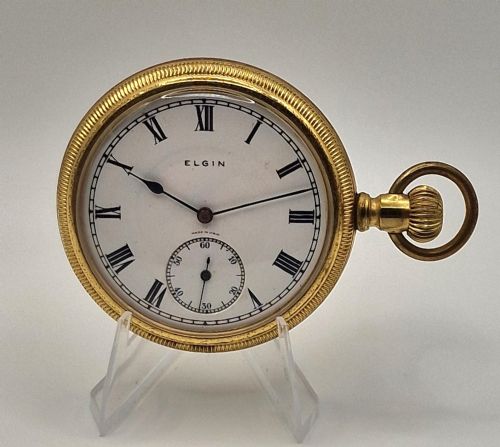
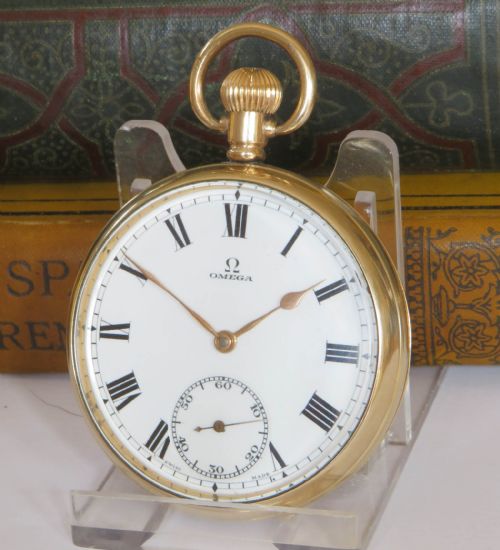
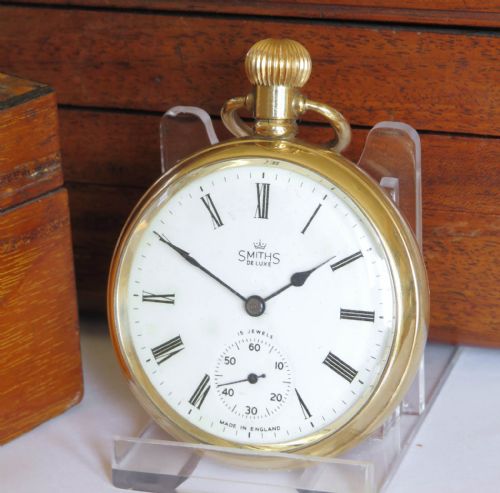
These gold plated pocket watch examples combine reliable mechanical movements with an accessible layer of precious metal.
Gold Plated Pocket Watch
A gold plated pocket watch offers the classic appearance of solid gold without the associated cost, making it a practical choice for daily carry. When searching for a gold plated pocket watch, buyers encounter pieces primarily originating from the Edwardian era through the mid-twentieth century.
Materials and Construction
Cases utilise base metals such as brass or steel coated with a layer of gold plate or rolled gold to provide durability and a rich surface finish. Enamel dials feature painted numerals protected by glass, while internal mechanical movements rely on brass and steel components assembled by makers in Britain, Switzerland, and America.
Specialised techniques such as gold plating and rolled gold application ensure an even distribution of precious metal over the underlying structure. Watchmakers housed these intricate movements within robust metal cases designed to withstand the rigours of everyday use.
Gold Plated Pocket Watch Retail Price Guide 2026
Typical asking prices for gold plated pocket watch among the pieces listed under this phrase on Sellingantiques today, from the lower quarter to the upper quarter. They describe what is for sale here now, not the wider market.
Some models include quarter repeater complications that audibly chime the hours and minutes in the dark at the press of a button.
Assessing Quality
Quality in these timepieces rests upon the precision of the mechanical movement and the preservation of the exterior metal surface. Finer examples retain an intact layer of gold plating across the case edges and feature complex mechanisms such as lever escapements or quarter repeaters.
The clarity of the enamel dial and the crispness of the case engraving also distinguish superior pieces from standard utilitarian models. Maker reputation plays a significant part, with established watch companies delivering higher standards of internal adjustment and finishing.
Elgin·Omega·Smiths De Luxe·Waltham·Thomas Russell
The Gold Plated Pocket Watch Glossary
- Full hunter
- A pocket watch featuring a spring-loaded metal cover that completely encloses and protects the glass dial. This design requires pressing a button to open the cover and read the time.
- Half hunter
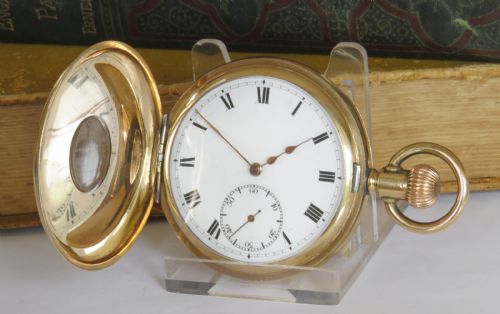
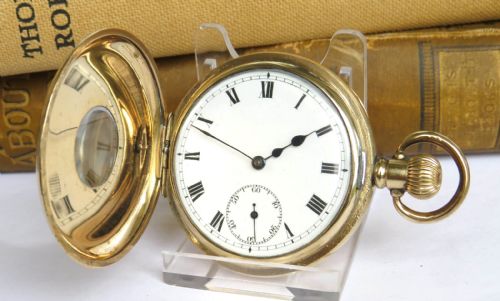
- A pocket watch with a metal outer case featuring a glass or open centre window in the lid. This allows the wearer to check the hands without opening the main cover.
- Open faced
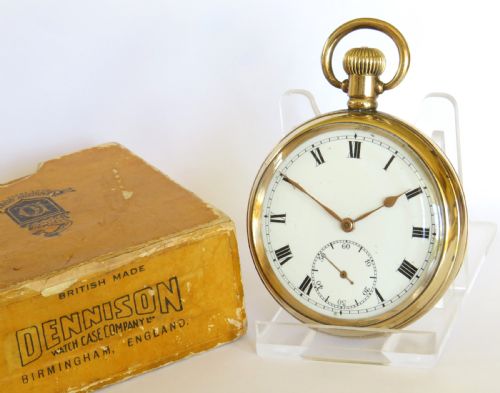
- A timepiece constructed without a protective metal lid over the dial. The glass crystal remains exposed directly to the elements.
- Rolled gold
- A manufacturing method where a sheet of gold is mechanically bonded to a base metal core under heat and pressure. This layer is substantially thicker than standard electroplating.
- Albert
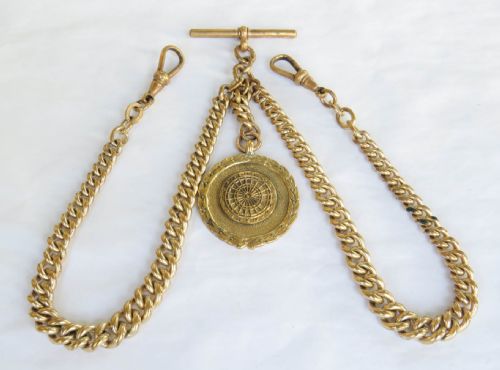
- A short chain or strap attached to a pocket watch and secured to a waistcoat buttonhole. Named after Prince Albert, it prevents the watch from falling if dropped.
Gold Plated Pocket Watch: Frequently Asked Questions
How do I wind my pocket watch?
Most pieces on this page utilise a button wind mechanism located at the crown. Gently rotate the crown clockwise until you feel resistance.
Avoid over-winding the spring, as this can damage the internal mechanical components.
What is a half hunter watch?
A half hunter design includes a protective metal outer lid with a small glass aperture in the centre. This lets you glance at the hands without opening the main cover.
Engraved enamel markers often surround the viewing window to help read the hours quickly.
Can I wear a pocket watch daily?
These pieces were built for everyday carry during the early twentieth century and remain suitable for regular use today. Pairing the watch with an albert chain secures it safely to a pocket.
Regular servicing by a professional horologist keeps the mechanical movement running accurately.
How do I identify the period?
Stylistic details such as dial typography, case ornamentation, and movement signatures help indicate the decade of manufacture. Art Deco examples typically feature geometric numerals and streamlined cases.
Earlier Edwardian pieces often display more ornate engraving and classic Roman numerals on the enamel face.