


Silver Dog Clip Chain
These silver dog clip chain pieces are robust utilitarian links repurposed as wearable necklaces and bracelets, offering versatile nineteenth century style.
What a silver dog clip chain is
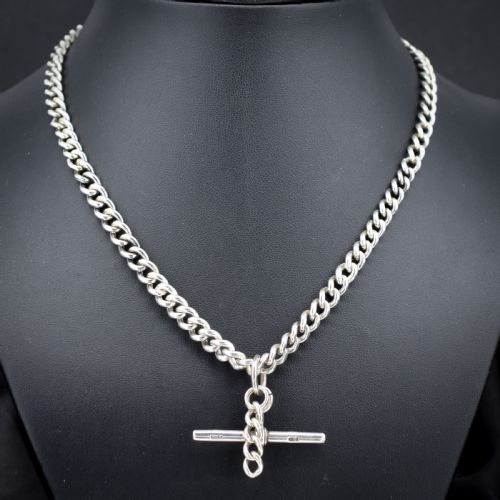
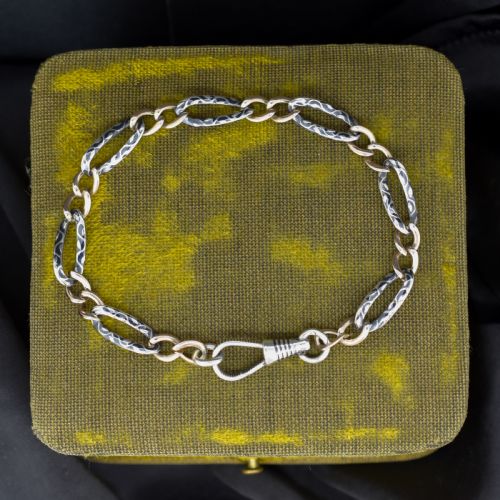
A silver dog clip chain brings together traditional watch chains and pocket watch hardware to form versatile necklaces and bracelets. When you search for this phrase, you encounter substantial nineteenth century links fashioned in sterling silver, complete with functional clasps.
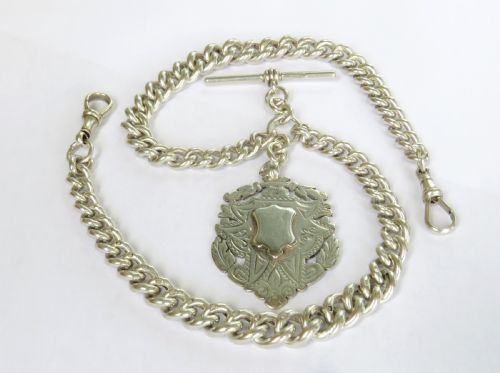
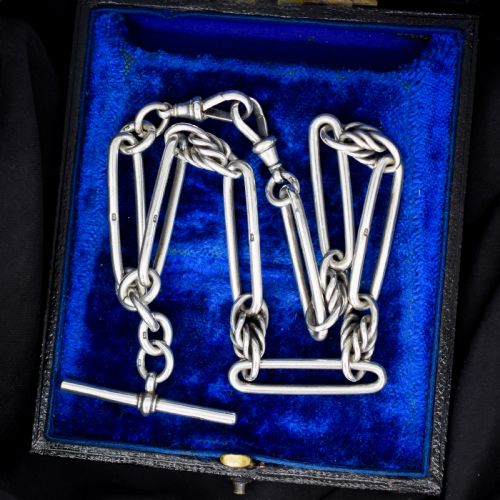
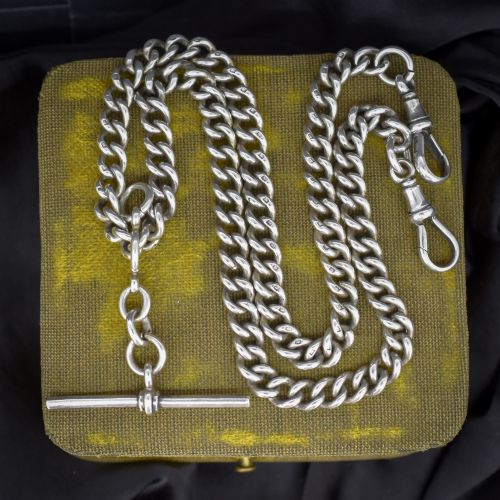
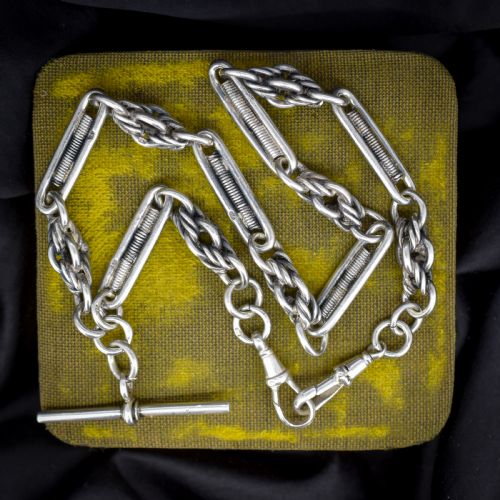
Most examples on this page date from the nineteenth century, including specific Victorian years and nineteen ten. These pieces take the form of curb link chains, trombone watch chains, love knot designs, and longuard chain necklaces.
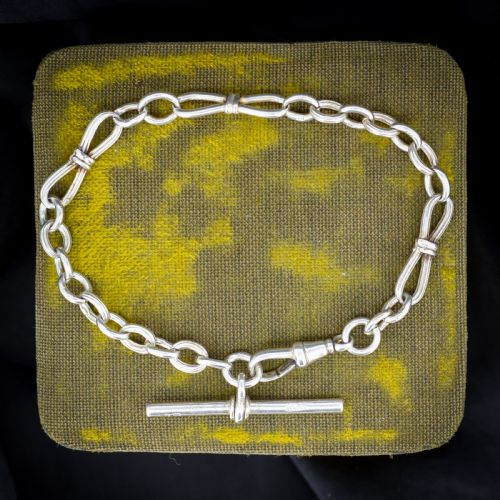
Many of these items retain their original T-bars and fob medals, or feature double dog clips. They serve equally well worn at various lengths as necklaces or wrapped as bracelets.
How they were made
These items are constructed entirely from sterling silver, shaping durable links into uniform curb patterns or alternating trombone and love knot configurations. Metalsmiths fabricated each section by hand or with period machinery to ensure enduring strength for daily pocket watch use.
The defining hardware mechanism is the spring-loaded dog clip, designed for secure attachment to waistcoats or fob medals. Artisans integrated these swivelling clips alongside traditional T-bars to create adaptable fastening systems.
Pocket watch chains spent their youth anchored securely inside Victorian waistcoats before finding a second life swinging freely around modern necks and wrists.
What varies in quality
Quality rests in the substantial weight of the sterling silver links and the crisp definition of the chain patterns. Heavier chunky curb links and intricate trombone or love knot assemblies command attention for their tactile presence.
The mechanical integrity of the spring dog clips and the presence of original components like T-bars and fob medals elevate certain examples. Superior pieces display even wear across the silver surface while maintaining the snap and security of their original clasps.
The Silver Dog Clip Chain Glossary
- Dog clip
- A spring-loaded swivel clasp originally used to secure pocket watches to waistcoats. This mechanism forms the primary closure and decorative focal point on these chains.
- T-bar
- A short transverse bar attached to the chain, designed to slip through a buttonhole. It anchored a pocket watch safely inside a pocket.
- Albert chain
- A type of watch chain named after Prince Albert, featuring a central drop for a fob or pendant. These are frequently configured today as necklaces or bracelets.
- Curb link
- A chain design composed of interlocking links that lie flat. This pattern provides both flexibility and notable weight in sterling silver.
- Trombone link
- A link style featuring elongated rectangular sections connected by smaller circular rings. It offers a distinctive geometric rhythm compared to standard curb links.
- Longuard chain
- An exceptionally long nineteenth century chain designed to be doubled around the neck. They often incorporate dog clips for suspending watches or lockets.
Frequently Asked Questions
How do I wear a dog clip chain?
These pieces function primarily as necklaces or multi-wrap bracelets. You can attach the dog clip directly to any link to adjust the length or secure a pendant.
The inclusion of T-bars and fob medals adds historical detail that sits visibly against the chest or wrist when worn.
Are these chains sterling silver?
The listings consist entirely of sterling silver pieces from the nineteenth century and nineteen ten. This metal standard ensures a bright finish that responds well to gentle polishing.
Over decades of use, the silver develops a soft patina in the recesses of the curb and trombone links while remaining bright on the high points.
What is an Albert chain?
An Albert chain is a specific style of pocket watch chain that includes a T-bar at one end and a dog clip at the other. They were worn across the front of a waistcoat.
Today, these robust chains are easily repurposed as substantial necklaces or layered bracelets.
How do I tell nineteenth century pieces apart?
Nineteenth century examples often feature distinct link variations such as trombone patterns, love knots, or heavy chunky curb links. Specific dated pieces help anchor the timeline of these designs.
Examining the construction of the dog clips and the weight of the sterling silver helps distinguish different decades within the Victorian era.