




Trombone Link Watch Chain
A trombone link watch chain brings substantial antique character to the neck or waistcoat, prized for its distinctive flat, rectangular links.
Trombone Link Watch Chain
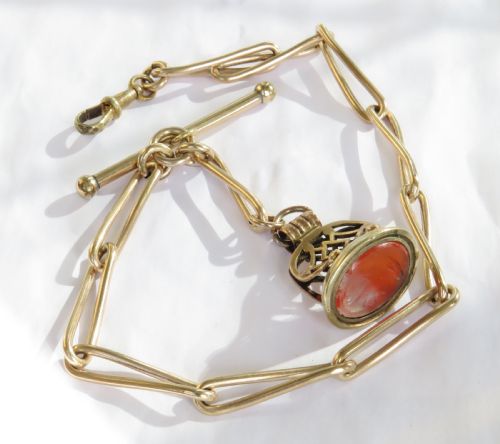
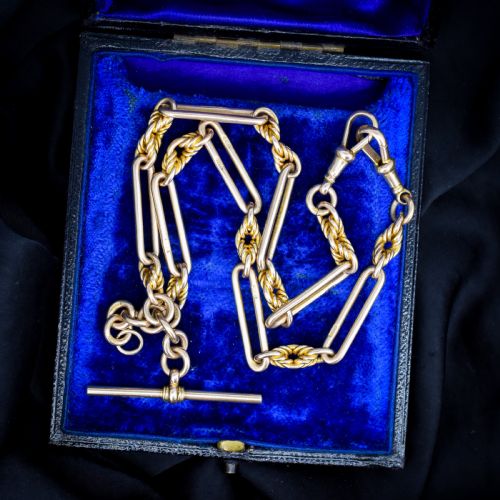
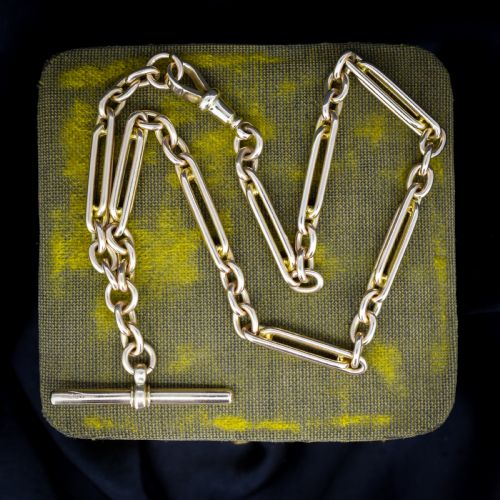
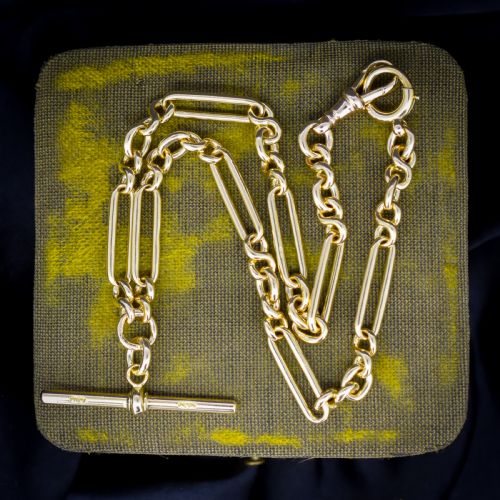
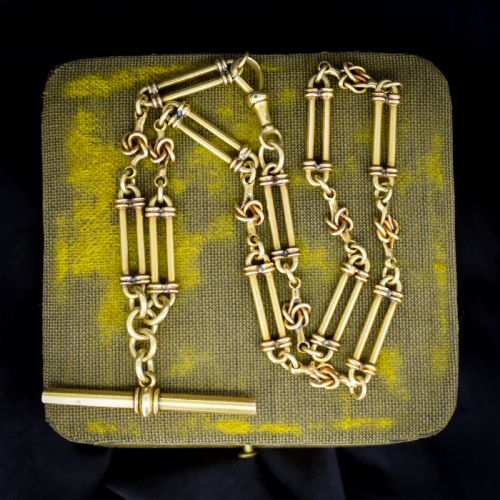
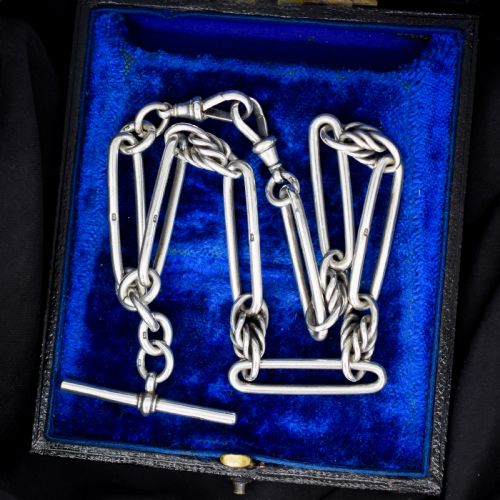
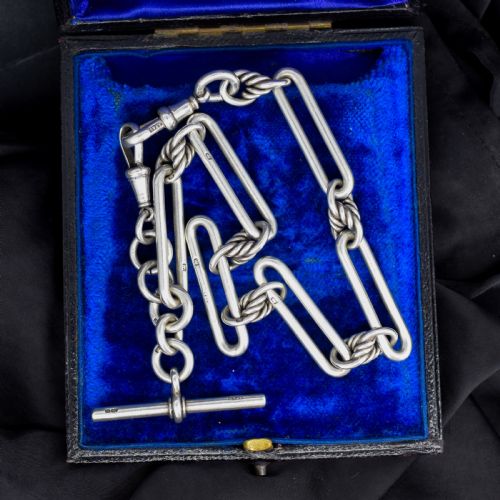
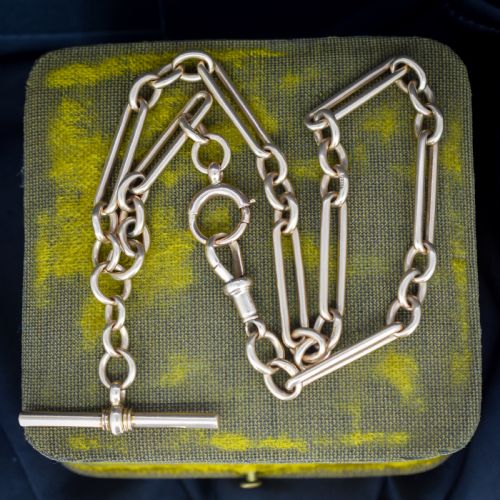
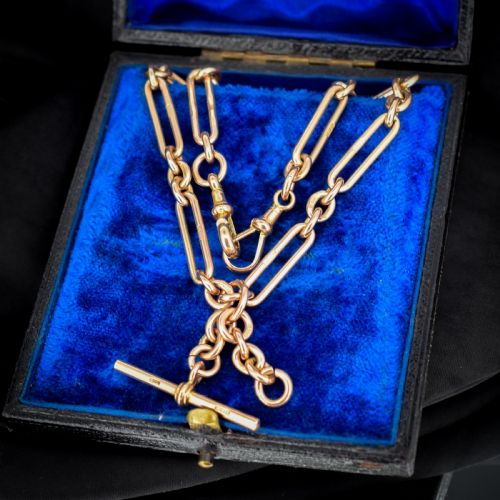
A trombone link watch chain is a historical piece of jewellery featuring long, rectangular links joined by smaller circular or fancy connectors, designed originally to secure a pocket watch. The examples seen here emerge mainly from the Victorian and Edwardian eras, stretching through the 1920s into the Art Deco period.
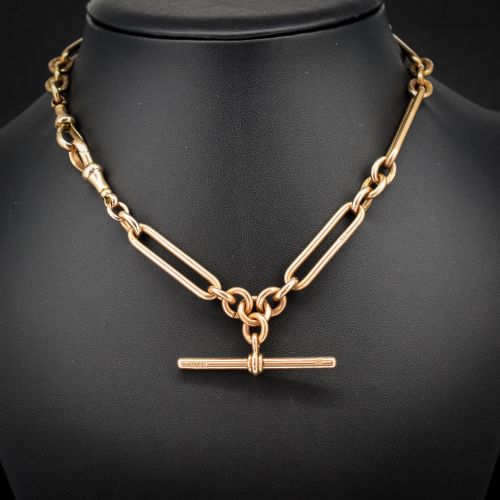
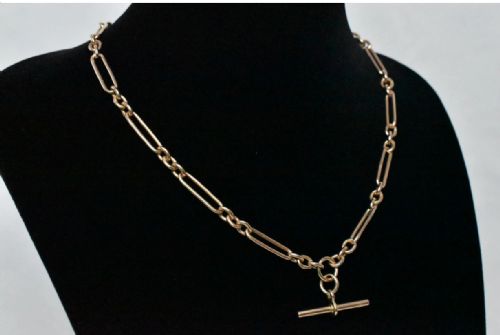
Buyers most frequently encounter these items configured as single or double Albert chains complete with dog clips, bolt rings, and T-bars. Many are now worn as necklaces, often incorporating love knot links, fetter links, or fob pendants alongside the characteristic trombone pattern.
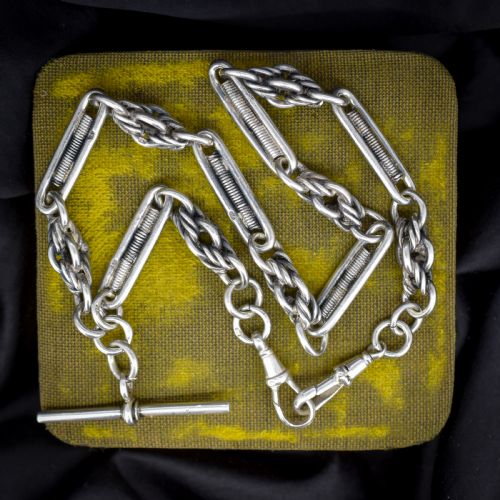
Materials span sterling silver, 9ct rose gold, 9ct yellow gold, 18ct yellow gold, and rolled gold, occasionally accented with carnelian or turquoise. Lengths vary considerably, from shorter lengths suitable for close necklines to very long guard chains reaching past seventy centimetres.
Materials and construction methods
Goldsmiths and silversmiths constructed these chains using solid precious metals including sterling silver, 9ct gold, and 18ct gold, alongside rolled gold alternatives. Individual links were drawn, shaped, and hand-assembled to create the signature long rectangular profile interspersed with smaller connecting rings.
Functional components such as dog clips, bolt rings, and T-bars were soldered or mechanically attached to provide secure fastening for pocket watches or fobs. Decorative variations integrate love knot motifs, fetter links, and occasional gemstone elements like carnelian and turquoise directly into the chain structure.
Listings span the late 19th century through the 1920s, showcasing periods including Victorian, Edwardian, and Art Deco in sterling silver and various gold carats.
Factors determining quality
The overall quality of a trombone link watch chain rests on the gauge and integrity of the precious metal used, distinguishing solid gold and heavy sterling silver from lighter rolled gold versions. Substantial weight and robust link construction indicate a higher grade of manufacture intended for daily utility.
The precision of the link assembly and the original condition of functioning hardware, such as swivelling dog clips and secure spring rings, define the standard of the piece. Intricate variations like love knot intersections and fully marked components also elevate the standing of an individual chain.
The Trombone Link Watch Chain Glossary
- Trombone link
- A jewellery link shaped like a long, flat rectangle, named after the visual similarity to the slide of a trombone. These form the primary repeating pattern of the chain.
- Albert chain
- A pocket watch chain designed to pass through a waistcoat buttonhole, featuring a T-bar at one end and a drop for a fob or watch at the other. They are frequently worn today as necklaces.
- Dog clip
- A spring-loaded snap hook attached to the end of the chain for securing a pocket watch or pendant. It allows the wearer to fasten and remove items quickly.
- T-bar
- A short transverse bar attached to the centre of an Albert chain, originally slotted through a waistcoat buttonhole to anchor the watch. It serves as a distinct decorative feature on converted necklaces.
- Love knot
- An intricate knot formed from interlaced wires or links, frequently interspersed between the rectangular trombone links for decorative effect. This motif carries traditional sentimental value from the Victorian period.
Trombone Link Watch Chain: Frequently Asked Questions
How do I wear a watch chain as a necklace?
Most antique trombone link chains measure between thirteen and seventeen inches, allowing them to sit comfortably around the neck as chokers or short necklaces. The original dog clips and T-bars are typically left in place to become part of the aesthetic.
Longer guard chains, sometimes exceeding seventy centimetres, can be doubled over the head for a layered appearance. You can attach pendants or fobs directly to the dog clip or leave the hardware hanging as a decorative detail.
How can I tell the period of my chain?
Dating relies heavily on hallmarks stamped onto the links, dog clips, or T-bars, which indicate the assay office, metal purity, and year of manufacture. Stylistic clues also help distinguish eras, such as the heavier silver pieces of the late nineteenth century compared to the lighter 1920s gold designs.
Victorian and Edwardian examples often feature specific clasp types and maker's marks that anchor their production dates. Reviewing the listed dates and material combinations provides a reliable benchmark for comparison.
Are these chains made of solid gold?
The listings include a mix of solid precious metals and rolled gold pieces. Solid options encompass 9ct gold, 18ct yellow gold, 9ct rose gold, and sterling silver.
Rolled gold versions consist of a base metal core bonded with a layer of gold. Hallmarks and stampings on the individual links or clasps generally clarify the exact metal standard used.