



Edwardian Trombone Link Chain
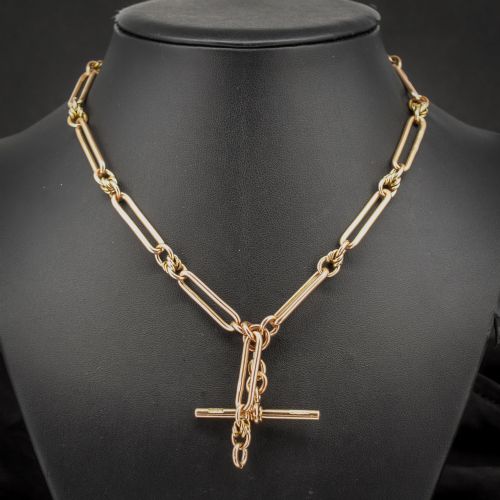
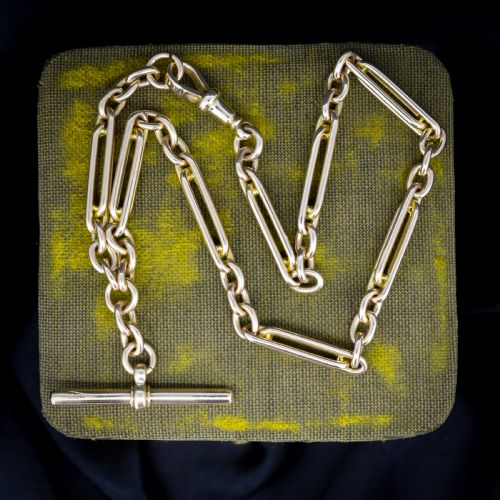
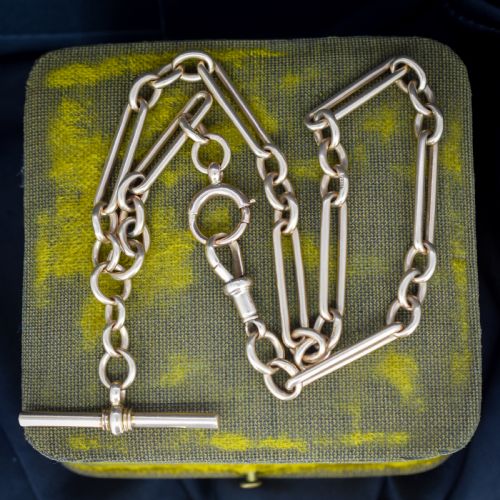
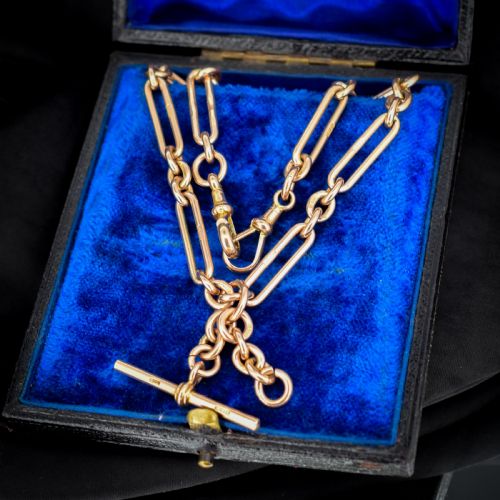
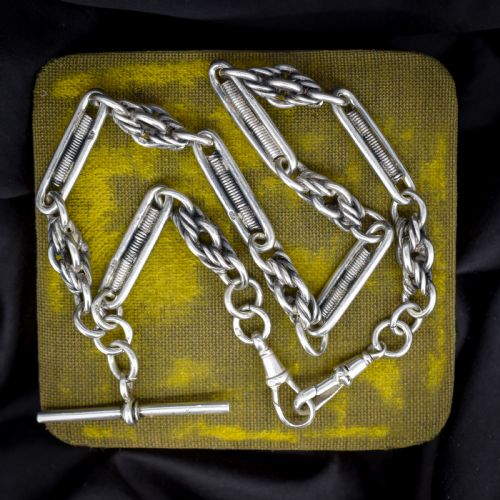
An edwardian trombone link chain offers a distinct geometric rhythm, prized for its alternating long bar and small round links.
Edwardian Trombone Link Chain
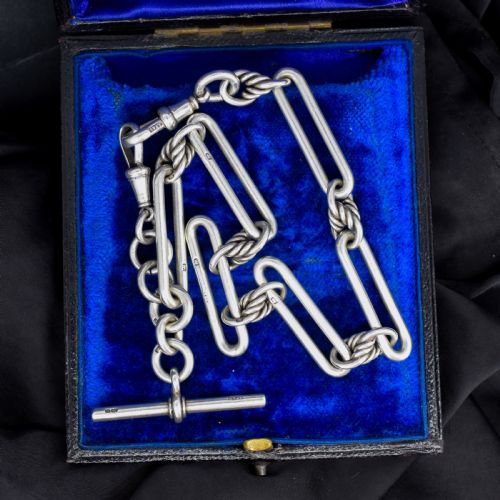
The edwardian trombone link chain draws its name from the musical instrument, using long rectangular links joined by smaller circular or oval connectors. These pieces typically appear as watch chains, neck chains, and albert chains, often fitted with dog clips and t-bars.
The versions most commonly met on this page span the 1900s through the 1920s, bridging late victorian tastes and early twentieth-century design. They are found in yellow gold, rose gold, sterling silver, and platinum.
Makers adapted the utility of pocket watch chains into decorative necklaces, sometimes pairing the characteristic trombone pattern with love knot or fetter links. Lengths vary from shorter thirteen-inch pieces to sixteen-inch necklaces.
What varies in quality
Subtleties in link gauge and wire thickness set examples apart, determining the substantial feel and drape of the chain. Heavier gold and platinum constructions display crisp edges on the elongated bars.
The retention of original hallmarks, safety clips, and matching t-bars distinguishes well-preserved specimens from those altered over time.
Edwardian Trombone Link Chain Retail Price Guide 2026
Typical asking prices for edwardian trombone link chain among the pieces listed under this phrase on Sellingantiques today, from the lower quarter to the upper quarter. They describe what is for sale here now, not the wider market.
A good trombone link chain has rhythm enough to make a silent film pianist tap a polished shoe.
The Edwardian Trombone Link Chain Glossary
- Albert chain
- A pocket watch chain designed to attach to a waistcoat, featuring a t-bar at one end and a swivel clasp or dog clip at the other.
- Dog clip
- A spring-loaded swivel clasp used on watch chains to secure pocket watches or charms safely.
- T-bar
- A short transverse bar attached to the centre of an albert chain, slipped through a buttonhole to anchor a pocket watch.
- Love knot
- A decorative motif formed by intertwined or looped wire, often interspersed between longer links in a chain.
- Fetter and knot link
- A traditional chain pattern alternating a long link with a small circular link, closely related to the trombone design.
Edwardian Trombone Link Chain: Frequently Asked Questions
What is an edwardian trombone link chain?
An edwardian trombone link chain is a period neck or watch chain characterised by alternating long rectangular links and smaller round connectors. They originate from the early twentieth century and late nineteenth century.
These pieces were originally designed to secure pocket watches to waistcoats or garments. Today, they are frequently worn as necklaces due to their distinctive geometric construction.
How do I wear a watch chain as a necklace?
Watch chains are adapted for the neck by connecting the dog clip directly to a jump ring or the t-bar itself. This creates a versatile length that showcases the repeating link pattern.
Many examples include original dog clips and t-bars which hang as decorative elements when worn around the neck. The length typically sits comfortably near the collarbone.
What metals were used for these chains?
The materials span yellow gold, rose gold in nine and eighteen carat variations, sterling silver, and platinum. Each metal reflects the prevailing preferences of the 1900s to the 1920s.
Silver and platinum examples offer a bright, silvery tone, while gold variants provide warmer hues. Hallmarks stamped on the links often indicate the specific town office and metal purity.
How do I tell an edwardian chain from a victorian one?
Distinguishing between periods relies on assay office marks, style nuances, and documentation accompanying the piece. Late victorian examples overlap closely with early edwardian production around the turn of the twentieth century.
Design elements such as platinum usage or specific clasp types help narrow down the date of manufacture. Examining any stamped date letters clarifies the exact year of assay.