




Antique Tbar Watch Chain
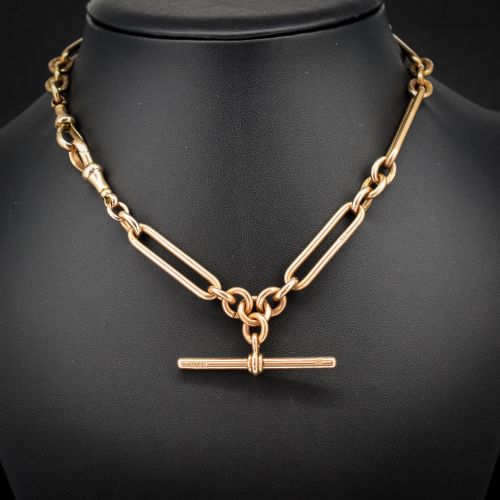
An antique tbar watch chain is a classic piece of Victorian and Edwardian gentleman's jewellery that now makes a versatile neckpiece.
Antique Tbar Watch Chain
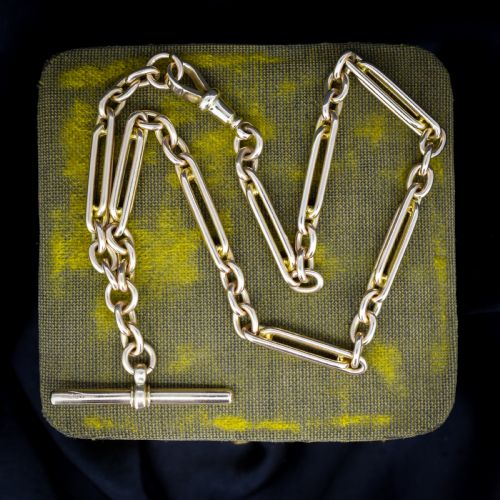
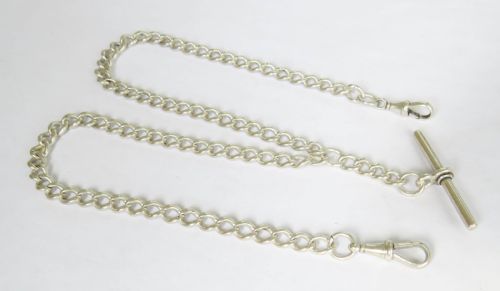
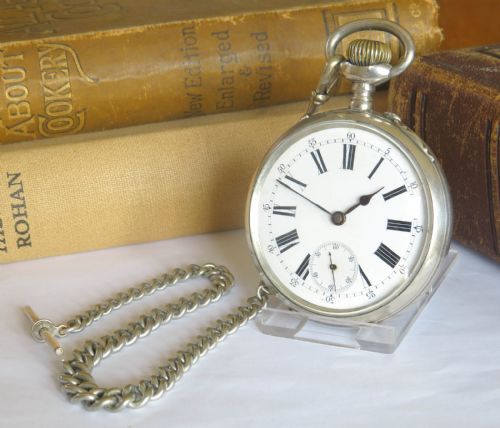
An antique tbar watch chain is a sturdy link length originally designed to secure a pocket watch in a waistcoat pocket. The central T-bar slotted through a buttonhole while the ends attached to the timepiece and a fob.
Most examples found here date from the late nineteenth century through to the nineteen-thirties, spanning the Victorian, Edwardian and Art Deco periods. They appear in sterling silver, silver, and various caratages of yellow gold including nine, ten, and eighteen carat.
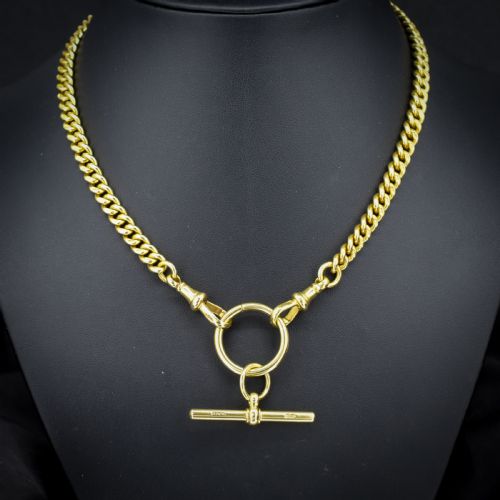
While many survive in their original form as double or single watch chains, modern wearers frequently repurpose them as necklaces. Shorter lengths and graduated link bracelets also feature among these items.
Materials and construction methods
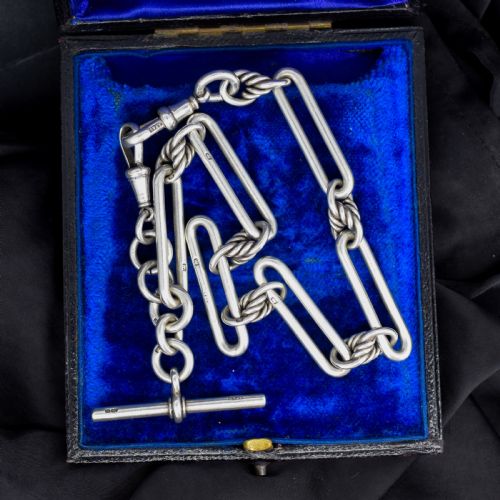
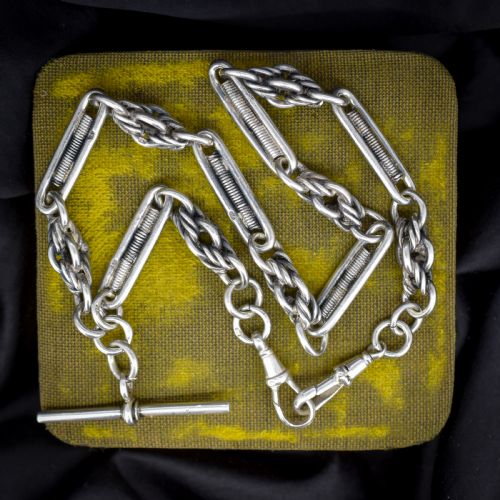
Makers fashioned these chains from sterling silver or yellow gold, shaping individual wire links by hand or machine before soldering them securely. Popular link formations include trombone, curb, and oval patterns, often combined with love knots.
Functional components such as dog clips and swivel clasps were engineered to endure daily use without failing. Hallmarks stamped onto the metal indicate the assay office, metal purity, and year of manufacture.
The markers of finer quality
Quality rests in the crispness of the links and the substantial weight of the metal. Finer chains maintain uniform link wear and retain strong, snappy spring mechanisms in their dog clips.
The presence of clear, legible hallmarks adds historical substance. Elaborate link variations, such as trombone patterns paired with love knots, elevate a piece above standard utilitarian designs.
The Antique Tbar Watch Chain Glossary
- T-bar
- The short transverse bar attached to the centre of the chain, designed to slip through a buttonhole. It anchored the pocket watch securely inside a waistcoat.
- Albert chain
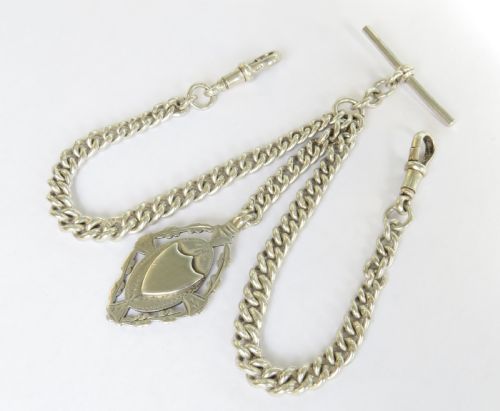
- A specific style of watch chain named after Prince Albert, worn across the front of a waistcoat. It can be single or double-stranded.
- Dog clip
- A spring-loaded clasp attached to the end of the chain for fastening to a pocket watch or fob. The spring mechanism allows for quick attachment and release.
- Trombone link
- A rectangular watch chain link with rounded ends, resembling the slide of a trombone. This form provides an open, geometric look.
- Fob
- A small ornament or medallion attached to a watch chain. It hung below the buttonhole as a decorative counterweight.
Antique Tbar Watch Chain: Frequently Asked Questions
How do you wear a watch chain as a necklace?
Remove any pocket watch and fasten the dog clip directly to one of the links or to the opposite end. This creates a shorter, draped chain that sits comfortably around the neck.
Many wearers keep the T-bar dangling at the front as a decorative pendant feature.
What is the difference between a single and double watch chain?
A single watch chain runs from a single pocket attachment to the watch itself, often featuring a T-bar along its length. A double watch chain has two strands meeting at a central T-bar, allowing a pocket watch on one side and a fob or secondary item on the other.
Double chains offer a heavier, more symmetrical look when repurposed as jewellery.
How can I date my gold watch chain?
Look closely at the individual links and clasps for tiny stamped hallmarks. These marks typically include a purity stamp like nine carat or eighteen carat, alongside assay office symbols and a date letter.
Comparing the letter to official British assay office tables reveals the exact year the metal was tested and marked.
Are these chains suitable for everyday wear?
Solid silver and gold watch chains are robustly constructed for daily use. However, antique dog clips and spring rings require gentle handling to preserve their original springs.
Checking the security of link connections periodically helps prevent accidental loss during regular wear.