




Gold Green Gemstone Pin
A gold green gemstone pin is a wearable piece of historic jewellery, prized for vibrant peridots, malachite, and emeralds set in yellow gold or silver.
Gold Green Gemstone Pin
A gold green gemstone pin unites precious metals with verdant stones, encompassing stick pins, bar brooches, cluster brooches, and pendant brooches. These items originate from the Victorian, Edwardian, and Art Deco periods, alongside the late nineteenth and early twentieth centuries.
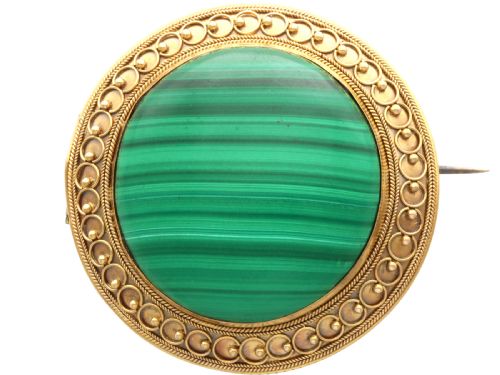
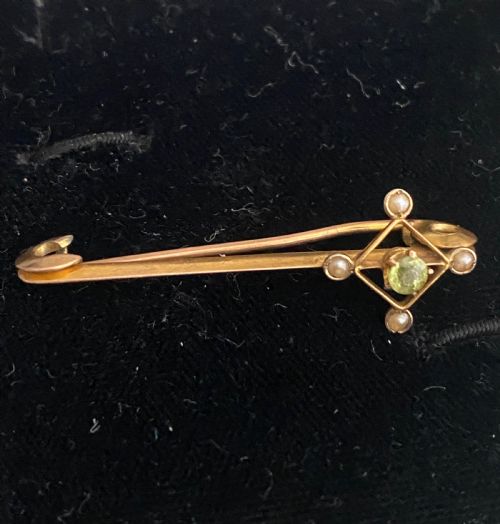
The version most commonly encountered on this page is the Victorian or Edwardian peridot and seed pearl brooch, frequently mounted in nine carat yellow gold. Alongside peridots, examples incorporate emeralds, malachite, chrysoprase, and bloodstone.
Makers and designers from Imperial Russian workshops to French Parisian premises contributed to these forms, utilising intricate trellis work, heart-shaped cabochons, and geometric white gold mountings.
Distinctions in quality
The upper tier of these pieces demonstrates exceptional stone selection, such as substantial emerald or peridot carat weights paired with well-matched diamonds and uniform seed pearls. Metalwork complexity, from detailed trellis designs to high-carat yellow gold and signed French or Imperial Russian provenance, elevates the standard.
Lower-tier examples typically employ simpler bar pin configurations with smaller stones and modest gold purities, lacking the intricate gemological combinations or documented case origins found in premier pieces.
One exceptional nineteenth-century piece arrives complete with its original Paris and Rome address case from Rue de la Paix.
G. Colani
The Gold Green Gemstone Pin Glossary
- Peridot
- A transparent yellowish-green gemstone frequently utilised in Victorian and Edwardian jewellery. It is often set alongside seed pearls in yellow gold mounts.
- Seed Pearl
- A very small natural or cultured pearl, often drilled and threaded, used to accent cluster and bar brooches. They create delicate white borders around central green gems.
- Cabochon
- A gemstone shaped and polished rather than faceted, displaying a smooth, rounded surface. This technique highlights the opaque qualities of stones like malachite and chalcedony.
- Bar Brooch
- A horizontal pin form shaped like a narrow bar, popular throughout the nineteenth and early twentieth centuries. Central gemstones or clusters are mounted directly onto the linear frame.
- Trellis Brooch
- An openwork design resembling a lattice or trellis structure, often supporting multiple gemstones. This intricate metalwork is typical of high-status nineteenth-century pieces.
Gold Green Gemstone Pin: Frequently Asked Questions
What is a gold green gemstone pin?
A gold green gemstone pin is a historic brooch or stick pin featuring green stones such as peridot, emerald, malachite, or chrysoprase set in gold or silver. These items date from the Victorian, Edwardian, and Art Deco eras.
They encompass diverse formats, from simple stick pins to elaborate pendant brooches set with diamonds and seed pearls.
How were these brooches worn historically?
Victorians and Edwardians wore brooches secured to lapels, collars, and bodice fronts, often fastening heavy fabrics or lace. Stick pins served to secure neckties, cravats, or lapels on tailored garments.
Many pieces designed during the Edwardian period also feature hidden bails, allowing the brooch to convert into a pendant worn on a chain.
How do I date a gold green gemstone pin?
Dating relies on identifying the prevailing material combinations, stone cuts, and mounting styles characteristic of specific eras. Victorian pieces frequently feature nine or fifteen carat yellow gold with peridots and seed pearls.
Later Edwardian and Art Deco examples introduce platinum, white gold, geometric rock crystal, and chrysoprase alongside higher carat milestones or specific maker documentation.
How should I care for an antique gemstone pin?
Care requires gentle handling, avoiding ultrasonic cleaners which can damage softer organic gems like pearls or porous stones like malachite. Store each piece separately in a lined box to prevent metal scratching and stone abrasion.
Professional inspection of the pin stem and settings ensures secure wearability without risking historic mountings.