
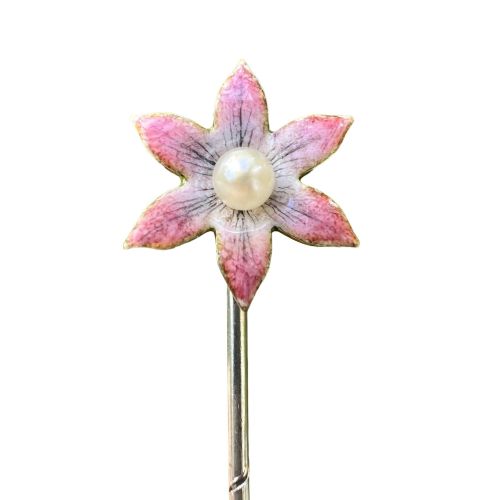


Gold Tie Stick Pin
A gold tie stick pin secures a cravat or lapel with discreet brilliance, spanning Georgian delicacy to Edwardian fancy.
Gold Tie Stick Pin
When searching for a gold tie stick pin, collectors encounter decorative hat and lapel ornaments originating from the Regency, Victorian, Edwardian, and mid-twentieth-century periods. These items feature slender metal shafts topped with ornate heads designed to pierce thick woollen neckwear or silk ties securely.
The pieces appearing on this page encompass varied styles such as Victorian sporting motifs, maritime emblems, and flowing Art Nouveau botanical designs. Miniature portraits, enamel work, and faceted gemstones frequently form the focal point of the upper terminal.
Originating across the nineteenth and twentieth centuries, these accessories serve both utilitarian dress functions and ornamental display. The diverse array ranges from plain nugget forms to diamond-set jockey caps and enamelled floral creations.
How they were made
Goldsmiths utilised different purities of yellow gold, white gold, and platinum to fabricate the structural pins and decorative heads. Precious components such as diamonds, garnets, amethysts, pearls, and Essex crystals were then securely bezel or prong-set into the mountings.
Specialised techniques like vitreous enamelling and miniature portrait painting brought vibrant colour and intricate detail to the upper terminals. Metalworkers also shaped hollow or solid gold into specific thematic forms, including hunting bugles and nautical flags.
Periods represented span from the Regency era through the Victorian and Edwardian decades up to mid-century modern designs.
What varies in quality
The standard of materials and the complexity of the lapel ornament dictate the distinction between simpler examples and superior items. High-grade specimens incorporate finely cut diamonds, natural pearls, and intricate hand-painted enamels rather than basic stamped metal components.
Structural integrity also separates the categories, as rigid pins firmly joined to their decorative heads survive with less distortion. Superior execution shows clean gemstone settings, crisp chasing on the gold, and well-preserved surface finishes across the miniature artworks.
The Gold Tie Stick Pin Glossary
- Stick pin
- A long, slender metal pin topped with a decorative motif, historically worn in cravats, ties, and lapels. The shaft allows the ornament to pass through dense fabric before a small guard secures the end.
- Essex crystal
- A convex rock crystal cabochon reverse-painted with a miniature subject to create a three-dimensional optical illusion. These tiny artworks often depict animals or sporting scenes.
- Rose cut
- An antique diamond cut featuring a flat base and a domed crown with triangular facets. This traditional geometric arrangement produces a soft, shimmering lustre rather than sharp brilliance.
- Baroque pearl
- An irregularly shaped pearl that departs from a perfect sphere. Their unique organic contours provide asymmetrical texture to Edwardian and Victorian jewellery designs.
- Enamel
- Powdered glass fused to a metal surface under high heat to produce vibrant coloured decoration. This vitreous coating guards the underlying gold while adding rich pigments.
Gold Tie Stick Pin: Frequently Asked Questions
How were gold stick pins originally worn?
These decorative pins were primarily pushed through folded cravats, neckties, and lapels to keep tailoring in place.
Gentlemen and ladies used them to fasten neckwear securely while displaying personal interests through heraldic, sporting, or floral motifs.
How do I date a Victorian stick pin?
Dating relies on observing the prevailing artistic style, gemstone cuts, and overall manufacturing techniques of the period.
Items from the nineteenth century often incorporate rose-cut diamonds, specific regional hallmarks, or characteristic motifs like floral enamel and mourning symbols.
Can I wear these pins on modern ties?
Modern neckties utilise thinner silk than nineteenth-century cravats, requiring careful placement to avoid fabric damage.
Wearing them on heavy winter woollens, lapels, or structured scarves provides a stable foundation without straining the delicate metal shaft.