
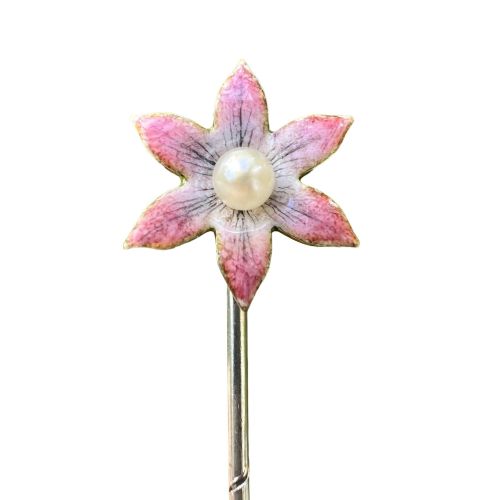


Antique Pearl Tie Pin
An antique pearl tie pin is a refined fastening of gold or platinum, worn to secure a cravat or tie with understated elegance.
Antique Pearl Tie Pin
An antique pearl tie pin is a delicate piece of gentleman's jewellery designed to secure a necktie in place. These items frequently cross paths with stick pins and bar brooches in the record, reflecting the fluid crossover of small dress accessories in past decades.
The selections span the Victorian, Edwardian, and Art Deco eras, capturing the shift from ornate nineteenth-century motifs towards streamlined twentieth-century geometry. Buyers encounter pieces from around nineteen hundred to the nineteen-twenties, incorporating gold, platinum, and diamonds alongside the central pearl.
Victorian examples bring heavy romanticism and equestrian motifs like horseshoes, while Edwardian and Art Deco iterations favour floral enamel, platinum settings, and pink pearls. Such diversity means a buyer can find both subdued daily wear and decorative evening adornments.
Materials and construction methods
The construction relies heavily on combinations of fifteen-carat gold, eighteen-carat gold, and platinum, often pairing yellow gold settings with white platinum tops to enhance diamond sparkle. Enamel work and gemstones such as garnets, rubies, and diamonds are integrated to frame the pearls.
Pearls used range from natural specimens to baroque and pink varieties, secured meticulously onto pins or mounted centrally within bar brooches. Metalwork techniques of the period involve fine wire twists, bezel settings, and structured box mounts.
Current listings span Victorian, Edwardian, and nineteen-twenties periods, employing pearl, gold, platinum, diamond, and enamel.
Assessing quality and craftsmanship
Quality rests in the harmony of the design and the integrity of the materials, such as the crispness of the platinum work against the warmth of the gold. Superior items demonstrate secure pearl mounting and expert integration of secondary stones like diamonds or garnets.
The refinement of decorative elements, whether hand-painted enamel petals or detailed shell carvings, dictates the tier of the piece. Well-preserved original boxes and intact settings further elevate the standing of an item.
The Antique Pearl Tie Pin Glossary
- Bar Brooch
- A horizontal pin featuring a narrow bar design, often set with pearls and gemstones. These frequently share stylistic traits with tie pins from the same era.
- Baroque Pearl
- An irregular, non-spherical pearl prized for its unique organic shape. Such pearls lend an individual character to Edwardian and Victorian settings.
- Stick Pin
- A long pin with a decorative terminal, traditionally used to secure neckties or lapels. Many share interchangeable forms with modern concepts of tie pins.
- Platinum
- A dense, durable white metal utilised extensively in Edwardian and Art Deco jewellery for delicate settings. It allowed artisans to create fine, secure claws around diamonds and pearls.
Antique Pearl Tie Pin: Frequently Asked Questions
How do I wear a pearl tie pin?
Push the pin horizontally through the knot of a tie, securing it to the shirt placket behind. This keeps the tie neat while displaying the decorative head.
Ensure you use the safety cap if provided to protect the fabric and prevent loss during movement.
Are these pins made of real gold?
The listings feature genuine fifteen-carat and eighteen-carat gold, alongside platinum and white gold. These metals were standard for quality jewellery of the Victorian and Edwardian periods.
Hallmarks and metal tests help verify the specific gold standard used by the maker.
How do I date an antique pearl pin?
Dating relies on stylistic clues, such as the floral motifs of Art Nouveau or the geometric lines of Art Deco pieces from nineteen-twenty. Material choices like platinum paired with yellow gold also point directly to the Edwardian era.
Examining the construction of the pin stem and catch provides further chronological context.
How do I care for antique pearls?
Wipe pearls gently with a soft, damp cloth after wearing to remove oils and acids. Store them away from harder jewellery to prevent scratching their delicate nacre.
Avoid exposing antique pearls to harsh chemicals, perfumes, or ultrasonic cleaners.