


Victorian Paste Brooch
A Victorian paste brooch brings bright candlelight brilliance to a lapel, offering the look of high-value gems through masterfully cut glass.
Victorian Paste Brooch
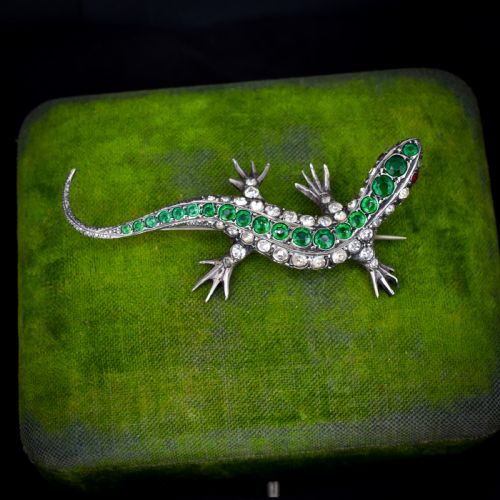
The version you are most likely to meet on this page is a silver or silver-gilt mounting set with hand-cut paste stones, shaped as crescents, flower sprays, or animal motifs such as lizards and swallows. Many examples survive from the nineteenth century, including rarer jewellery sets and demi-parures.
Makers of the period utilised various stylistic revivals, producing pieces in Georgian styles, Etruscan Revival, and French nineteenth-century designs. These jewels served as fashionable accessories for daily wear and evening events alike, prized for their visual impact rather than intrinsic stone value.
What varies in quality
Quality separates pieces through the precision of stone cutting and the complexity of the metal mounting. Hand-cut old stones with clean facets and secure prong settings sit at the upper end of the range.
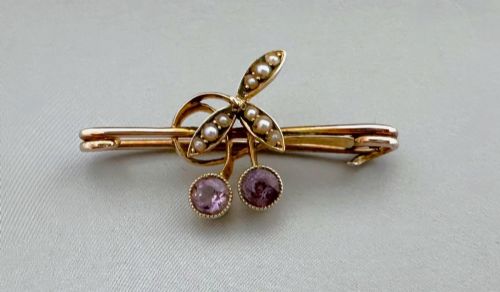
The choice of precious metal also defines the grade of the item, with solid nine-carat gold and substantial silver-gilt frames marking superior manufacture compared to lighter base metal alternatives.
Lizards scale your lapel in sparkling green glass, proving that Victorian insects had remarkably good taste.
The Victorian Paste Brooch Glossary
- Paste
- Hand-cut and polished lead glass used to imitate gemstones. It captures light with exceptional clarity and colour.
- Giardinetti
- A small garden design of jewellery featuring baskets or vases filled with floral paste stones. This style originated in the eighteenth century and continued into the Victorian era.
- Demi-parure
- A matched set of jewellery containing fewer pieces than a full parure, usually consisting of a brooch and matching earrings. These sets offer coordinated styling for formal wear.
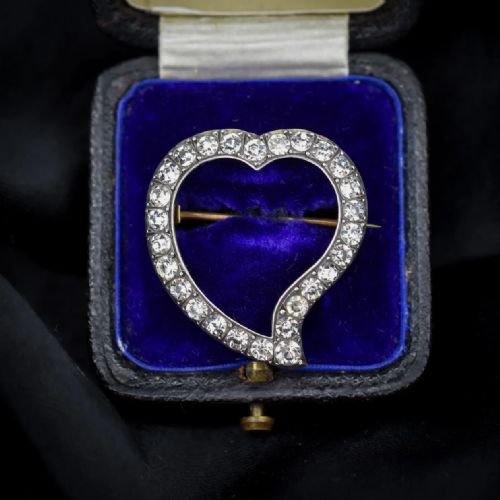
- Witches heart
- An amulet shape with a twisted tail, popular in historic jewellery symbolising affection and protection. Makers often set these forms with coloured paste stones.
- Silver gilt
- Silver that has been coated with a thin layer of gold. This technique provides the warmth of gold with a silver base.
Victorian Paste Brooch: Frequently Asked Questions
How do I clean a victorian paste brooch?
Clean these items with a dry or slightly damp soft cloth, avoiding liquid immersion. Moisture can seep behind foiled stones and ruin the reflective backing.
Store them separately to prevent scratching the softer glass surfaces against harder metals or other gems.
Were paste brooches worn during the day?
Victorian society wore paste jewellery for both daytime gatherings and evening events. Their bright sparkle made them versatile accessories for collars, hats, and heavy woollen shawls.
They provided fashionable elegance without requiring the wearer to risk loss of high-value precious gemstones in public spaces.
How do I spot foiled paste stones?
Look closely at the back of the stones through a loupe to check for a thin reflective sheet of metal or foil placed beneath the glass. This foil intensifies the colour and sparkle of the paste.
Avoid getting foiled pieces wet during cleaning, as trapped water ruins the foil layer permanently.
What motifs are common on these brooches?
Natural and celestial themes dominate the designs, including crescents, stars, flower sprays, swallows, and lizards. These subjects reflected nineteenth-century romanticism and an appreciation for the natural world.
Animal and floral forms often incorporated coloured paste stones like green emerald imitations or golden topaz hues.