
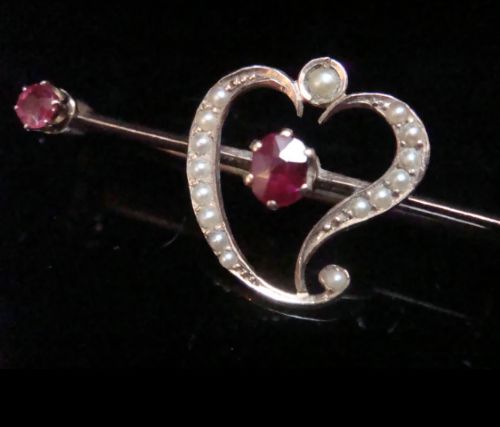


Antique Heart Pin
An antique heart pin is a sentimental jewel or desk accessory designed around the universal motif of affection, spanning Victorian gold brooches and Edwardian trinket holders.
Antique Heart Pin
An antique heart pin encompasses wearable brooches, stick pins, and desk pieces such as pin cushions and trinket dishes shaped around the enduring motif of the heart. These items bridge multiple eras, appearing frequently in Victorian romantic designs and Edwardian iterations.
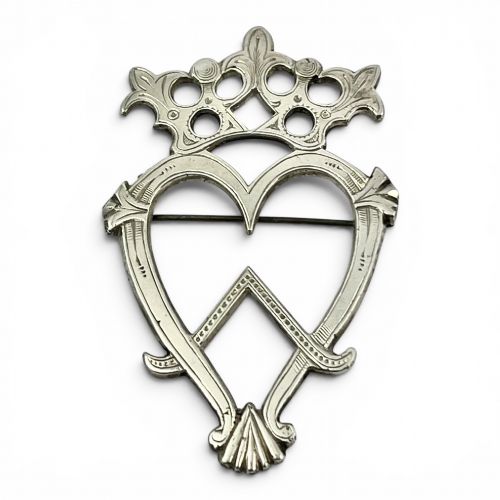
The selections available here lean heavily toward breast ornaments and lapel fastenings alongside smaller silver desk objects. Gold and silver form the foundational bodies, often accompanied by targeted gemstone embellishments.
Makers shaped these sentimental objects to serve as tokens of devotion, mourning, or fashionable adornment. The range spans simple sterling silver stampings to elaborate multi-stone compositions set in higher-karat gold.
Materials and construction methods
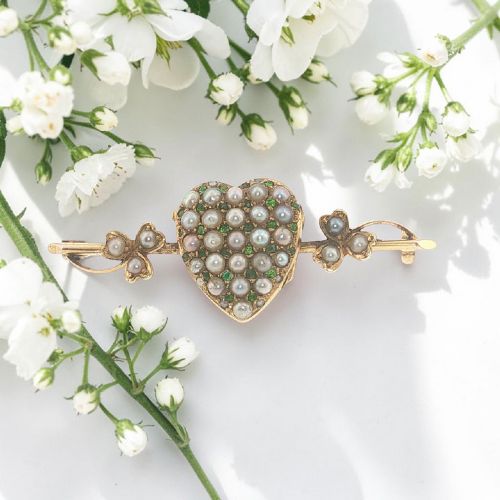
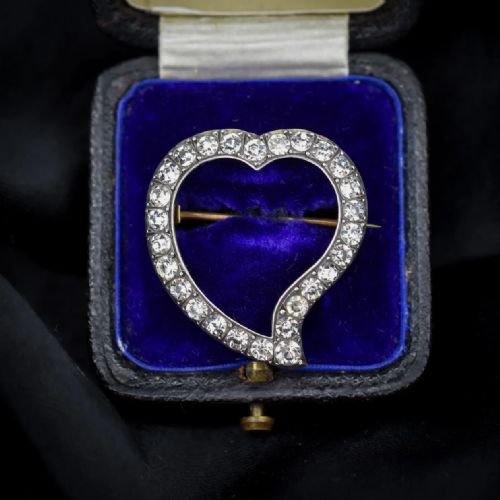
Metals span sterling silver, 9ct, 15ct, and 18ct gold, alongside platinum and base metal alloys utilised in paste settings. Jewellers combined these structural metals with precious and semi-precious stones including diamonds, rubies, turquoises, pearls, and garnets.
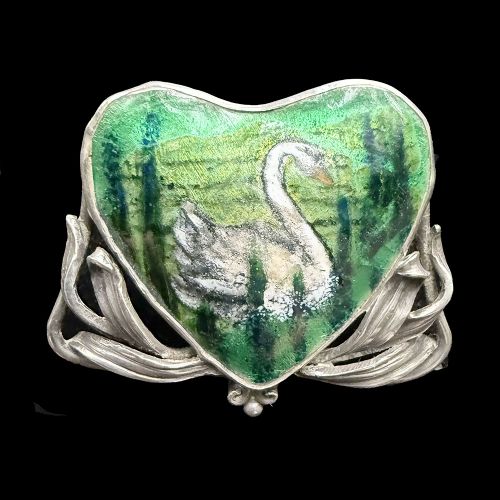
Techniques relied heavily on hand fabrication, casting, and piercing work to shape the precious metals into curved heart outlines. Enamelling methods, notably plique-à-jour and coloured transparent coats, added vibrant colour panels to silver and gold frameworks.
Gemstones were secured using various mounting styles, from claw and bezel settings to flush star settings in solid gold backplates. Seed pearls and tiny turquoises were often pegged or glued into drilled channels following traditional period practises.
Object forms cover wearable brooches and stick pins alongside desk items like silver pin cushions and trinket dishes.
Differentiating quality across pieces
Quality rests on the depth of hand execution, the weight and purity of the gold or silver chassis, and the selection of the stones. Pieces featuring clean gem cutting, intact enamel work, and robust pin mechanisms stand apart from mass-produced stamped alternatives.
The complexity of the design plays a primary role, separating simple silver outlines from multi-gem clusters set with diamonds and natural pearls. Maker marks and secure original fittings contribute further weight to the standing of a piece.
George W Shiebler·Mappin & Webb
The Antique Heart Pin Glossary
- Paste
- Faceted glass cut and polished to imitate gemstones. It appears frequently in Georgian and Victorian jewellery for high-impact sparkle.
- Plique-à-jour
- An enamelling technique where enamel is applied without a backing metal, resembling miniature stained glass. Light passes directly through the translucent colour.
- Cabochon
- A gemstone shaped and polished with a smooth, convex dome rather than faceted edges. This cut highlights the natural texture of materials like turquoise, chalcedony, and opal.
- Stick pin
- A long pin topped with a decorative motif, designed to secure cravats, scarves, or lapels. The top ornament often mirrors the heart designs found on larger brooches.
Antique Heart Pin: Frequently Asked Questions
How do I wear an antique heart pin?
Secure the pin through heavy fabrics such as wool coat lapels, scarves, or thick knit sweaters to support the weight of the metal and stones safely.
Ensure the safety catch or c-clasp is firmly engaged before wearing to prevent the piece from slipping off during movement.
Were these pins used only as jewellery?
Many examples served as personal ornaments on clothing, while others functioned as household items on dressing tables and desks.
Objects such as silver pin cushions, trinket dishes, and hatpin stands brought the heart motif into domestic interior spaces.
How can I tell Victorian from Edwardian pieces?
Victorian items often display heavier gold weights, darker garnet or turquoise stones, and sentimental motifs linked to romance or remembrance.
Edwardian pieces generally favour lighter platinum or silver-topped gold frameworks, airy pierced openwork, and brighter arrangements of diamonds and seed pearls.
How do I care for antique gemstone pins?
Clean silver and gold components gently with a soft dry cloth, avoiding harsh chemical dips that damage pearls, turquoise, and enamel.
Store the pin in a padded box away from direct sunlight and moisture to protect delicate seed pearls and fragile historic settings.