


Edwardian Heart Pin
An edwardian heart pin carries the sentiment of its era in gold, silver, and precious stones.
Edwardian Heart Pin
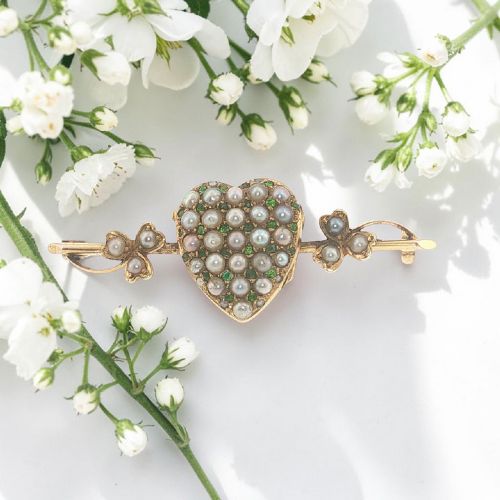
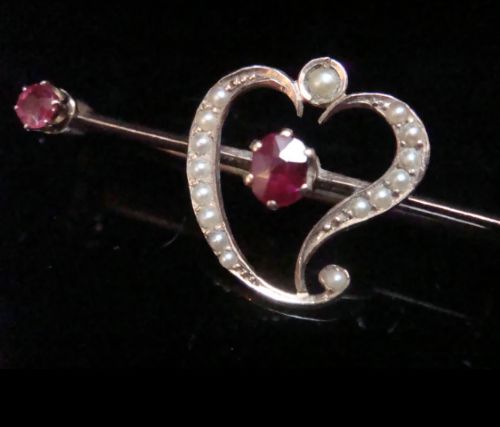
The edwardian heart pin brings together the romantic motifs of the early twentieth century and the fine craftsmanship of the period. These pieces take the form of brooches, stick pins, and hatpins, often incorporating delicate drops or bows.
Most examples found in these listings date from the Edwardian era and the late Victorian period, spanning into the nineteen-thirties. Buyers encounter everything from simple silver designs to elaborate gold mountings set with diamonds, turquoise, and pearls.
Beyond standard brooches, the selection includes functional items shaped around the heart motif, such as silver pin cushions and pin trays. These domestic pieces share the same decorative vocabulary as personal jewellery.
Materials and Manufacture
Goldsmiths and silversmiths utilised nine-carat gold, fifteen-carat gold, and sterling silver as the primary metals for these pins. Stones such as pearls, seed pearls, turquoise, diamonds, and garnets were then set by hand into the metal framework.
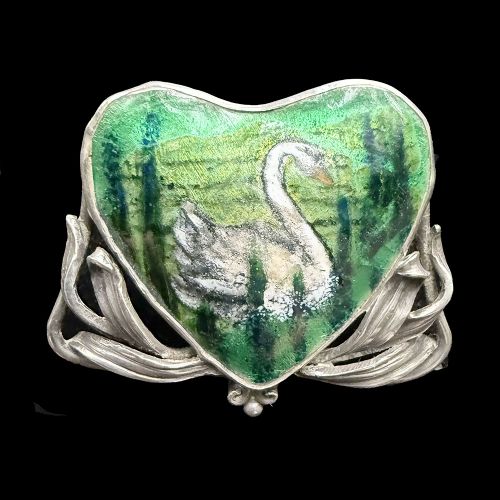
Enamelling techniques, including plique-à-jour, added translucent colour to silver and gold backgrounds. Artisans also employed fine wirework and casting to create intricate bows, wings, and ivy leaves framing the central heart.
Art Nouveau and Arts and Crafts design influences appear alongside mainstream Edwardian and Victorian aesthetic standards.
Evaluating Quality
Quality rests on the selection and matching of stones, from uniform seed pearls to bright old-cut diamonds. Metalwork precision also distinguishes finer pieces, visible in the crispness of a bow casting or the evenness of enamel work.
The integration of secondary decorative elements, such as articulated drops or winged mounts, dictates the complexity of the piece. Preservation of original fitted boxes and hallmarks further influences the standing of an item.
The Edwardian Heart Pin Glossary
- Plique-à-jour
- An enamelling technique where translucent enamel is fired in open cellular metal frames, resembling miniature stained glass. This method allows light to pass directly through the coloured glass.
- Seed pearl
- A very small natural pearl, often drilled and threaded onto fine wire or silk. These pearls frequently edge or fill central motifs in period jewellery.
- Old-cut diamond
- A hand-faceted diamond cut before modern machine precision methods were developed. These stones possess smaller tables and deeper pavilions that catch candlelight effectively.
- Turquoise
- An opaque blue-to-green mineral frequently used in Victorian and Edwardian cluster jewellery. It contrasts sharply with yellow gold settings.
Edwardian Heart Pin: Frequently Asked Questions
How were edwardian heart pins worn?
These pins were typically fastened to lapels, bodices, or hats as decorative accessories during the early twentieth century. Hatpins and stick pins served both a functional purpose in securing garments and a purely ornamental one.
Today, collectors often wear them on modern coats or scarves, or display them mounted in shadow boxes when not in personal use.
Are these pins made of solid gold?
Many period pieces utilise solid nine-carat or fifteen-carat gold for the structural body and settings. Hallmarks stamped onto the metal often indicate the exact gold standard and assay office origin.
Silver was also commonly employed, particularly in pieces featuring enamel work or old-cut diamond pavé settings.
How do I distinguish Edwardian from Victorian pieces?
Edwardian jewellery generally favours lighter, more delicate filigree work and pastel stones like pearls and turquoise set in platinum or lighter gold. Victorian pieces often display heavier proportions and deeper colour saturation in the gemstones.
Overlap occurs frequently around the turn of the century, making hallmarks and specific stylistic flourishes key to dating.
How should I care for antique silver and gold?
Gentle cleaning with a soft, dry microfiber cloth helps maintain the metal shine without damaging delicate seed pearls or enamel. Harsh chemical dips must be avoided because they strip the natural patina and ruin softer stones.
Storing pieces individually in fabric pouches prevents scratching from other items in a collection.