
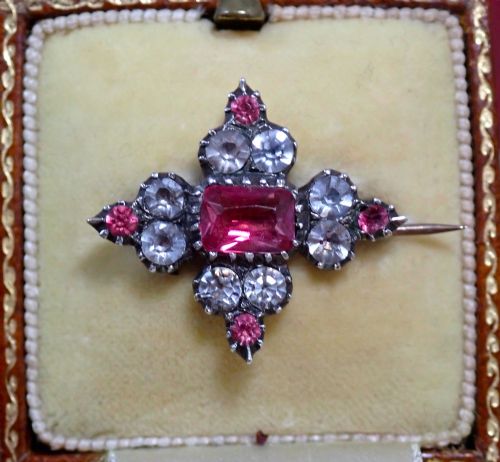


Silver Topped Brooch
A silver topped brooch brings together bright metal and old stone, offering a tangible piece of Georgian, Victorian, or Edwardian history to wear today.
Silver Topped Brooch
A silver topped brooch is typically encountered as a fine piece of jewellery spanning the Georgian, Victorian, and Edwardian periods, presented in forms ranging from simple bar brooches to elaborate star motifs. Buyers searching for a silver topped brooch will frequently find items that double as pendants, offering versatility in how the piece can be worn.
The selections span distinct historical eras, with Victorian and Edwardian examples appearing regularly alongside earlier Georgian pieces. These items take diverse shapes, including bows, hearts, birds, flies, and geometric stars, reflecting the changing tastes of the nineteenth and early twentieth centuries.
Materials and construction
These pieces are constructed using a combination of silver and gold, frequently pairing silver at the front to showcase the stones with yellow gold, 9ct gold, 15ct gold, or 18kt gold at the reverse or mount. This dual-metal technique allowed makers to utilise bright silver for optimal stone settings while retaining the strength and warmth of gold.
Gems such as diamonds, paste glass, pearls, rubies, and labradorite are integrated into the designs using old European cuts, rose-cut diamonds, and black dot techniques. Metalwork and stone setting were executed by hand, creating secure housings for complex motifs like swallows, stars, and tiaras.
Listings feature items spanning the Georgian, Victorian, and Edwardian periods, incorporating diamonds, rubies, pearls, paste glass, and labradorite set in silver and gold.
Factors in quality
Quality in these items is determined by the precision of the stone setting and the complexity of the design, such as multi-carat diamond starbursts or convertible pendant mechanisms. The integration of contrasting materials, including the crispness of the silver top against the underlying gold mount, dictates the visual success of the piece.
The refinement of hand-cut stones, whether old European cut diamonds or ruby paste glass, separates standard production from superior examples. Preservation of the original form, particularly in convertible items or fitted boxes, adds to the standing of a piece.
The Silver Topped Brooch Glossary
- Silver topped
- A construction method where silver is applied to the front face of a piece of jewellery to enhance the brilliance of set stones, backed by gold for structural support. This technique was standard practice before all-platinum or all-white gold settings became common.
- Rose-cut diamond
- A gemstone cut featuring a flat base and a domed crown faceted with triangular shapes resembling an unopened rosebud. This style produces a soft, translucent gleam rather than modern brilliance.
- Paste glass
- High-refractory glass expertly cut and polished to imitate gemstones like diamonds or rubies. Georgian and Victorian jewellers utilised paste to achieve dramatic effect and deep colour.
- Convertible pendant
- An item designed with hidden loops or detachable fittings allowing it to be worn interchangeably as a brooch or suspended from a chain as a pendant.
Silver Topped Brooch: Frequently Asked Questions
How do I wear a silver topped brooch?
These pieces attach securely to heavy fabrics like wool coats, scarves, or tailored jackets using traditional pin and catch mechanisms. Many examples feature hidden loops that let you thread a chain through the back to wear them as pendants.
Because antique pins and catches differ from modern safety fasteners, handle the fastenings with care when securing them to your garments.
Are these pieces suitable for daily wear?
While these items were built to last, their age and delicate settings mean they require thoughtful handling. Avoid wearing them during rigorous physical activities or exposing them to harsh household chemicals.
Strokes of care, such as storing them flat in lined boxes, will protect the delicate silver tops and gold mounts from unnecessary friction.
How can I tell the period of a brooch?
Dating relies on observing the design motifs, stone cuts, and metal combinations present in the item. Georgian pieces often feature closed-back settings and paste, while Victorian items frequently showcase starbursts and old European cut diamonds.
Edwardian examples lean towards lighter, airier motifs like swallows and bows executed in gold and silver.
What is the difference between gold and silver tops?
The silver top sits on the face of the jewellery because its bright white colour complements diamonds and hides behind stones effectively. The gold underneath provides the necessary strength and prevents tarnish from transferring to clothing.
This two-metal approach was a hallmark of fine jewellery manufacturing before modern platinum alloys took over.