

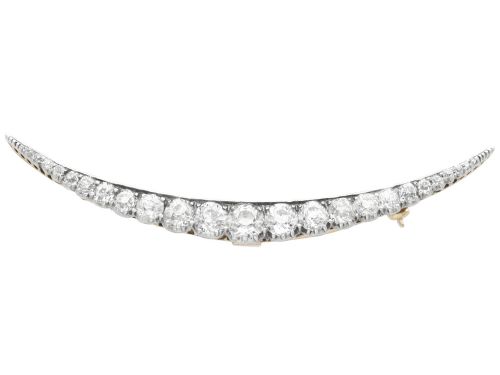
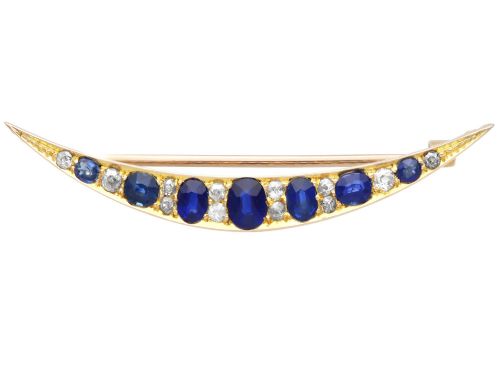
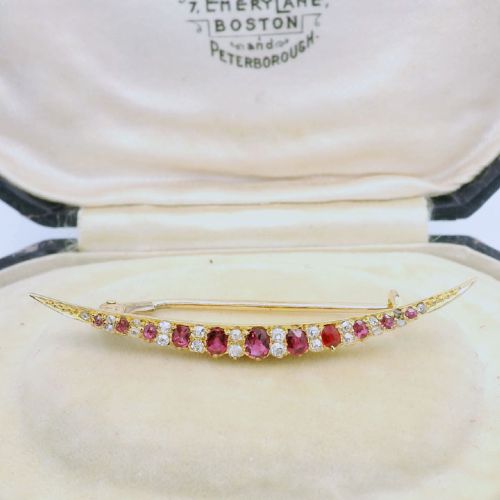


Gold Diamond Moon Brooch
A gold diamond moon brooch captures the celestial fascination of the nineteenth and early twentieth centuries, offering a sparkling crescent set with precious stones.
Gold Diamond Moon Brooch
A gold diamond moon brooch takes the form of a celestial crescent, blending romantic symbolism with fine jewellery craftsmanship from the Victorian, Edwardian, and Art Deco eras. Buyers searching for a gold diamond moon brooch will find pieces that frequently incorporate vibrant gemstones alongside diamonds, creating striking colour contrasts against yellow gold, rose gold, or platinum.
The selections available span from late Victorian creations to Edwardian and 1920s examples, reflecting shifting tastes in gemstone weight and metal combinations. Most pieces function primarily as brooches, though convertible designs also appear that allow the crescent to be worn as a pendant.
How they were made
Craftsmen built these crescents using a variety of foundational metals, notably 8ct, 9ct, 15ct, 18ct yellow and rose gold, alongside platinum and silver settings that enhanced the brilliance of the stones. Gemstones including rubies, sapphires, turquoises, and pearls were meticulously flush-set or claw-set into the curved gold bodies alongside diamonds.
The construction often combines traditional yellow gold backing with platinum or silver topped sections on the face, a technique designed to make white diamonds appear brighter and more cohesive against the dark of night represented by the crescent.
Gold Diamond Moon Brooch Retail Price Guide 2026
Typical asking prices for gold diamond moon brooch among the pieces listed under this phrase on Sellingantiques today, from the lower quarter to the upper quarter. They describe what is for sale here now, not the wider market.
Listings feature yellow gold, rose gold, and platinum materials paired with diamonds, rubies, sapphires, turquoises, and pearls across Victorian and Edwardian periods.
What varies in quality
Quality in these crescents rests upon the scale and matching of the central gemstones, where substantial rubies or sapphires command attention alongside carefully graded diamond accents. The choice of metal also dictates the calibre of the piece, moving from lower karat yellow golds up to finer 18ct gold and platinum combinations.
The finesse of the setting work and the structural integrity of the curved pin mechanisms determine how well the jewel holds its stones over generations of wear. Pieces that integrate multiple stone types, such as pearls and turquoise alongside diamonds, demonstrate higher complexity in lapidary arrangement.
The Gold Diamond Moon Brooch Glossary
- Crescent brooch
- A decorative pin shaped in the profile of a waxing or waning moon. This curving silhouette was immensely popular during the late nineteenth and early twentieth centuries.
- Platinum
- A dense, silvery-white precious metal utilised heavily in Edwardian jewellery for its strength and ability to hold small diamond settings securely without tarnishing.
- Ruby
- A pink to blood-red coloured gemstone of the mineral corundum. In these crescents, rubies frequently alternate or pair with diamonds to create rich colour contrast.
- Turquoise
- An opaque, blue-to-green mineral prized in Victorian jewellery for its distinct robin-egg hue. It often provides a soft pastel counterpoint to sparkling diamonds.
Gold Diamond Moon Brooch: Frequently Asked Questions
How do I wear a crescent brooch?
These pieces pin securely onto lapels, scarves, or evening wear using traditional pin and C-clasp mechanisms common to antique jewellery. Some examples feature hidden loops that allow them to suspend from a chain as a pendant.
When pinning to heavier fabrics, ensure the backing cloth is thick enough to support the weight of gold and gemstones without pulling.
What periods do these brooches come from?
The pieces span the Victorian, Edwardian, and early twentieth-century eras, generally dating from around 1880 through the 1920s. Victorian examples often lean towards warmer yellow golds and diverse gemstone combinations.
Edwardian and later pieces frequently introduce platinum tops and brighter white metals to enhance the sparkle of the diamonds.
Are rubies always used with diamonds?
Rubies appear frequently alongside diamonds in these celestial designs, providing a deep red contrast to the white stones. However, other gems such as sapphires, pearls, and turquoise also appear.
The choice of accompanying gemstone often defines the visual weight and dating of the specific piece.
How do I clean an antique gold brooch?
Antique jewellery requires gentle care to protect soft stones like pearls or turquoise and to preserve delicate claw settings. Warm water and a soft brush remove everyday dust without harsh chemical exposure.
Professional ultrasonic cleaning should be avoided if the piece contains pearls or closed-back foils.