
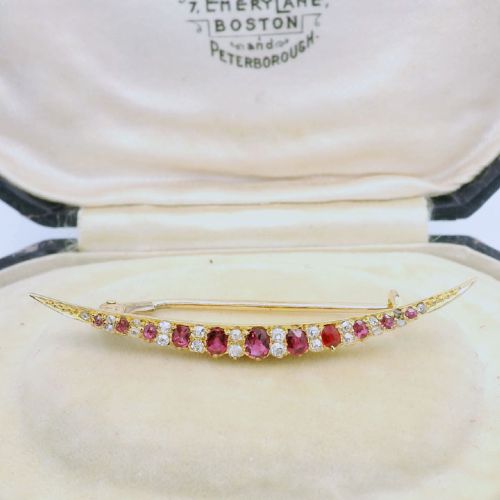


Gold Crescent Pin
Gold crescent pin jewellery offers curved rows of gemstones and pearls, combining Victorian sentiment with Edwardian elegance for everyday wear.
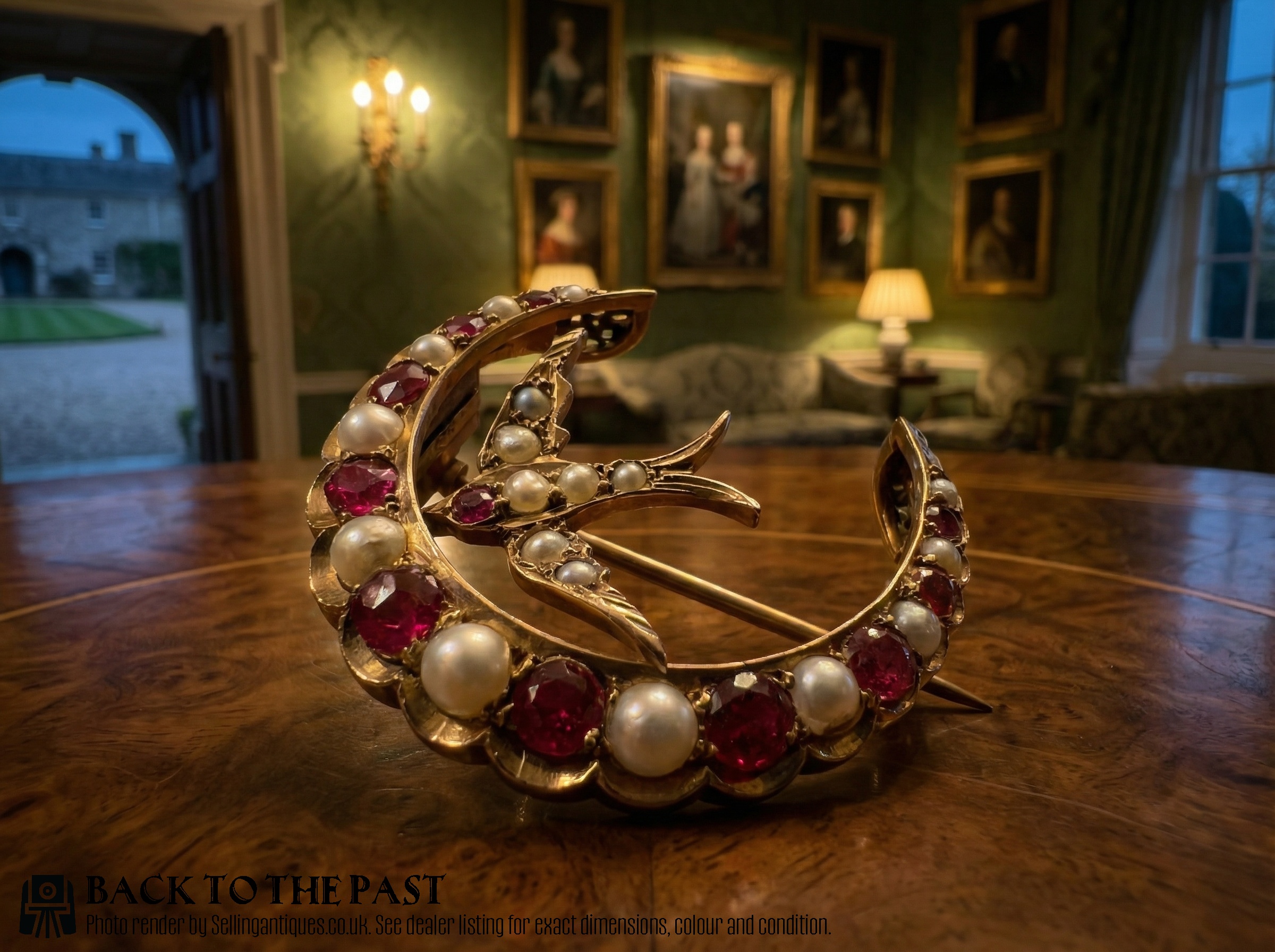
Gold Crescent Pin
A gold crescent pin takes the shape of the moon, styled either as a simple curved bar or embellished with floral motifs, swallows, and stars. These pieces primarily date from the Victorian, Edwardian, and Art Deco periods, capturing the late nineteenth and early twentieth century fascination with celestial symbolism.
How they were made
Goldsmiths constructed these pieces using 9ct, 15ct, and 18ct yellow and rose gold, occasionally incorporating platinum and silver settings on the face to brighten diamond work. Metal was drawn into wire, cast into bar mounts, or hand-fabricated to support the curved crescent shape.
Gemstones such as diamonds, rubies, sapphires, and turquoise were flush-set, grain-set, or star-set into the gold surface, while pearls and seed pearls were threaded or pegged onto central posts. These traditional bench techniques ensured the stones followed the tight curve of the crescent.
Materials recorded across the inventory include diamonds, seed pearls, turquoise, rubies, and unheated sapphires set in 9ct and 15ct gold.
What varies in quality
The grade of the gold and the weight of the precious stones dictate the standing of each piece, distinguishing modest 9ct examples from heavier 15ct or 18ct mountings. Natural untreated rubies and sapphires of significant weight elevate the standard above smaller, routine melee stones.
Precision in the arrangement of the gems and the delicacy of subsidiary motifs like swallows, forget-me-nots, or stars separate ordinary workshop output from finer maker production. The harmony between the curve of the gold and the sizing of the graduated pearls defines the visual balance.
The Gold Crescent Pin Glossary
- Crescent brooch
- A curved brooch shaped like a waxing or waning moon. It became especially popular during the late Victorian and Edwardian eras.
- Seed pearl
- A very small, naturally formed or early cultured pearl, frequently drilled and strung along pins or set closely in clusters.
- Bar brooch
- A brooch featuring a straight metal shaft or bar as its primary structural element, sometimes combined with a crescent motif.
- Stick pin
- A long pin with an ornamental head designed to secure neckties, lapels, or scarves. The head often mirrors the design of larger brooches.
- Unheated sapphire
- A sapphire that has undergone no thermal enhancement to improve its natural colour or clarity. Such stones are prized by collectors for their untutored origins.
Gold Crescent Pin: Frequently Asked Questions
How are gold crescent pins worn today?
These pieces pin neatly to coat lapels, silk scarves, or heavy knit jumpers, bringing a discreet touch of period character to contemporary outfits.
Smaller stick pin variants secure neatly into shirt collars or neckties, while larger crescent brooches work well centered on jacket fastenings.
What periods do these pins come from?
The pieces seen here stem primarily from the Victorian and Edwardian eras, spanning the late nineteenth century through the early twentieth century.
A small number extend into the Art Deco period, showing slight shifts toward geometric platinum and white gold settings.
How can I tell Victorian from Edwardian pieces?
Victorian designs often utilise heavier yellow gold, richer rubies, and turquoise, frequently incorporating mourning or sentimental motifs like forget-me-nots.
Edwardian examples lean towards lighter rose and yellow gold, platinum-topped mounts, and delicate combinations of diamonds, pearls, and sapphires.
What metals were used for the pins?
Makers relied on various gold purities including 8ct, 9ct, 15ct, and 18ct yellow and rose gold, depending on the region of origin and the period.
Later Edwardian versions occasionally introduced platinum and silver overlays on the front to contrast with the warm gold backs.