
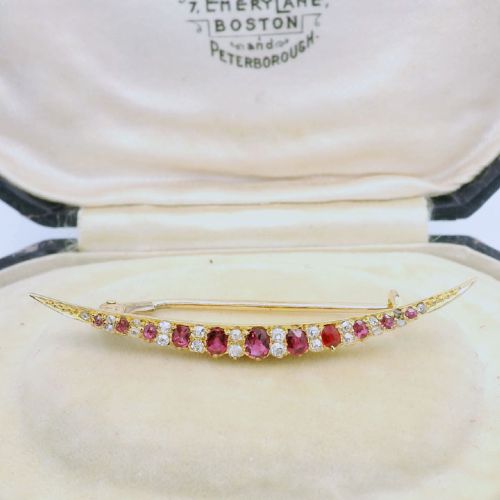


Antique Crescent Pin
An antique crescent pin carries the quiet elegance of the late nineteenth and early twentieth centuries, prized for its celestial form and fine gemstone settings.
Antique Crescent Pin
When you search for an antique crescent pin, you are looking at small brooches and stick pins shaped like the moon, frequently set with pearls, rubies, sapphires and diamonds. These pieces originate primarily from the Victorian, Edwardian and Art Deco periods, spanning the late nineteenth century into the nineteen-twenties.
The most common versions on this page are yellow gold crescent brooches embellished with seed pearls and bright gemstones, alongside occasional silver paste pieces and stick pins. They capture a distinct fascination with celestial motifs that dominated jewellery design during these decades.
How they were made
Goldsmiths worked chiefly in nine carat, fifteen carat and eighteen carat yellow gold, sometimes mounting stones in silver or platinum to enhance the brilliance of the diamonds. Gemstones such as rubies, sapphires and turquoise were carefully cut and flush-set or claw-set along the curved frame.
Pearls and seed pearls were meticulously drilled and secured onto pins or wires to follow the graceful arc of the crescent moon. Construction often involved hollow-backed stampings or solid cast frames fitted with traditional pin stems and C-clasps.
Several pieces quietly incorporate tiny swallows mid-flight beside the moon, capturing a fleeting Victorian obsession with avian symbolism.
What varies in quality
The distinction between average and exceptional pieces lies in the choice and graduation of the gemstones, where well-matched natural rubies or sapphires elevate the entire design. The delicacy of the goldwork and the precision with which seed pearls are graded along the curve also dictate the calibre of the piece.
Better examples maintain integrity in their mechanical components, such as sturdy pin hinges and secure closures, whilst retaining crisp detailing in the underlying metalwork. Superior weight and higher carat gold content further separate standard production items from finer jewelled commissions.
The Antique Crescent Pin Glossary
- Crescent
- A jewellery motif shaped like a waxing or waning moon, symbolising change and female empowerment in period design.
- Seed pearl
- A very small, naturally formed or cultured pearl used extensively in clusters and border settings on nineteenth-century jewellery.
- Stick pin
- A long pin with a decorative ornamental head, designed to be worn secured vertically through the lapel of a coat or a cravat.
- Paste
- Hand-cut lead glass used as a substitute for gemstones, highly valued in antique pieces for its brilliance and distinct refractive quality.
- Bar brooch
- A narrow horizontal metal bar that supports a central decorative element, such as a crescent moon, across its span.
Antique Crescent Pin: Frequently Asked Questions
How do I wear a crescent pin?
These pins work well secured to the lapel of a tailored blazer, fastened at the neckline of a blouse, or pinned to a woollen scarf. Their compact size makes them adaptable for everyday wear.
For a different look, a stick pin version can be slipped into a lapel buttonhole or used to fasten a knitted shawl. Ensure the fabric is sufficiently robust to support the weight of the gold and gemstones.
Were these pins worn as symbols?
Celestial motifs held significant sentimental meaning during the Victorian and Edwardian eras, often representing constancy, growth or a new beginning. The addition of forget-me-nots or specific gemstones added layers of romantic personal significance.
Many of these jewels were given as tokens of affection between family members or romantic partners. The crescent shape itself remained a popular emblem of the heavens throughout the late nineteenth century.
How do I tell Victorian from Edwardian pieces?
Victorian crescent pins tend to feature warmer yellow gold alloys, often fifteen carat, combined with heavier mountings and deep-coloured rubies or garnets. The overall aesthetic leans towards robust sentimentality.
Edwardian examples frequently incorporate platinum or silver-topped gold settings to showcase brighter diamonds and sapphires with lighter, airier frameworks. This reflects the transition towards a more delicate aesthetic after nineteen hundred.
Are these pieces suitable for daily use?
Antique crescent pins can be worn regularly provided they are handled with care and stored safely when not in use. The older clasps and delicate pin stems require gentle management.
It is wise to remove them before engaging in strenuous physical activity or housework to protect the tiny seed pearls and gemstone settings from impact.