


Red Ruby Brooch
A red ruby brooch brings together brilliant red corundum and precious metals, offering a wearable piece of history from Georgian, Victorian, Edwardian and Art Deco periods.
Red Ruby Brooch
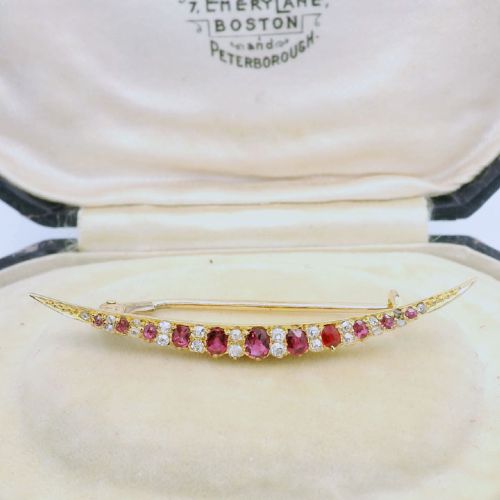
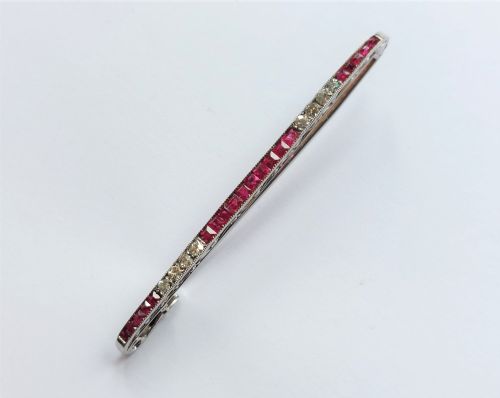
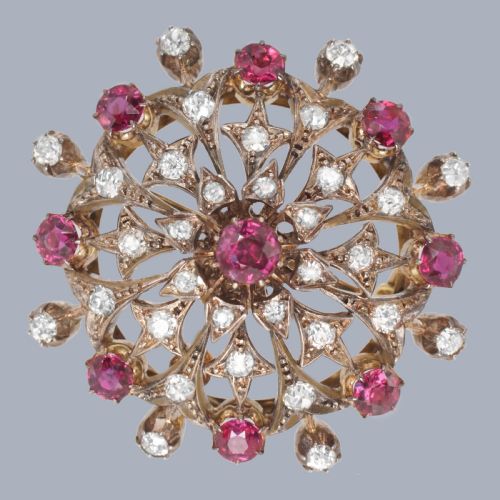
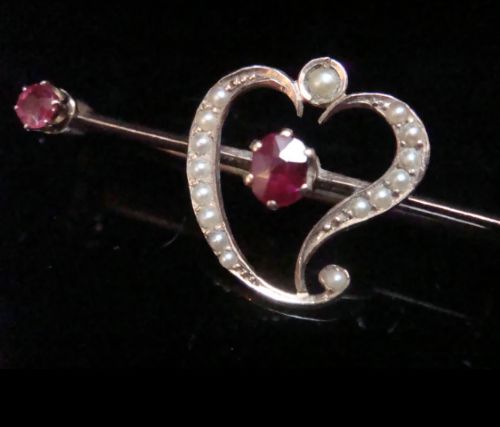
A red ruby brooch is a wearable ornament set primarily with rubies, frequently accompanied by diamonds, pearls or paste glass. These pieces take various forms including crescent shapes, bar pins, hearts and pendant brooches.
Buyers browsing this selection will most often encounter crescent and bar brooch designs dating from the Victorian and Edwardian eras, alongside Georgian and Art Deco examples. The configurations range from simple 9ct gold pins to substantial 18K gold and platinum mounts.
The materials span natural untreated rubies, Thai and Burma origins, and paste glass substitutes set in silver, gold, and platinum. Such variety reflects changing jewellery fashions across the nineteenth and early twentieth centuries.
Materials and construction
The construction of these pieces relies on traditional metalworking techniques utilising gold, silver and platinum. Jewellers combined 9ct, 15ct and 18K gold alongside silver and platinum settings to secure the gemstones.
Gemstones including rubies, diamonds, seed pearls and paste glass are mounted into intricate crescent, heart and bar formations. Metal combinations such as silver-topped gold are frequently observed in earlier Georgian and Victorian examples.
Distinguishing quality in pieces
Quality varies significantly through the origin and treatment of the rubies, ranging from natural untreated stones with gem reports to paste glass alternatives. The choice of precious metal, such as platinum combined with 18kt gold versus standard 9ct gold, also defines the tier of the piece.
The precision of the stone setting and the integration of supporting diamonds and pearls dictate the overall standard of craftsmanship. Pieces retaining original configurations and documented gem reports represent the higher end of the range.
The Red Ruby Brooch Glossary
- Crescent brooch
- A crescent-shaped pin design popular in the Victorian and Edwardian periods. These typically feature graduated rubies and diamonds following the curved metal frame.
- Paste glass
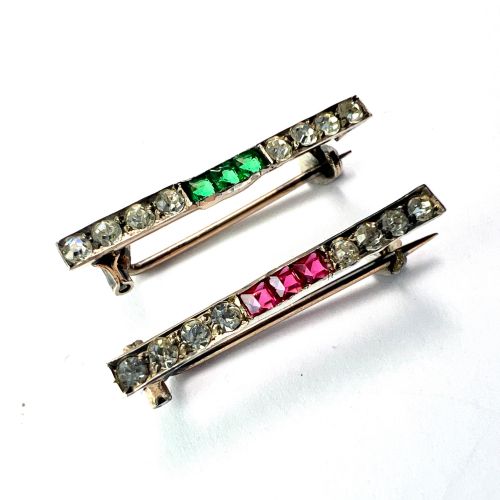
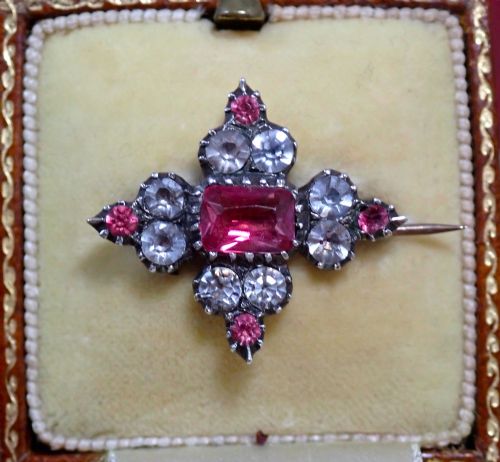
- Faceted glass used as an affordable substitute for gemstones in historic jewellery. Georgian and Art Deco pieces frequently utilise ruby or emerald paste.
- Mourning brooch
- A commemorative piece of jewellery containing hair, a portrait, or dark materials associated with remembrance. These often incorporate pearls and dark stones.
- Bar brooch
- A slender horizontal metal pin decorated across its length with stones. They are common in Edwardian and Art Deco designs utilising gold and platinum.
Red Ruby Brooch: Frequently Asked Questions
How do I date a ruby brooch?
Dating relies on identifying the metal types, stone cuts and mounting styles characteristic of specific eras like the Georgian or Edwardian periods. Criterions such as silver-topped gold point towards older Victorian or Georgian origins.
Examining the clasp mechanisms and overall silhouette provides further clues to the decade of manufacture. Hallmarks, where present, help confirm the exact gold purity and origin.
Are all rubies natural in these brooches?
Not all stones are natural mined corundum, as historical paste glass was also utilised to achieve the red ruby appearance. Gemological reports help verify whether a ruby is natural and untreated.
Listings specify descriptions ranging from natural Burma and Thai rubies to paste substitutes. Checking the detailed description clarifies the exact composition of the main stones.
How were these brooches worn historically?
Historic brooches were pinned to lapels, collars, bodices and hats as decorative fasteners. Pendant brooches offered the versatility of hanging from a chain as well as pinning to clothing.
Victorian and Edwardian wearers utilised them to fasten garments or simply as ornamental dress accessories. The inclusion of secure pin stems allowed them to be fixed onto heavy fabrics.
What metals are typically found in these pieces?
Common metals include 9ct, 15ct and 18K gold, alongside silver and platinum. Combinations like silver and gold together frequently appear in pieces from the nineteenth century.
Edwardian and Art Deco examples often incorporate platinum and higher carat golds. The choice of metal generally aligns with the prevailing fashion of the manufacturing period.