

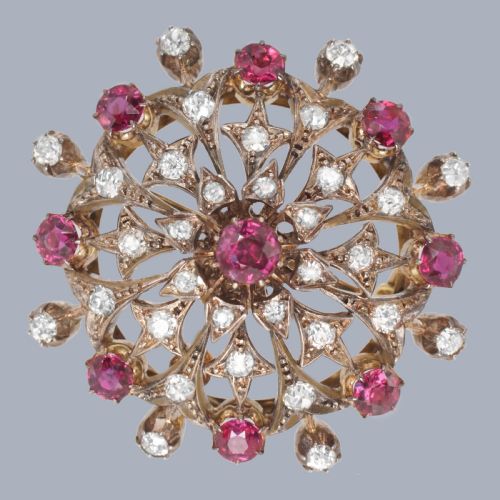


Ruby and Diamond Brooch
A ruby and diamond brooch brings together deep red corundum and bright stones in gold and silver settings.
Ruby and Diamond Brooch
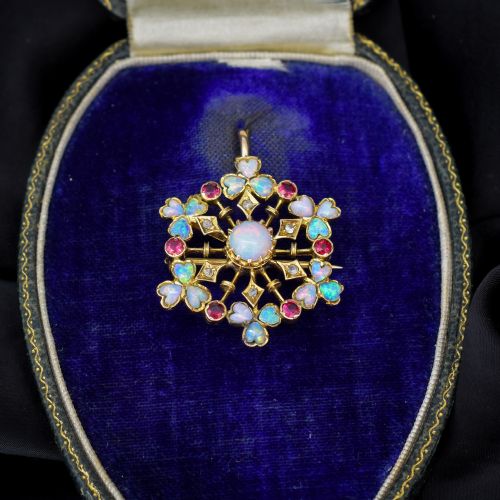
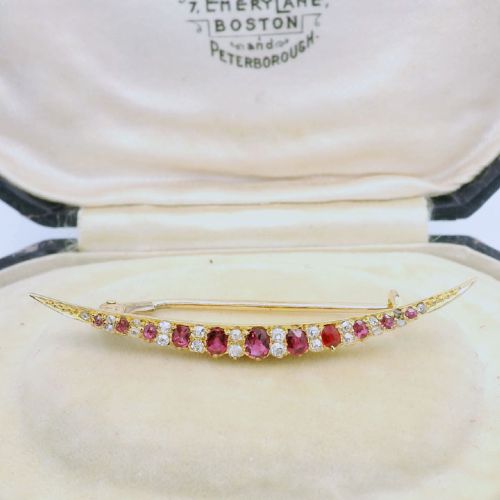
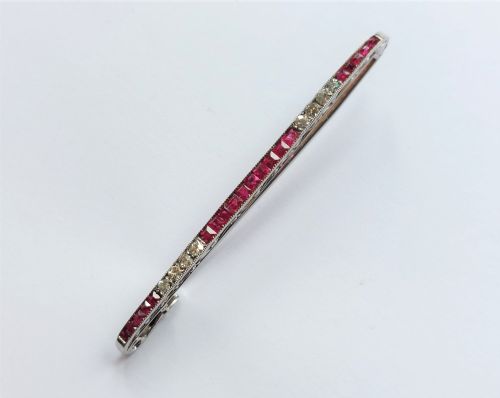
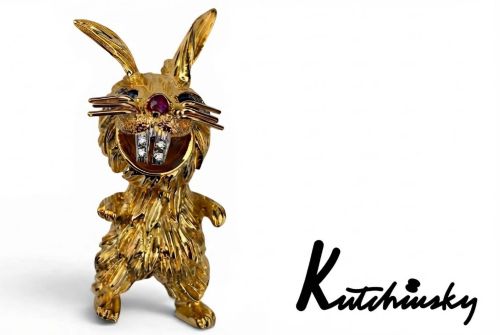
A ruby and diamond brooch takes many forms across the Victorian, Edwardian, and Art Deco periods, ranging from crescent shapes to floral motifs and figural designs. Buyers searching for a ruby and diamond brooch encounter pieces shaped as animals, insects, hearts, and bar brooches set with precious gems.
The materials span yellow gold, rose gold, white gold, platinum, and silver-topped gold, reflecting the shifting tastes of the nineteenth and twentieth centuries. Many examples function as both brooches and pendants, offering versatility in how they are worn.
Crescent designs and bar brooches appear frequently among the pieces, often incorporating pearls, sapphires, or emeralds alongside the central rubies and diamonds. These items originate from British, French, and international makers spanning the 1800s through the mid-twentieth century.
Materials and Construction
Goldsmiths utilised various carats of yellow, rose, and white gold, alongside platinum and silver, to mount the rubies and diamonds securely. Silver was frequently layered over gold in earlier pieces to enhance the brilliance of the stones by day and by candlelight.
Gemstones are set using claw, bezel, and flush techniques suited to the particular design, whether a delicate floral spray or a robust geometric Art Deco bar brooch. Multi-gem compositions often integrate supportive metals like platinum to hold intricate millegrain work and pave-set diamonds.
Listings feature yellow gold, rose gold, white gold, platinum, and silver, spanning the Victorian, Edwardian, Art Deco, and mid-century periods.
Assessing Quality and Execution
The distinction between standard items and exceptional examples rests upon the origin, treatment status, and weight of the rubies and diamonds. Natural untreated rubies, specific geographic origins such as Burma, and certified stone weights elevate the stature of a brooch significantly.
Kutchinsky·Ben Rosenfeld·Gubelin
The Ruby and Diamond Brooch Glossary
- Crescent brooch
- A curved, moon-shaped brooch popular during the Victorian and Edwardian eras, often graduated in stone size. This form frequently combines rubies and diamonds in symmetrical arrangements.
- Bar brooch
- A narrow horizontal pin format common in the late nineteenth and early twentieth centuries. These pieces often feature a central cluster or a series of gems spaced evenly along the metal bar.
- Pendant brooch
- A dual-purpose piece of jewellery designed to be worn pinned to clothing or suspended from a chain. They usually incorporate a hidden or hinged loop at the reverse.
- Silver-topped gold
- A manufacturing technique where a layer of silver is soldered to a gold backing. This method allowed stones to be set in white metal while maintaining the strength of gold underneath.
- Millegrain
- A decorative border of tiny raised metal beads along the edges of a setting. This technique was widely utilised in Edwardian and Art Deco platinum work to soften metal contours.
Ruby and Diamond Brooch: Frequently Asked Questions
How do I wear an antique brooch today?
A ruby and diamond brooch fastens securely to lapels, scarves, heavy knitwear, or evening shawls using its original pin and clasp mechanism. Many versions also feature a loop allowing them to be hung from a chain as a pendant.
Heavier figural or multi-gem pieces require sturdy fabrics to support their weight properly throughout the day or evening.
Can I convert a brooch into a necklace?
Pieces that were originally made as pendant brooches already possess an integrated loop or bail for a chain. Other solid-backed brooches can sometimes be worn using a specialised converter that grips the pin safely without altering the antique metalwork.
Consult a jeweller before attempting any permanent modifications to preserve the historical integrity of the piece.
How do I date a ruby and diamond brooch?
Stylistic markers such as crescent shapes, silver-topped gold, and natural motifs point toward Victorian or Edwardian origins. Geometric lines, platinum settings, and stylised animal forms typically indicate later Art Deco or mid-century manufacture.
Assay marks, hallmarks, and specific gemstone cuts provide further evidence for narrowing down the decade of creation.
Are these rubies and diamonds natural?
Many antique and vintage pieces incorporate natural rubies and diamonds, sometimes accompanied by gemological reports detailing origin and treatment status. The presence of inclusions under magnification often supports natural formation.
Grading standards have evolved over centuries, meaning older stones display hand-cut facets unique to their period of origin.