


Edwardian Insect Pin
An edwardian insect pin brings a delicate, winged creature into jewellery form, offering charming detail that catches the eye on any lapel.
Edwardian Insect Pin
An edwardian insect pin captures beetles, butterflies, and dragonflies in precious metals and gemstones. These whimsical pieces served as decorative fastenings for ladies' garments and hats during the early twentieth century.
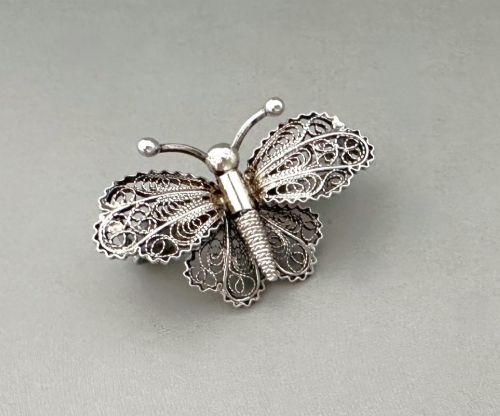
Most examples found here span the Victorian, Edwardian, and Art Deco periods, encompassing both silver filigree butterflies and gemstone-set bar brooches. Makers utilised diverse forms ranging from spider pincushions to butterfly wing dragonfly brooches.
The selection includes delicate items featuring rubies, diamonds, pearls, and sapphires set in gold or silver gilt. Each object type, whether a brooch or a hatpin, reflects the naturalistic obsessions of the era.
Materials and Techniques
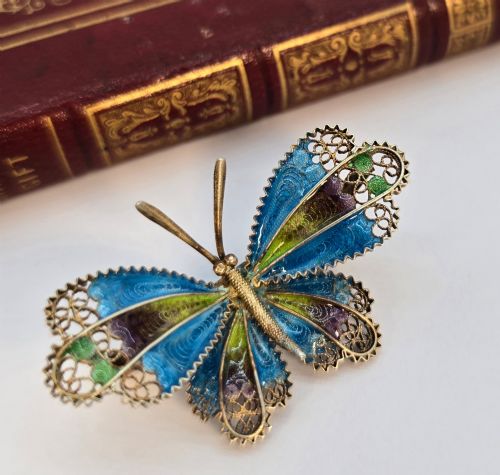
Craftsmen shaped sterling silver and yellow gold into intricate insect bodies, often applying silver gilt to enhance the metallic lustre. Enamel work added vibrant colour to butterfly wings, while pewter provided an alternative medium for sculptural scarab designs.
Gemstone setting required precise skill, embedding diamonds, rubies, sapphires, and emeralds into the metal framework. Artisans also incorporated organic materials such as pearls and butterfly wings behind glass to create realistic textures.
Listings feature items spanning the Victorian, Edwardian, and Art Deco periods, created in silver, gold, pewter, and enamel.
Assessing Quality and Execution
Quality rests on the fineness of the metalwork and the security of the stone settings. Finer examples display meticulous filigree wirework and cleanly applied enamel without chipping.
The choice of materials distinguishes standard items from exceptional ones, with high-carat gold and matched precious stones elevating a piece. Superior execution appears in the anatomical accuracy and proportional balance of the insect's wings and legs.
Rene Lalique
The Edwardian Insect Pin Glossary
- Silver gilt
- Silver that has been coated with a thin layer of gold. This technique provides the warm appearance of gold while utilising a silver base.
- Filigree
- Ornamental work consisting of fine wire twisted into delicate openwork patterns. It appears frequently in the wings of butterfly brooches.
- Pincushion
- A small decorative object stuffed to hold pins, often shaped as an animal or insect. These sat upon dressing tables during the Edwardian period.
- Enamel
- A glassy substance melted onto metal surfaces for decoration. It brings vivid, lasting colour to insect wings.
Edwardian Insect Pin: Frequently Asked Questions
What is an insect pin?
An insect pin is a small decorative fastener shaped like a butterfly, dragonfly, spider, or scorpion. These ornaments were pinned to clothing, hats, or scarves.
They reflect a widespread Victorian and Edwardian fascination with natural history and entomology. Jewelers rendered these creatures using precious metals and gemstones.
How do I wear a brooch?
Brooches can be fastened to jacket lapels, collars, blouses, or hats to add a distinct focal point to an outfit. Securing them through thicker fabrics ensures the pin stays balanced.
Many antique examples feature sturdy safety catches or pin stems designed for daily wear. Placing them carefully prevents strain on delicate textiles.
How do I date these pieces?
Dating relies on stylistic clues, materials, and hallmarks stamped onto the metal. Edwardian pieces often feature platinum or silver-topped gold alongside delicate gemstone clusters.
Victorian items tend to be heavier with bold gold work, while Art Deco designs favour geometric symmetry. Comparing the specific motif and construction method helps establish the period.
Were these used as hatpins?
Some long-stemmed versions functioned specifically as hatpins to secure elaborate millinery to a woman's hair. Shorter variations served as traditional dress brooches.
The functional length of the pin stem usually indicates whether the piece was meant to pierce a hat or fasten to a garment.