
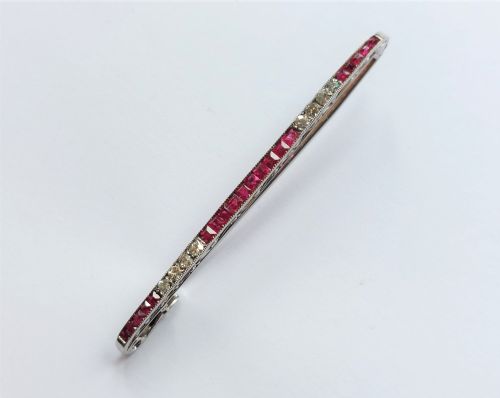

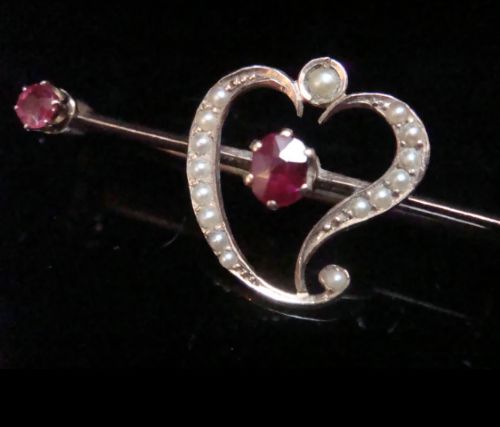


Edwardian Gemstone Bar Brooch
An edwardian gemstone bar brooch brings together delicate gold work and vibrant stones like peridot, ruby and diamond to fasten a lapel with period elegance.
Edwardian Gemstone Bar Brooch
When you search for an edwardian gemstone bar brooch, you encounter slender horizontal pins set with colourful gemstones and pearls. These pieces frequently date from the Edwardian era, alongside related examples from the late Victorian period and the early twentieth century.
Most items reflect the light, airy aesthetic of the early nineteen hundreds, incorporating stones such as aquamarine, tourmaline, chrysoberyl, emerald and garnet alongside diamonds and seed pearls.
Materials and Construction
Goldsmiths worked primarily in nine carat gold, fifteen carat gold, silver and eighteen carat white gold to construct these linear foundations. Stones were secured using delicate claw settings, bezel mounts or silver-topped gold techniques designed to enhance the brilliance of diamonds.
Makers integrated natural gemstones including rubies, peridots, amethysts and fire opals, accented by split pearls and seed pearls arranged in floral clusters or symmetrical line patterns.
Listings feature periods spanning the late Victorian era through the Edwardian years and into the nineteen twenties, nineteen thirties and nineteen fifties.
Quality Variations
Quality rests in the choice of metal purity and the selection of gemstones. Pieces fashioned from fifteen carat gold or eighteen carat white gold sit alongside those rendered in nine carat gold or silver.
The refinement of the mounting work distinguishes finer examples. Precision in stone matching, the use of old cut diamonds and intricate pierced metalwork separate standard production from superior output.
The Edwardian Gemstone Bar Brooch Glossary
- Bar brooch
- A horizontal pin featuring a narrow metal shaft that often displays mounted gemstones or central decorative motifs.
- Seed pearl
- A very small, naturally occurring or cultured pearl used in clusters or bordering larger stones on period jewellery.
- Old cut diamond
- A hand-faceted diamond style common in antique jewellery, featuring a small table and high crown that catch candlelight.
- Chrysoberyl
- A golden-green gemstone valued for its clarity and durability, frequently utilised in Edwardian dress jewellery.
- Silver-topped gold
- A historical technique where a layer of silver is soldered to gold jewellery fronts so diamonds appear brighter against a white metal.
Edwardian Gemstone Bar Brooch: Frequently Asked Questions
How do I wear a bar brooch?
Pin the brooch securely through the fabric of a heavy coat lapel, a wool scarf or a tailored jacket. Ensure the safety clasp functions properly before wearing it out.
Position the brooch horizontally or at a slight diagonal to balance the weight of the central gemstone clusters against the backing fabric.
Are these brooches made of solid gold?
Many examples are fashioned from solid nine carat or fifteen carat yellow and rose gold, whilst others combine silver tops with gold backs. Hallmarks or specific metal stamps often indicate the purity standard used by the maker.
White gold and platinum-topped variations also appear from the Edwardian and later Art Deco periods, offering different tonal backgrounds for diamonds and coloured stones.
How can I tell an Edwardian brooch from a Victorian one?
Edwardian pieces typically showcase lighter, airier mountings with floral or garland motifs executed in platinum or silver-topped gold. Peridots, aquamarines and seed pearls dominate this lighter palette.
Victorian designs tend to be heavier, employing more robust yellow gold settings, deeper hued gemstones like garnets and rich rubies, and denser cluster formations.
How do I clean my gemstone brooch?
Gently wipe the metal and stones using a soft, dry microfibre cloth to remove surface dust and skin oils. Avoid submerging pearl-set pieces in liquid cleaners, as moisture can damage the adhesive and the pearls themselves.
Store the brooch flat in a lined jewellery box away from direct sunlight and harder items that might scratch the softer gems.