

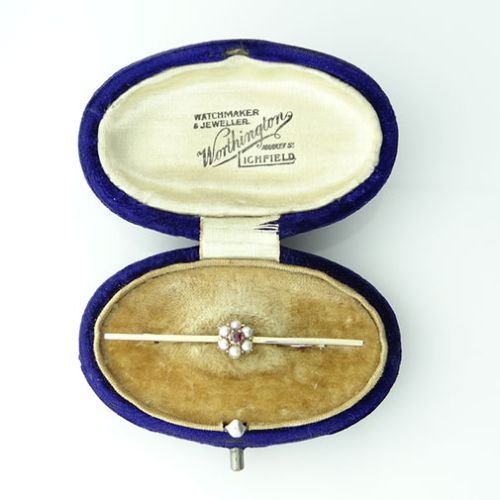
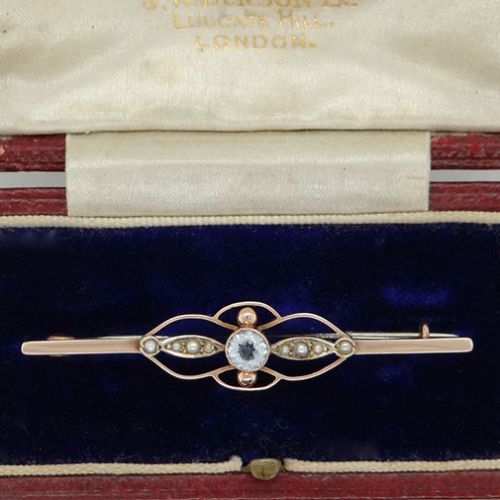
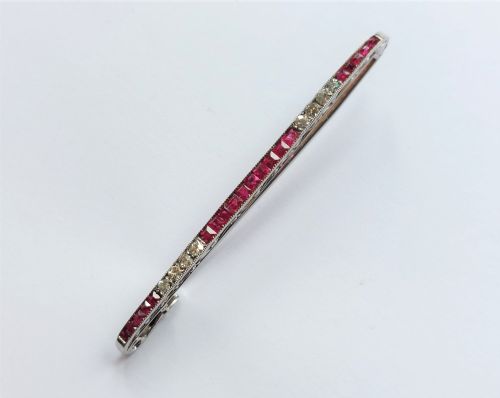
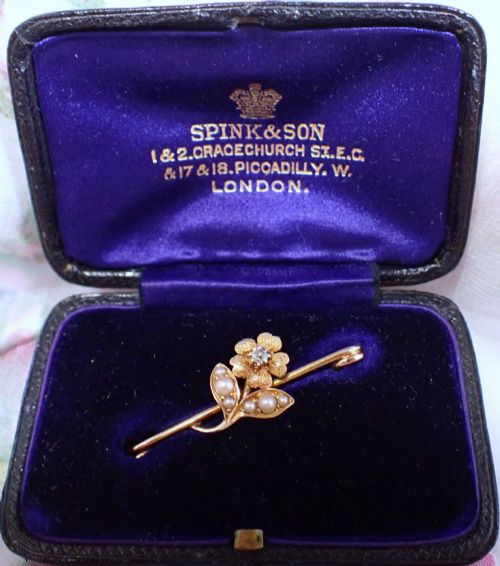

Gold Bar Pin
A gold bar pin is a slim, linear brooch designed to fasten a cravat or secure a lapel.
Identifying a gold bar pin
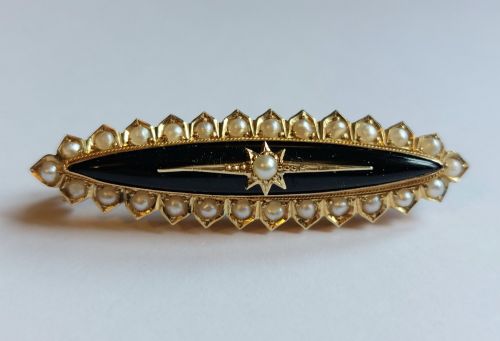
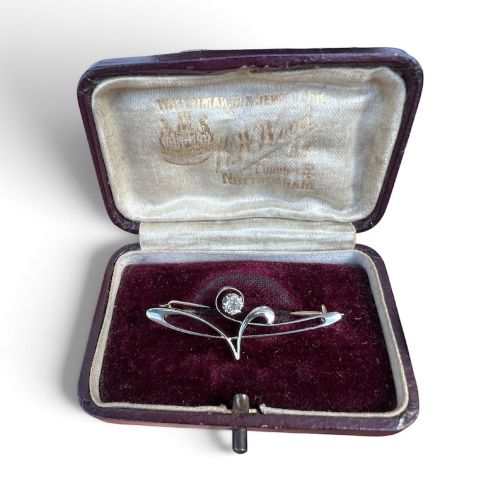
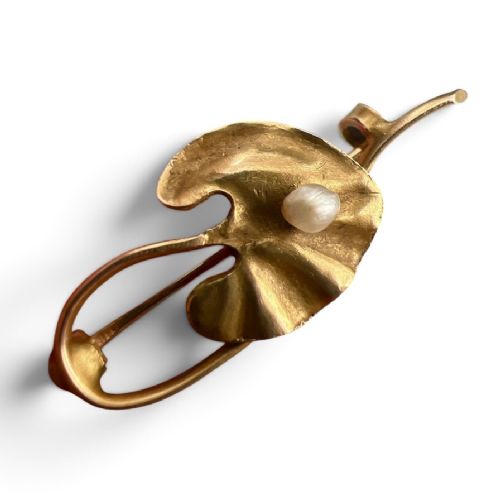
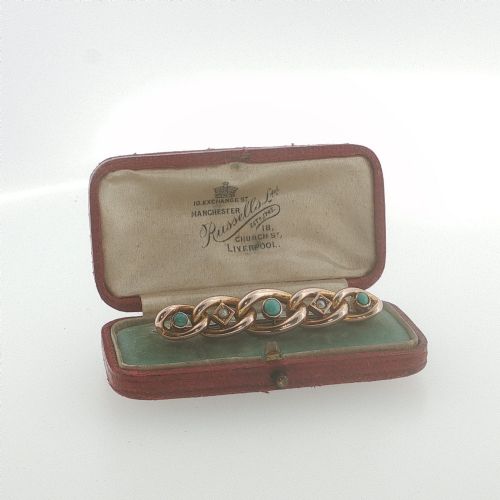
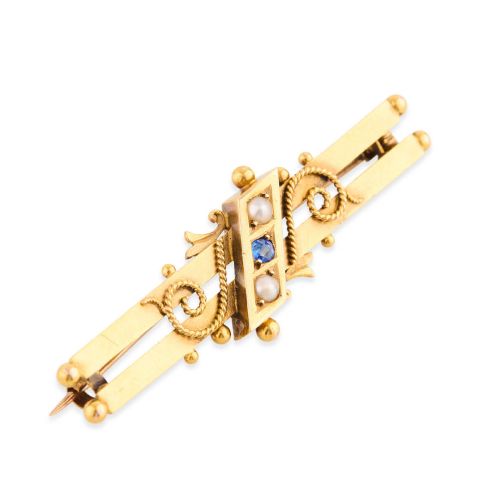
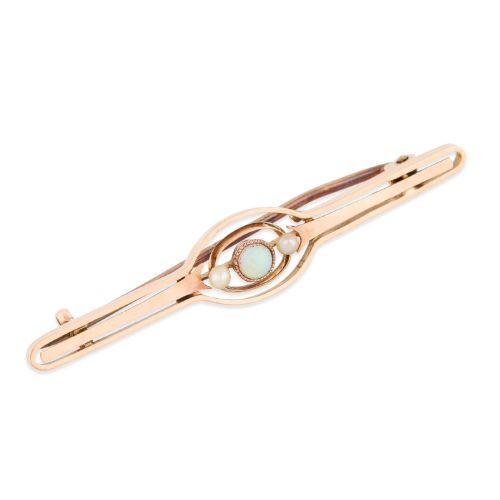
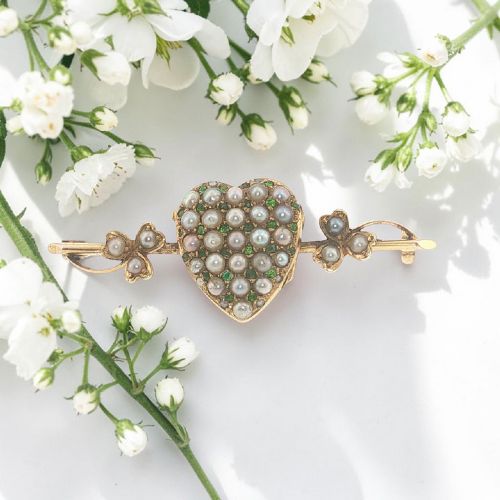
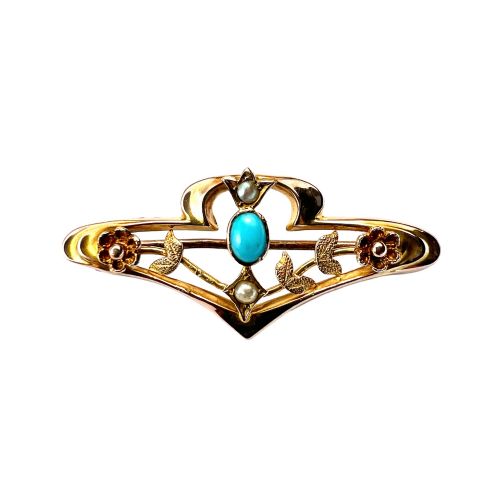
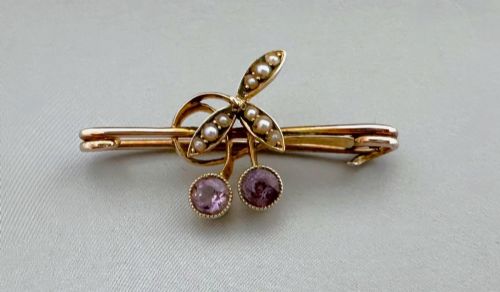
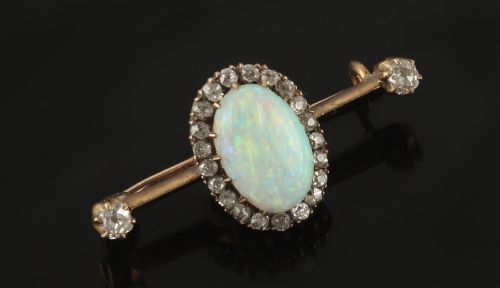
A gold bar pin takes the form of a slender horizontal shaft of precious metal, frequently mounted with central gemstones or insect motifs. These pieces date across the Victorian era and into the early twentieth century.
The version most commonly encountered on this page is the Victorian bar brooch, often worked in yellow gold and set with opals, diamonds, chrysoberyl, pearls or topaz.
Makers utilised various purities of metal, ranging from standard nine-carat and fifteen-carat gold down to rolled gold variants alongside base metal components.
Materials and construction
Goldsmiths shaped bar brooches from yellow gold and fifteen-carat gold, integrating pin stems with secure C-clasps or safety catches. Metalwork techniques involved wire-drawing, bezel setting and prong mounting.
Gemstones such as opals, diamonds, chrysoberyl, moonstones, pearls, pink topaz and blue topaz were carefully selected to punctuate the linear gold framework. Certain designs incorporated detailed curb link chains and swivel fobs.
Some bar pins doubled as accidental insect traps, featuring delicate golden spiders perched atop topazes.
Assessing quality
Quality rests upon the purity of the gold, the precision of the stone setting and the integrity of the hinge and pin mechanism. Heavier fifteen-carat gold examples demonstrate superior substance compared to lighter nine-carat or rolled gold alternatives.
The distinction between ordinary production and finer work lies in the selection of gemstones, where well-matched opals, clean diamonds or unusual chrysoberyl stones elevate the piece above standard decorative pins.
The Gold Bar Pin Glossary
- Bar brooch
- A horizontal pin featuring a narrow metal shaft that often carries decorative clusters or gemstones along its length.
- Fifteen-carat gold
- An alloy containing sixty-two point five percent pure gold, commonly utilised in British jewellery manufacture during the Victorian and Edwardian periods.
- C-clasp
- An early form of brooch fastening shaped like the letter C, onto which the pin stem is hooked.
Frequently Asked Questions
How do I wear a bar pin today?
These slender brooches work well pinned to the lapel of a tailored jacket or used to fasten a knitted scarf.
Ensure the safety catch remains secure when attaching the pin to heavier fabrics.
What stones are typically found on them?
Victorian and Edwardian bar pins frequently feature opals, diamonds, pearls and chrysoberyl.
Coloured stones like pink and blue topaz also appear alongside whimsical insect designs.
How do I date a gold bar pin?
Stylistic clues such as gemstone selection and construction methods help narrow down the period.
Pieces from the Victorian era often display ornate cluster work, whereas later Edwardian designs favoured refined linear settings.