

15ct Gold Jewellery
These pieces of 15ct gold jewellery span the Victorian, Edwardian, and Art Nouveau eras, offering distinct warmth and durability for everyday wear.
15ct Gold Jewellery
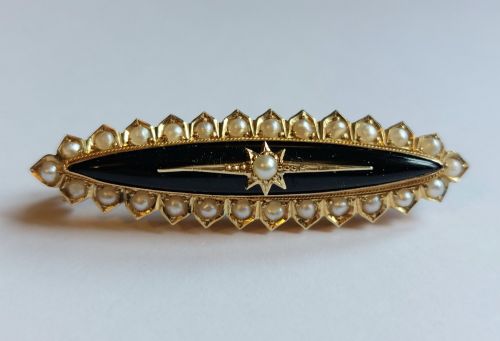
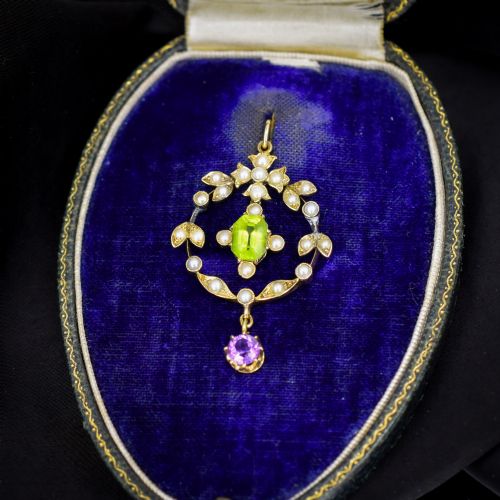
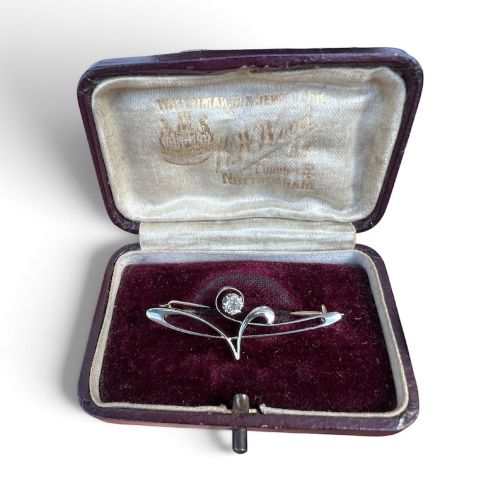
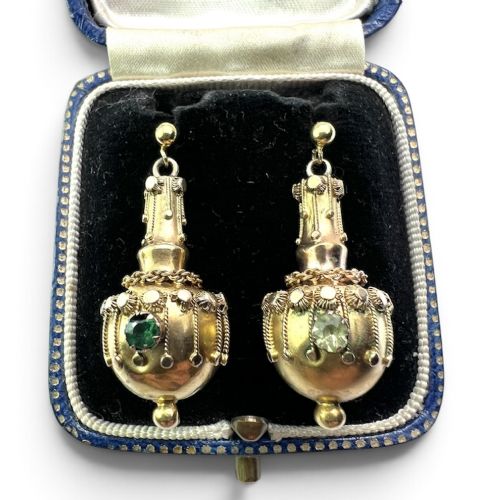
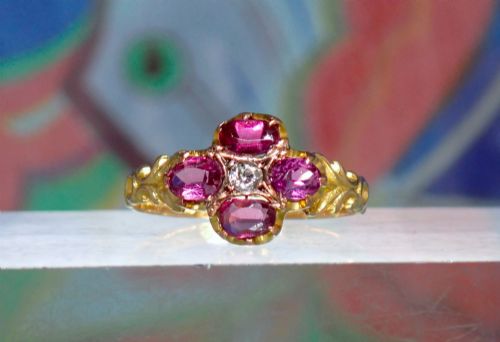
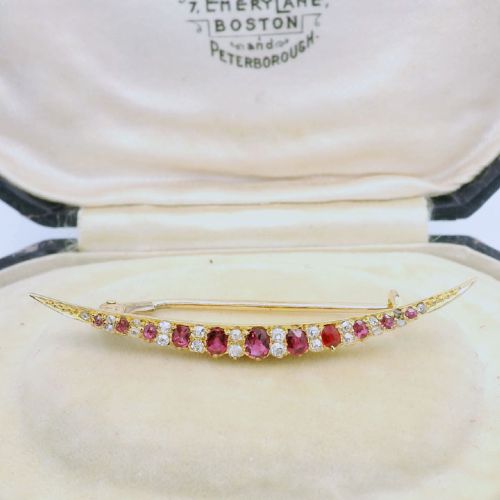
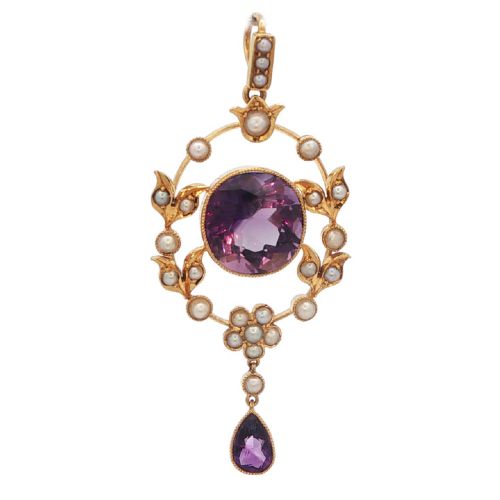
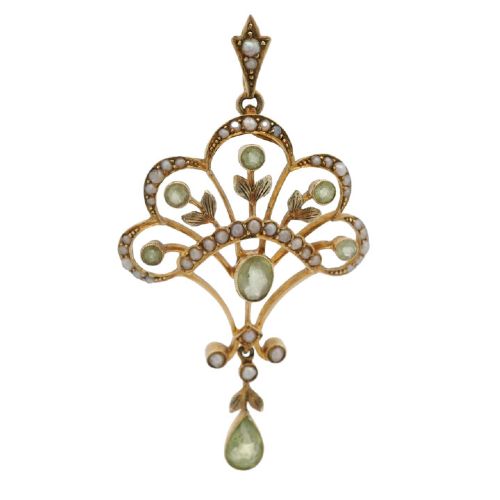
When you search for 15ct gold jewellery, you encounter brooches, rings, necklaces, pendants, earrings, and longguard chains created during the nineteenth and early twentieth centuries. These items reflect the distinct aesthetic movements of their time, ranging from ornate Victorian mourning pieces and Etruscan Revival designs to flowing Art Nouveau pendants and Edwardian lavaliers.
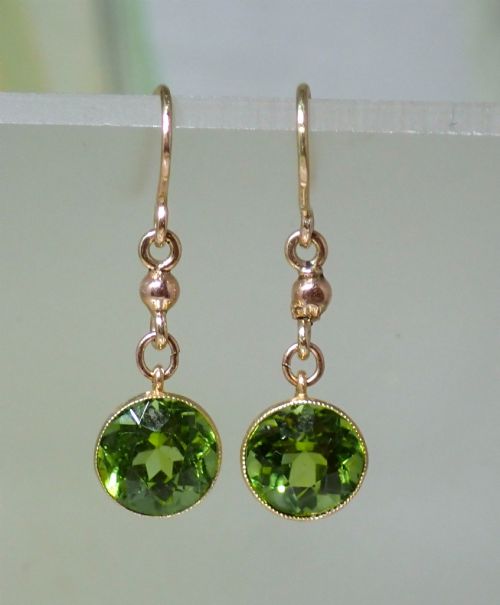
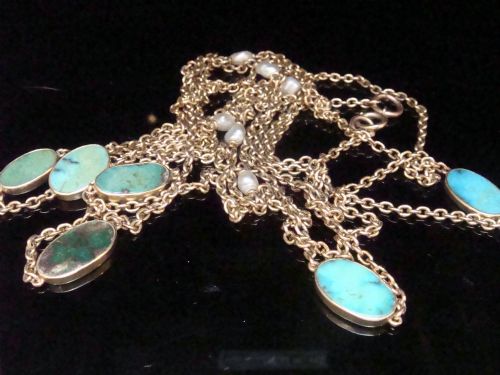
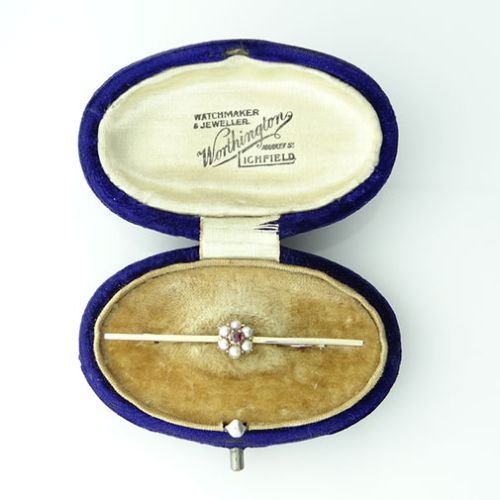
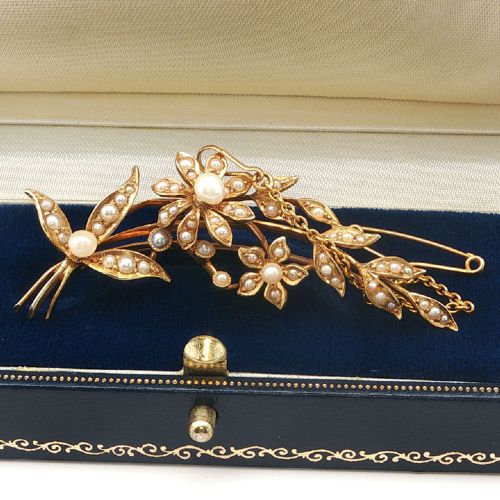
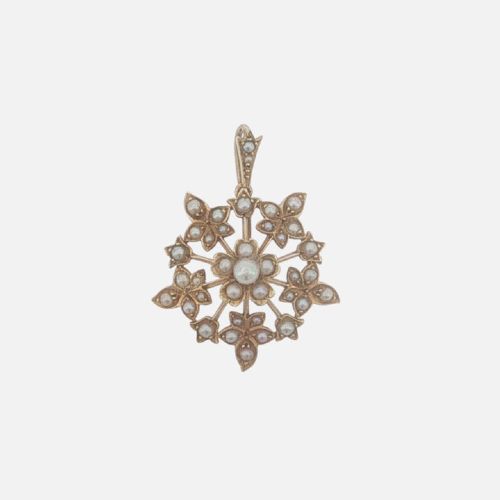
The material standard itself sits between the lower and higher purities common in British items, offering a specific rich yellow tone that collectors recognise instantly. You meet this gold most frequently in combination with natural gems like seed pearls, almandine garnets, amethysts, peridots, and diamonds.
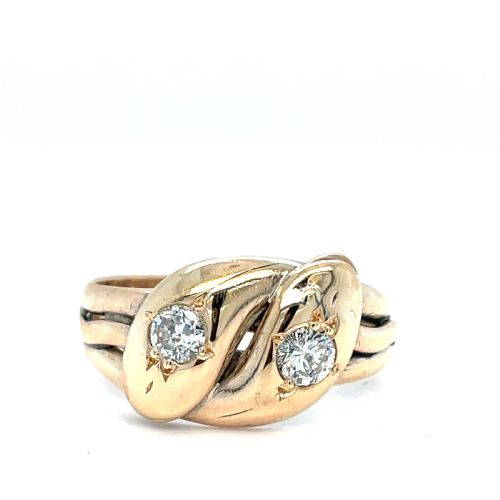
The forms span practical daily wear items, such as patterned band rings and robust curb bracelets with dog clips, alongside decorative dress pieces like insect charms and flower spray brooches. Each format demonstrates the era's dedication to detailed metalwork and secure stone setting.
Materials and methods
The metal foundation relies on fifteen-carat gold, containing a specific proportion of pure gold alloyed to balance durability with a deep hue. Goldsmiths shaped this material through casting, wire-drawing, and hand-engraving, producing items like engraved crosses, solid bangles, and hollow chain links.
Gemstones including seed pearls, rubies, sapphires, turquoises, and pink tourmalines are integrated using collet settings, grain settings, and closed-back foils in earlier examples. Art Nouveau and Edwardian workshops frequently combined the 15ct gold framework with platinum accents or detailed enamel work to highlight central diamonds and aquamarines.
The listings feature 15ct gold items from the Victorian, Edwardian, and Art Nouveau periods, incorporating pearls, garnets, and diamonds.
Quality differences
The standard of execution in 15ct gold jewellery rests on the precision of the hand-chased engraving and the structural integrity of the mounts. Superior pieces maintain crisp detail on motifs like amphorae, snakes, and floral sprays without excessive wear to the high points of the metal.
The selection and matching of natural gemstones dictate the upper tier of these items, where pearls retain their original lustre and coloured stones show vibrant, uniform saturation. Maker marks, clear hallmarks, and original clasps or dog clips further distinguish exceptional survivals from standard production.
The 15ct Gold Jewellery Glossary
- 15ct Gold
- An alloy containing 62.5 percent pure gold, standard in British items until the introduction of 9ct and 18ct standards in the early twentieth century. This metal provides a deeper yellow colour than modern lower-carat alloys.
- Dog Clip
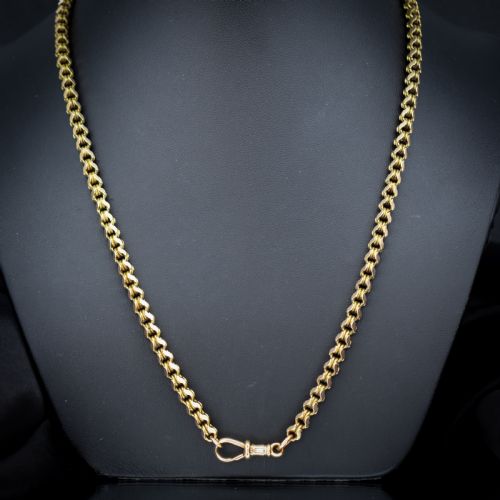
- A spring-loaded swivel clasp used on longguard chains, curb bracelets, and watch chains. It allows secure attachment of charms and pendants.
- Seed Pearl
- A very small natural or saltwater pearl, often drilled and threaded onto silk or fixed with tiny pins in floral and star clusters.
- Lavalier
- A necklace featuring a pendant that drops below the main chain line, popular during the Edwardian and Art Nouveau periods.
- Etruscan Revival
- A nineteenth-century style drawing on ancient archaeological discoveries, characterised by granulation, wirework, and classical motifs.
15ct Gold Jewellery: Frequently Asked Questions
What is 15ct gold?
Fifteen-carat gold is an alloy containing sixty-two and a half percent pure gold, marked by a distinct, warm yellow tone.
This standard was widely used in British manufacturing during the Victorian and Edwardian eras before being largely replaced by other purities.
How do I care for antique pearl jewellery?
Pearls are organic gems that require gentle handling, avoiding contact with harsh chemicals, perfumes, and ultrasonic cleaning methods.
Store them separately in soft pouches and wipe them clean with a damp cloth after wearing to preserve their natural lustre.
How can I date my 15ct gold piece?
Dating relies on stylistic clues like the flowing lines of Art Nouveau or the heavy geometry of late Victorian mourning pieces.
Assay office hallmarks and date letters stamped onto the metal provide the exact year of manufacture where present.
Are longguard chains versatile?
Longguard chains were originally designed to hold pocket watches or lorgnettes, offering significant length for various styling options.
Today, you can loop them multiple times around the neck or attach pendants and dog clips to create custom necklace combinations.