
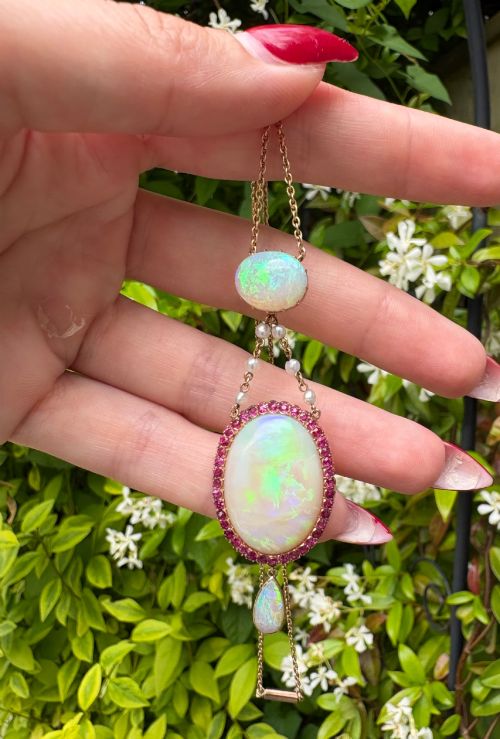


Victorian Lavalier Necklace
A victorian lavalier necklace brings a delicate drop pendant to the neckline, prized for period gemstone work and graceful movement.
Victorian Lavalier Necklace
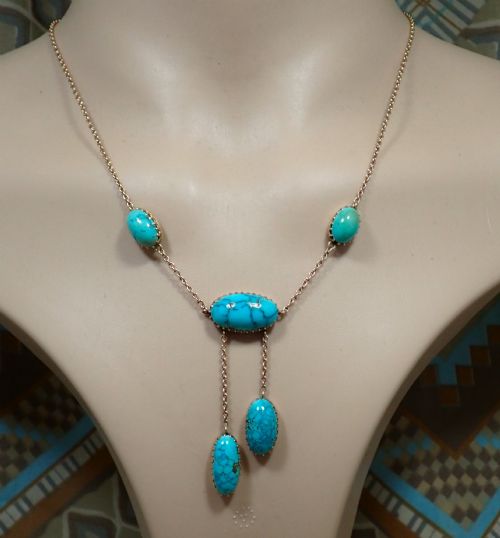
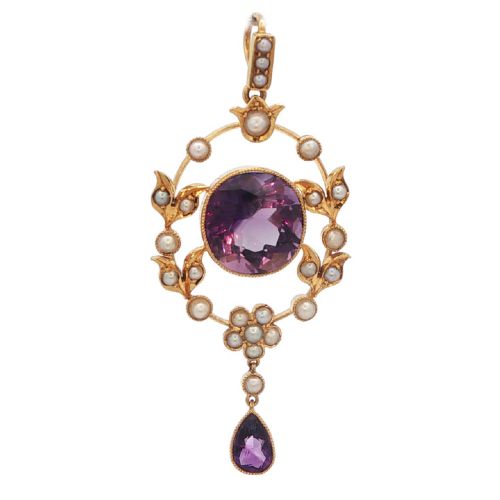
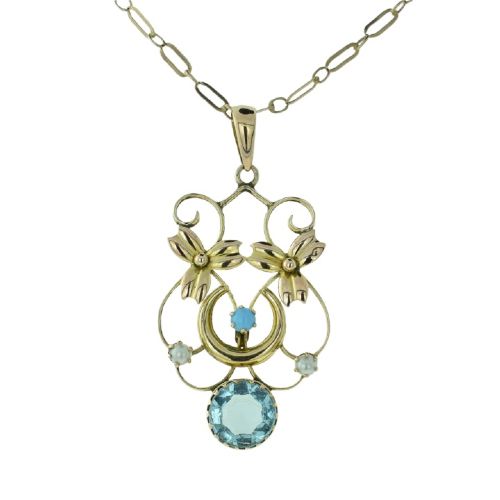
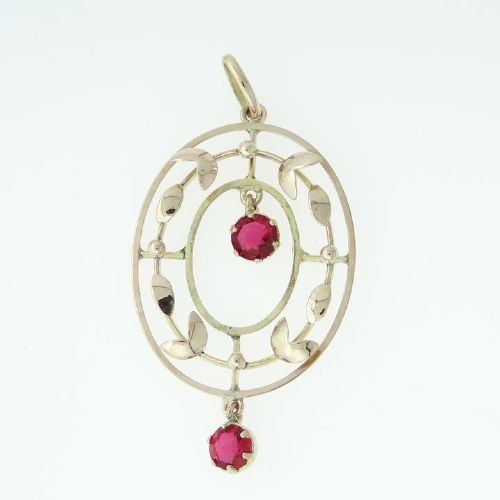
The selections on this page draw heavily from victorian and edwardian periods, alongside art nouveau and arts and crafts design influences. Necklaces and pendants dominate the forms, often uniting several gemstone types within a single piece.
How they were made
Jewellers built these pendants primarily in nine carat and fifteen carat gold, occasionally using eighteen carat gold or sterling silver settings. Metalwork techniques combined yellow and rose gold shades to create contrast within foliate and geometric motifs.
Gems were secured using collet and claw settings, complemented by meticulous arrangements of tiny seed pearls. Stones such as amethyst, opal, turquoise, garnet, peridot and diamond were chosen to catch the light around the dangling drop.
Many of these delicate drops double safely as brooches, giving nineteenth century wearers a clever two-in-one wardrobe trick.
What varies in quality
Quality rests in the harmony of the design and the proportion of the drop pendant relative to the chain. Finer examples display balanced art nouveau curves or precise foliate metalwork rather than heavy, repetitive stamping.
The selection of stones dictates the upper tier of the range, where matched natural opals, clean amethysts and bright diamonds are securely set. Lower tiers rely on simulated stones or simpler metal assembly with less refined finishing on the reverse.
Murrle Bennett·Hamilton & Co
The Victorian Lavalier Necklace Glossary
- Lavalier
- A pendant necklace featuring one or more suspended drops hanging below the main cluster. This style became popular during the late nineteenth and early twentieth centuries.
- Seed pearl
- A very small natural or cultured pearl, often drilled and threaded onto fine wire or silk. These tiny pearls form delicate floral clusters in period jewellery.
- Negligee necklace
- A style of pendant featuring two asymmetric drops hanging at different lengths from a central connector. It emerged during the edwardian period.
- Foliate
- Ornamentation modelled on leaves, vines and foliage. This decorative style defines many victorian and arts and crafts pieces.
- Collet setting
- A flat band of metal enclosing the girdle of a gemstone to hold it securely in place. It provides a clean, finished border around cabochon or faceted stones.
Victorian Lavalier Necklace: Frequently Asked Questions
How do I wear a lavalier necklace?
These pendants rest close to the collarbone on delicate gold or silver chains, making them suitable for evening wear or layered necklines.
Because many vintage examples include a pin mechanism on the reverse, the pendant can also be detached and worn as a brooch.
Are these necklaces solid gold?
The pieces listed utilise nine carat, fifteen carat and eighteen carat yellow or rose gold, alongside silver settings for certain gemstone combinations.
Testing marks and hallmarks often confirm the gold purity used by the maker during the nineteenth or early twentieth century.
What stones are common in these pieces?
Amethysts, opals, turquoise and seed pearls appear frequently across the victorian and edwardian inventory.
Diamonds, peridots, garnets and blue topaz also feature prominently, often paired with pearls in art nouveau designs.
How do I date a lavalier necklace?
Dating relies on stylistic clues such as the flowing asymmetry of art nouveau or the structured geometry of arts and crafts metalwork.
Material choices, chain types and any accompanying box or hallmark help narrow the period between the mid victorian era and nineteen thirty.