
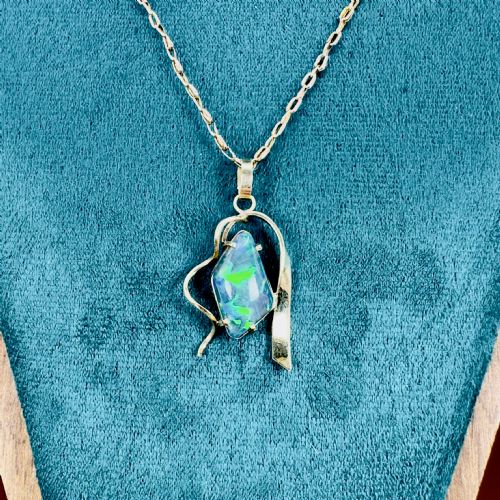
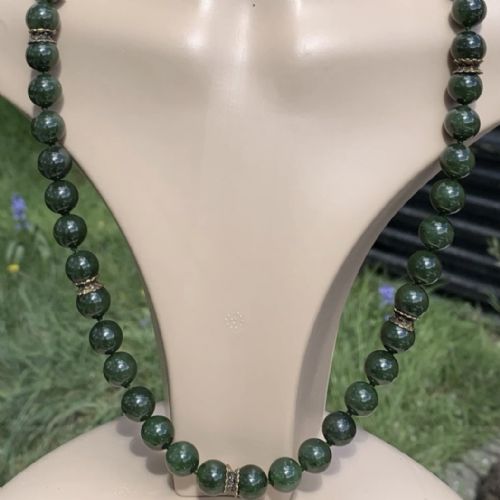


Green Gemstone Necklace
A green gemstone necklace brings together peridot, jade, emerald and chrysoprase set in gold and silver across multiple periods.
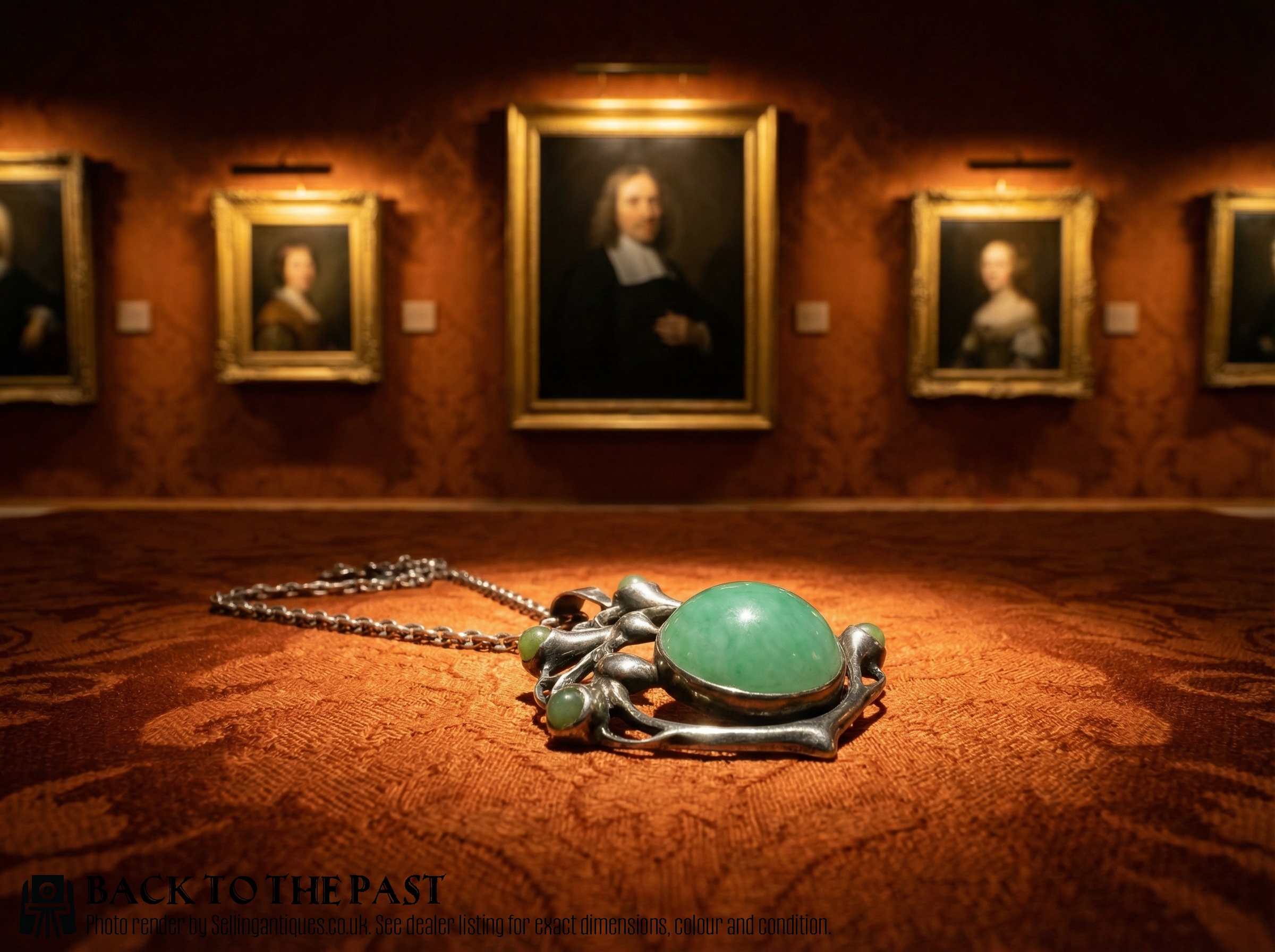
Green Gemstone Necklace
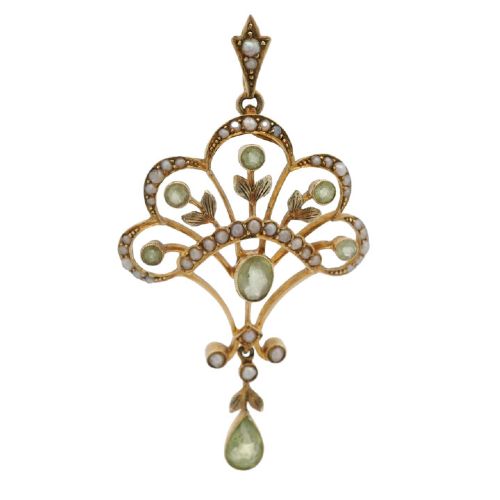
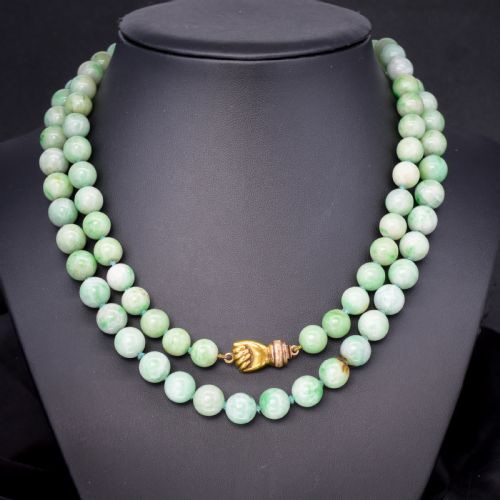
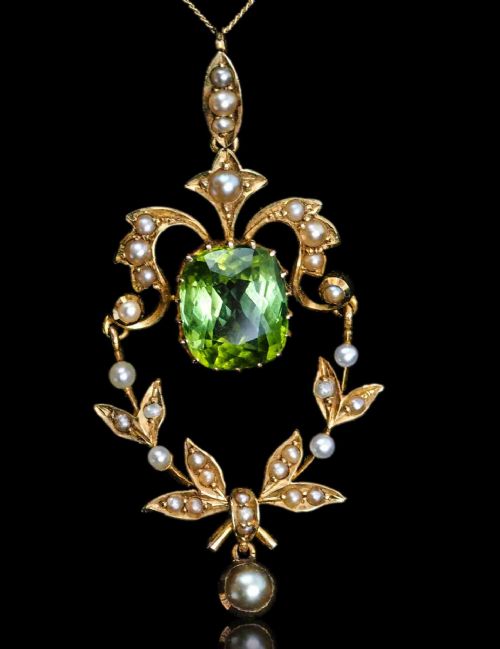
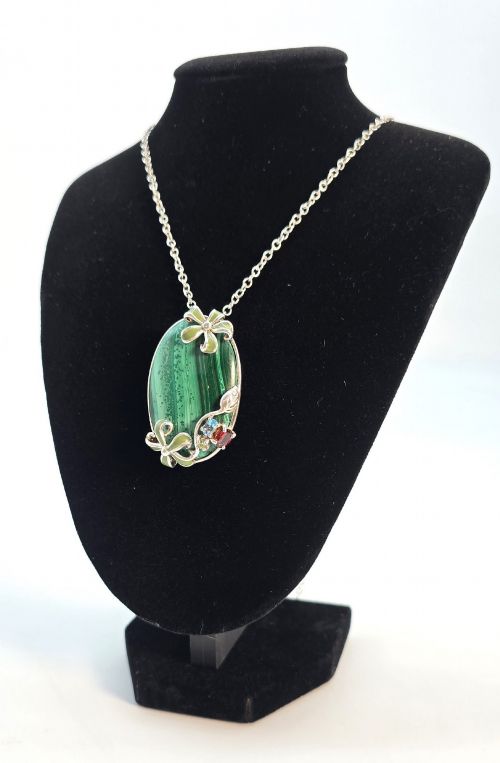
When you search for a green gemstone necklace, you encounter items ranging from delicate Edwardian peridot and seed pearl pendants to substantial jadeite strands and Art Nouveau silver and enamel designs. The selections span the nineteenth century through the mid-twentieth century, capturing distinct shifts in jewellery design.
Edwardian and Victorian pieces dominate the choices, frequently pairing peridot with gold and pearls. Alongside these sit Arts and Crafts, Art Deco, and mid-century examples utilising materials such as chrysoprase, amazonite, and tourmaline.
Materials and Construction
Metals span yellow gold in nine, fourteen, and fifteen carat standards, alongside silver, silver gilt, and platinum. Stones are mounted in collets or bezels, often accompanied by seed pearls, diamonds, or enamel work.
Techniques range from delicate wirework in Edwardian garland necklaces to plique-a-jour enamel and hand-carved jadeite. Chains and clasps often match the primary period aesthetic, utilising spacers or figa hand motifs.
Materials span peridot, jade, emerald, tourmaline, and chrysoprase set across Victorian, Edwardian, and Art Deco periods.
Distinctions in Quality
Quality rests on the clarity and cut of the central green stones, whether peridot, emerald, jade, or tourmaline, and the finesse of the surrounding metalwork. Pieces from known makers or specific design movements display superior chased detail and stone matching.
The integrity of the original setting, the presence of matching seed pearls or diamonds, and the survival of original components or boxes elevate certain examples above standard production.
Murrle Bennett·Liberty and Co·Arthur and Georgie Gaskin·Ludwig Knupfer·Theodor Fahrner
The Green Gemstone Necklace Glossary
- Peridot
- A yellowish-green gemstone frequently utilised in Edwardian and Victorian pendants. It provides the bright green characteristic of many early twentieth-century designs.
- Seed Pearl
- Tiny natural or cultured pearls used as accents in clusters and garlands. They typically frame larger central stones like peridot or amethyst.
- Plique-a-jour
- An enamelling technique where enamel is applied without a backing, resembling miniature stained glass. It appears on Art Nouveau silver and gold mounts.
- Figa Hand
- A talismanic hand gesture carved from materials like jade used as a clasp or pendant motif. It serves a protective function in historical jewellery.
Green Gemstone Necklace: Frequently Asked Questions
What periods do these necklaces span?
The pieces range from the nineteenth century and Victorian era through Edwardian, Art Nouveau, and Arts and Crafts movements, extending into mid-century modern design.
Most examples date from the early nineteen hundreds, reflecting the popularity of peridot and gold during the Edwardian period.
What metals are typically used?
Yellow gold appears in nine, fourteen, and fifteen carat standards, alongside silver and platinum. Some later or decorative pieces utilise silver gilt.
Gold is often paired with peridot and pearls, while silver frequently supports stones like chrysoprase, amazonite, and enamel.
How do I distinguish Edwardian pieces?
Edwardian designs frequently feature peridot and seed pearls set in fifteen carat yellow gold or platinum. Garland motifs and lighter filigree work are common.
These pieces often incorporate diamond accents and intricate drop configurations characteristic of the decade around nineteen hundred.
Are stones treated or certified?
Descriptions occasionally note specific gemological details, such as emerald treatments or exact carat weights. Evidence shows entries specifying unheated or treated gemstone statuses where applicable.
Buyers should examine individual descriptions for specific details regarding stone origins and carat measurements.
How were these necklaces worn?
Many items function as both pendants and brooches, offering versatile fastening options for historical wearers. Beaded strands were designed for longer drape, such as thirty-five inch lengths.
Shorter pendant necklaces were intended to sit centrally on the collarbone, often suspended from fine gold or silver chains.