
Seed Pearl Drop Necklace
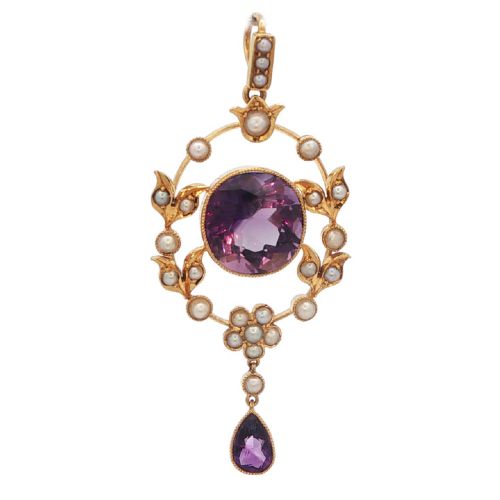
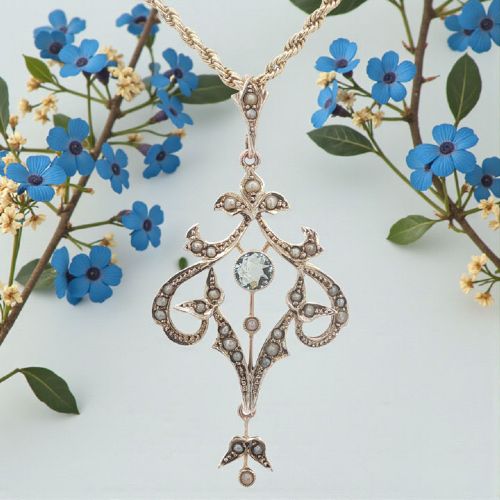
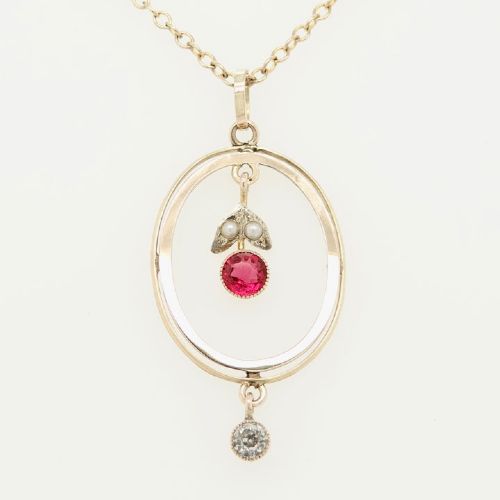
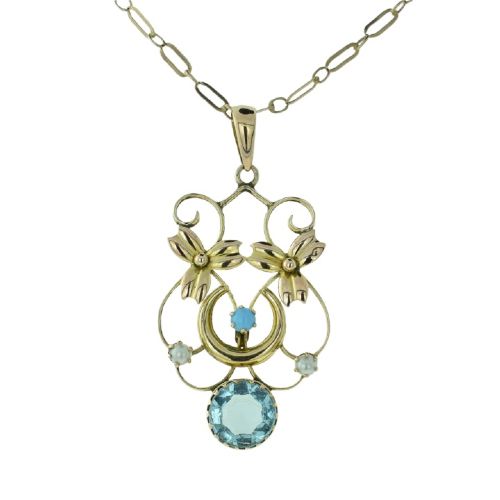
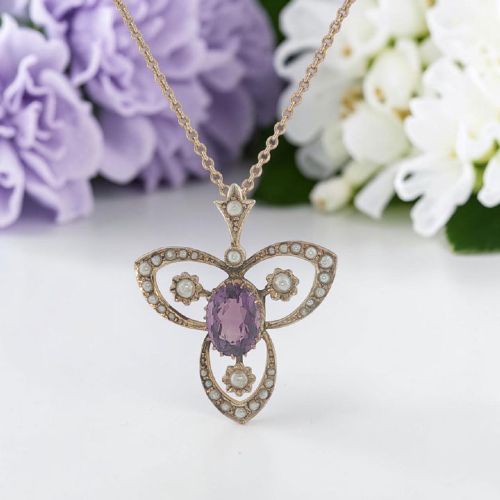
A seed pearl drop necklace brings together delicate tiny pearls and suspended coloured stones in pieces spanning the Victorian to Mid-Century periods.
Seed Pearl Drop Necklace
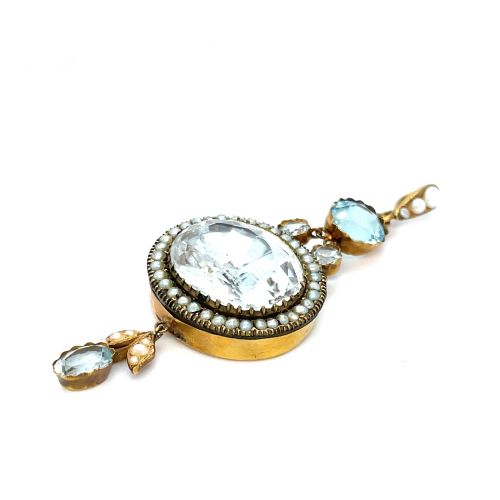
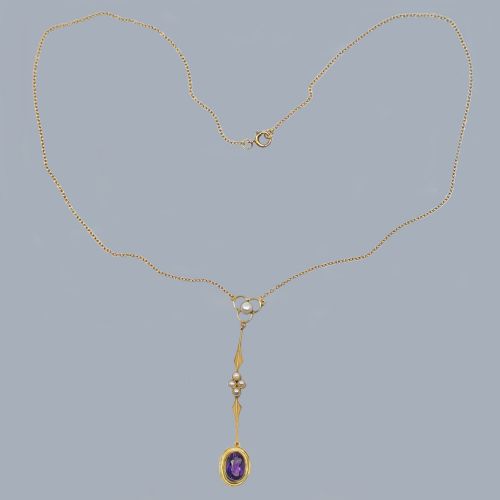
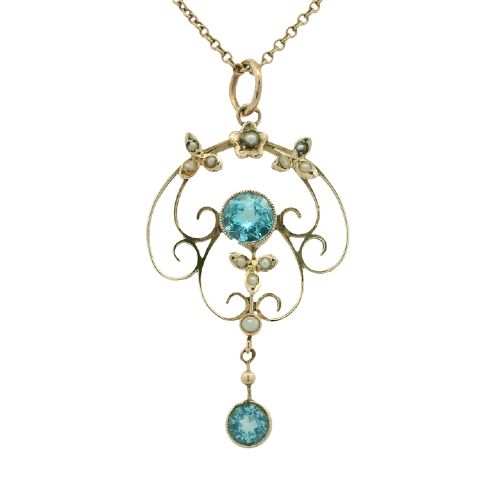
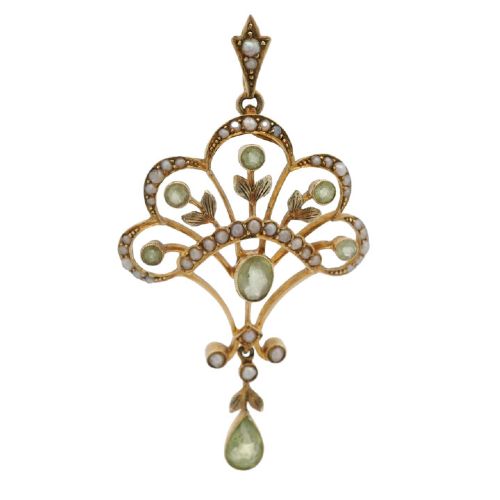
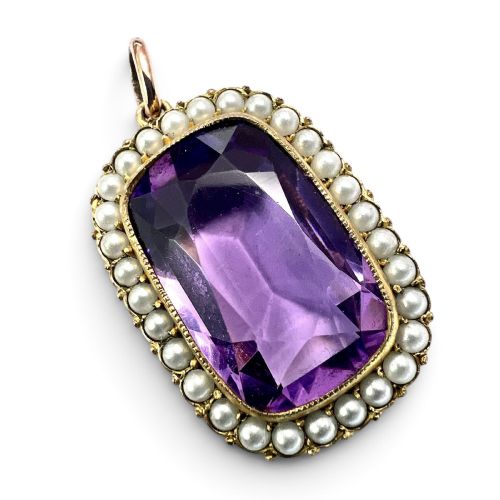
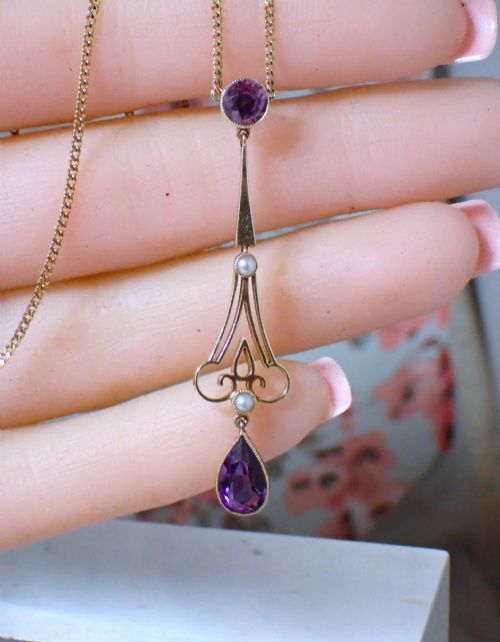
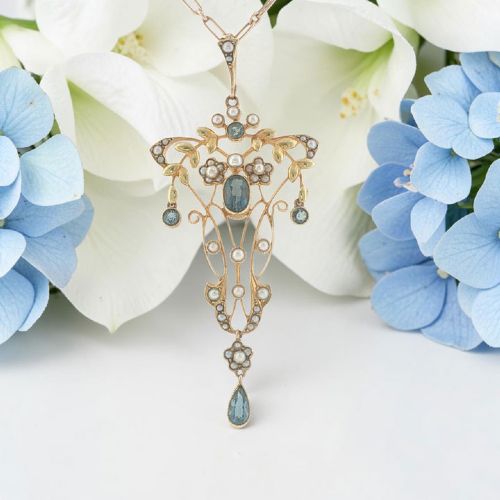
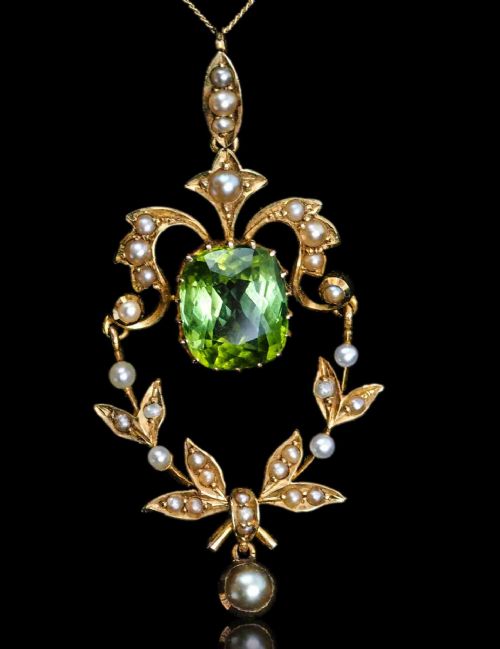
The version most commonly encountered on this page pairs 9ct or 15ct gold settings with an amethyst, peridot, or aquamarine drop suspended from a fine chain or integrated necklace framework. Examples frequently incorporate delicate foliate motifs or Art Nouveau whiplines alongside the characteristic pearl clusters.
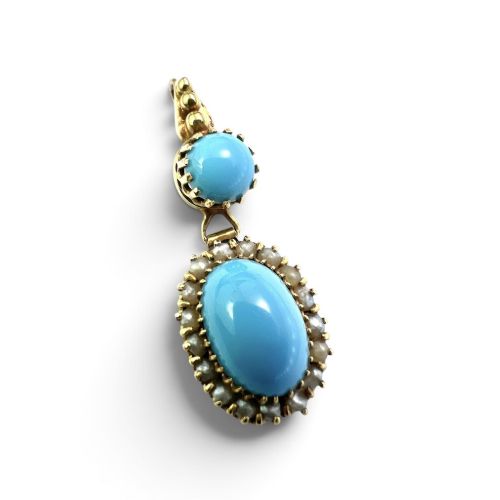
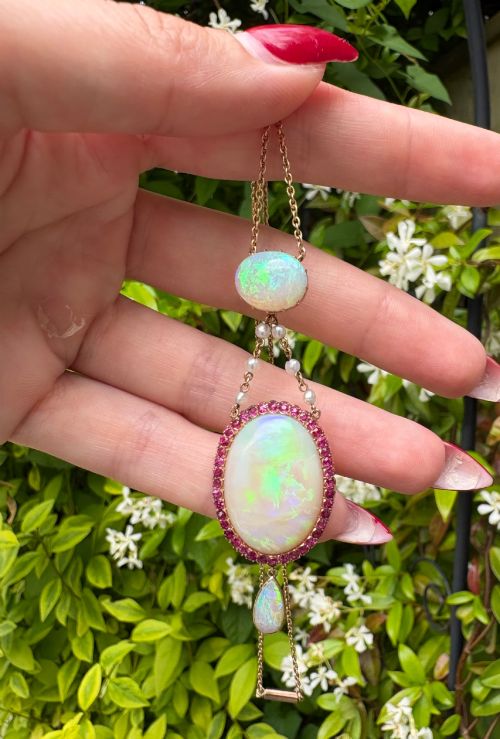
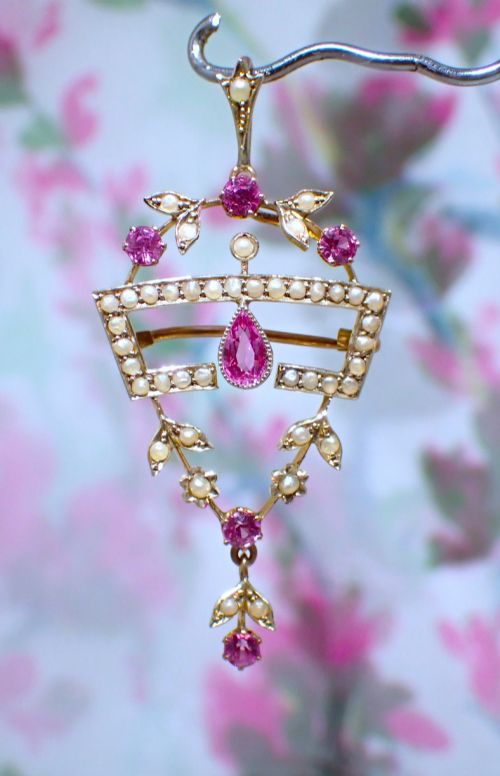
Makers often combined seed pearls with turquoise, tourmaline, and occasionally diamonds or sapphires to create distinctive drop pendants. These configurations range from simple halo settings to elaborate fringe and lavaliere designs.
Materials and Construction
Goldsmiths utilised 9ct and 15ct yellow and rose gold to construct the delicate wirework, bezels, and box settings that anchor the pearls and stones. Platinum occasionally appears in later Edwardian configurations, providing structural strength for intricate stone clusters.
Makers set tiny seed pearls by hand, often securing them on tiny pegs or threading them on silk within hollow or open-backed gold frames. Central coloured stones such as amethyst, peridot, and aquamarine are typically collet-set or prong-set to maximise light transmission through the gemstone.
Several pieces arrive safely nestled inside their original Victorian and Edwardian presentation boxes.
Evaluating Quality and Craftsmanship
Quality rests upon the uniformity and lustre of the seed pearls, alongside the depth and clarity of the central coloured stones. Finer examples maintain matched, creamy pearls with high nacre rather than chalky or mismatched replacements.
Construction rigour distinguishes finer workshops, evident in the crispness of openwork gold scroll foliage, the security of pearl settings, and the retention of original chains and boxes. Superior pieces display thoughtful integration of the drop mechanism, allowing natural movement without structural strain.
S. Blanckensee & Son·Hamilton & Co
The Seed Pearl Drop Necklace Glossary
- Seed Pearl
- A very small natural pearl, typically under two grains, prized for delicate Victorian and Edwardian clusters. These tiny pearls form the textural border and fringe elements in many pendant designs.
- Lavaliere
- A pendant necklace featuring a central gemstone drop suspended below the main decorative cluster. This fluid style gained immense popularity during the Edwardian and Art Nouveau periods.
- Collet
- A metal collar or band that holds a gemstone in place within a piece of jewellery. It represents a traditional stone-setting technique common in antique gold work.
- Fringe Necklace
- A necklace design featuring numerous small pendants or drops suspended at regular intervals along the lower edge of the chain. These drops often incorporate alternating gemstones and seed pearls.
- Art Nouveau
- An international decorative style characterised by flowing, organic lines and natural motifs like whiplash curves and floral forms. Pieces from this period frequently blend goldwork with amethyst and seed pearls.
Seed Pearl Drop Necklace: Frequently Asked Questions
What is a lavaliere necklace?
A lavaliere necklace is a pendant design featuring a primary decorative motif with one or more dangling gemstone drops suspended beneath it. This style became particularly fashionable during the Edwardian era.
These pieces often combine gold framework with seed pearls and central stones like peridot or amethyst, creating a light, dangling silhouette against the neckline.
How do I date an antique pearl pendant?
Dating relies on examining the gold carat marks, gemstone cuts, and stylistic clues such as Edwardian garland motifs or Victorian mourning and heraldic elements. Hallmarks and box makers often provide precise chronological markers.
Early twentieth-century pieces frequently utilise 15ct gold and platinum, while late Victorian items more commonly feature 9ct or 15ct yellow gold alongside hand-cut gemstones.
Are seed pearls durable for daily wear?
Seed pearls are delicate organic gems that require careful treatment to preserve their natural lustre and secure placement. Moisture, cosmetics, and physical impact can damage the pearls and their traditional silk threading.
Owners should store these necklaces flat, avoid exposure to harsh chemicals, and have the settings inspected periodically by a specialist jeweller.
What stones accompany seed pearls?
Amethyst, peridot, and aquamarine are the most frequent gemstone companions found alongside seed pearls in Edwardian and Victorian drop necklaces. Designers also utilised turquoise, garnets, pink tourmaline, and occasionally diamonds or opals.
These colourful stones provide a vibrant contrast to the white or cream lustre of the tiny seed pearls set into the gold frames.