

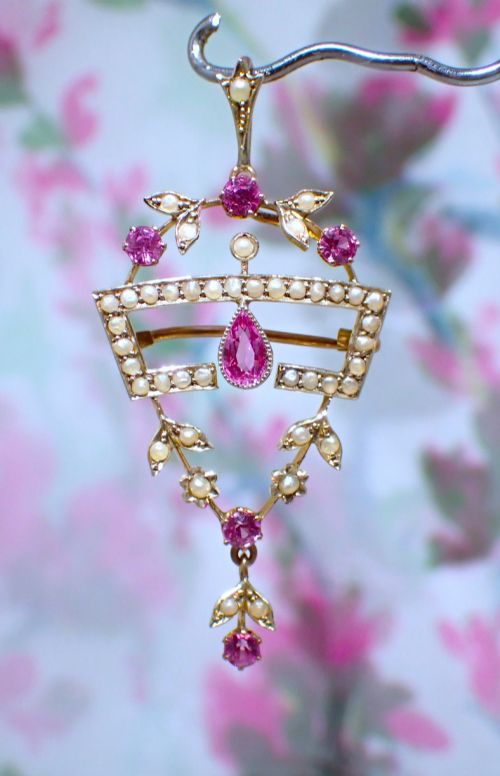


Gold Tourmaline Pendant
A gold tourmaline pendant brings vibrant colour and delicate metalwork together, offering a striking piece of jewellery for daily wear.
Gold Tourmaline Pendant
When searching for a gold tourmaline pendant, a buyer encounters pieces ranging from delicate Edwardian drop designs to mid-century creations. These items combine gold settings with pink, green, or cognac tourmaline stones.
The most frequent examples on this page hail from the Edwardian period, often incorporating seed pearls alongside natural pink tourmaline in fifteen-carat or nine-carat gold. Other pieces showcase Art Nouveau, Art Deco, and Arts and Crafts aesthetics.
Forms include lavalieres, convertible brooch pendants, and structured geometric drops. The stones themselves appear in various cuts, from simple pear shapes to carved horse heads.
How they were made
Maker workshops utilised yellow gold, fifteen-carat gold, and later eighteen-carat white gold to construct secure bezel and prong settings. Jewellers shaped the precious metal by hand or utilised early casting methods depending on the era.
Stones such as pink and green tourmalines, diamonds, seed pearls, and aquamarines were carefully selected and arranged to complement the central gemstone. Fine chainwork, lavalier drops, and intricate wirework finished the construction of these necklaces.
Gold Tourmaline Pendant Retail Price Guide 2026
Typical asking prices for gold tourmaline pendant among the pieces listed under this phrase on Sellingantiques today, from the lower quarter to the upper quarter. They describe what is for sale here now, not the wider market.
Listings feature nine-carat and fifteen-carat gold alongside eighteen-carat white gold.
What varies in quality
The distinction between standard and superior pieces rests on the weight and purity of the gold, alongside the clarity and saturation of the tourmaline. Maker attribution, such as work by Liberty and Co or Chaumet, elevates a piece significantly.
The subtlety of the stone-setting and the integration of supporting gems like diamonds or pearls determine the overall refinement of the pendant. Condition of the delicate gold wirework and original components also separates ordinary examples from exceptional ones.
Chaumet·Liberty and Co
The Gold Tourmaline Pendant Glossary
- Tourmaline
- A crystalline boron silicate mineral that displays a wide spectrum of colours, frequently appearing in pink, green, and multi-colour varieties within antique jewellery.
- Lavalier
- A necklace featuring a pendant that drops below the main chain line, typically popular during the Edwardian era.
- Seed pearl
- A very small, naturally formed or cultured pearl used extensively in Victorian and Edwardian cluster and border settings.
- Belle Epoque
- A period of refined jewellery design spanning the late nineteenth century and the years leading up to the First World War.
- Sputnik
- A mid-century stellar design motif featuring radiating stones resembling the early satellite.
Gold Tourmaline Pendant: Frequently Asked Questions
How do I clean a gold tourmaline pendant?
Tourmalines possess a moderate hardness and require gentle care to avoid scratching the facets or damaging delicate seed pearls. Warm soapy water and a soft brush serve best for removing daily residue from the gold setting.
Harsh chemical dips and ultrasonic cleaners must be avoided entirely, as they can ruin pearls and alter treated or fractured gemstones. Pat the piece dry thoroughly with a soft cloth after rinsing.
Can I wear my pendant every day?
Most gold tourmaline pendants suit regular wear provided they receive sensible care during physical activities. Removing the necklace before swimming, gardening, or sleeping protects the delicate chain and prong settings.
Edwardian lavalieres and pieces with seed pearls demand particular attention because organic gems absorb moisture and oils easily. Storing the pendant in a lined box prevents scratches from other jewellery.
How do I identify an Edwardian pendant?
Edwardian pendants typically feature light, airy openwork metal designs in fifteen-carat yellow gold, often incorporating platinum highlights. Motifs lean towards garlands, bows, and symmetrical drops set with pink tourmalines and seed pearls.
Proportions remain delicate and feminine, reflecting the aesthetic preferences of the early nineteen hundreds. Hallmarks stamped on the reverse often confirm the period and gold standard.