

Edwardian Drop Pendant
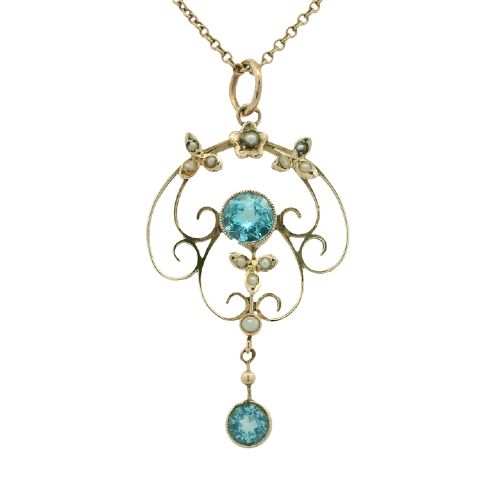
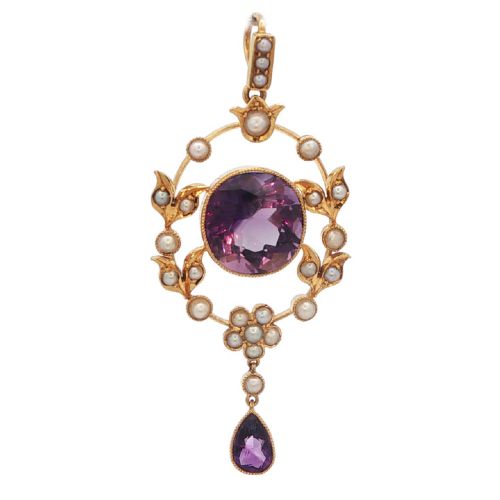
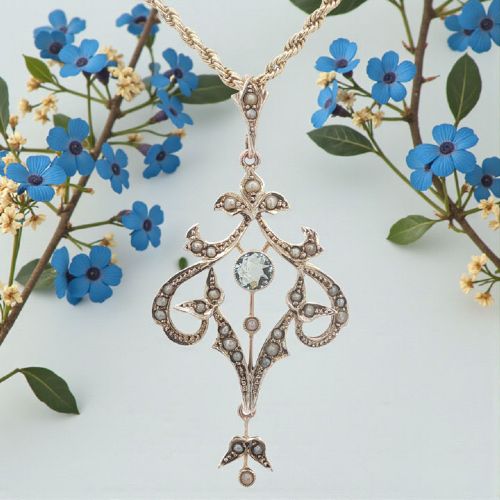
An edwardian drop pendant brings delicate sparkle and fine metalwork from the early twentieth century directly to your neckline.
The Edwardian Drop Pendant
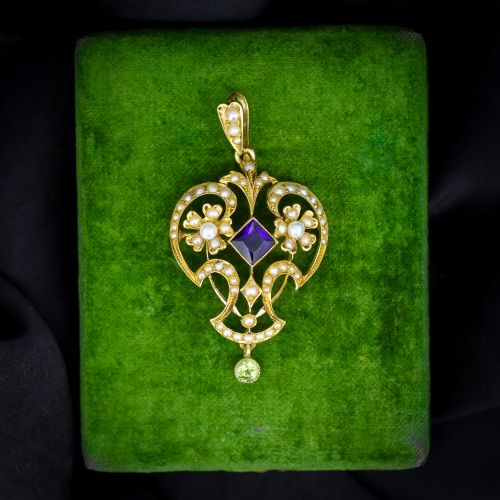
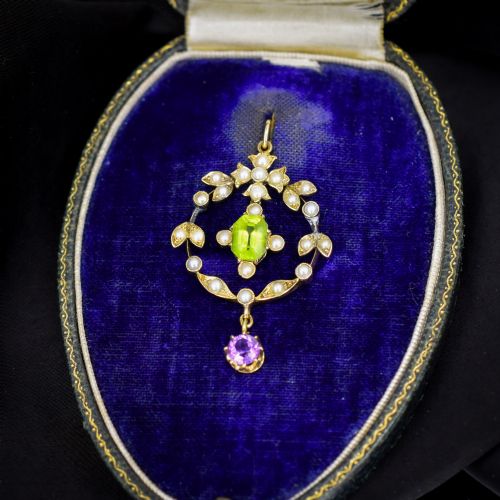
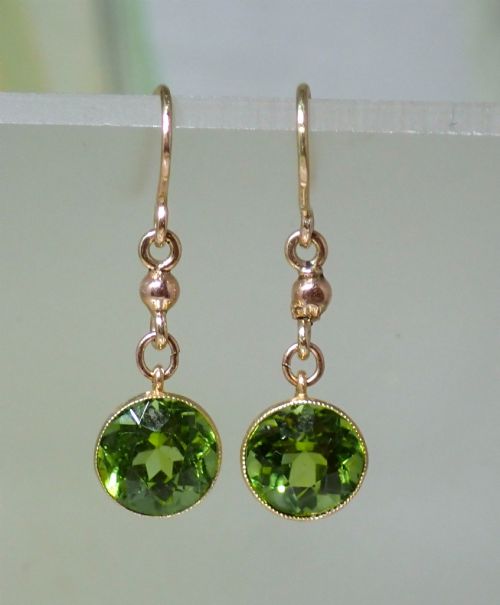
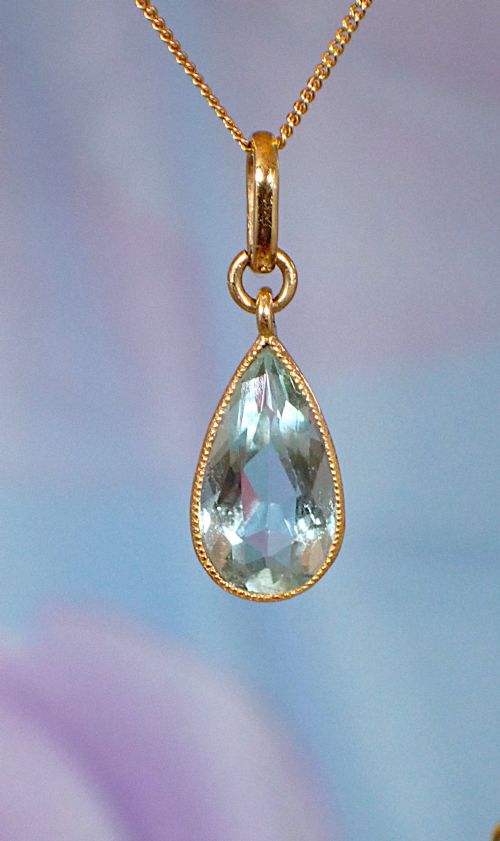
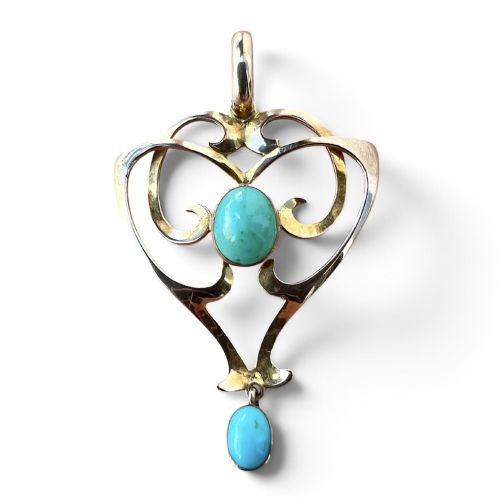
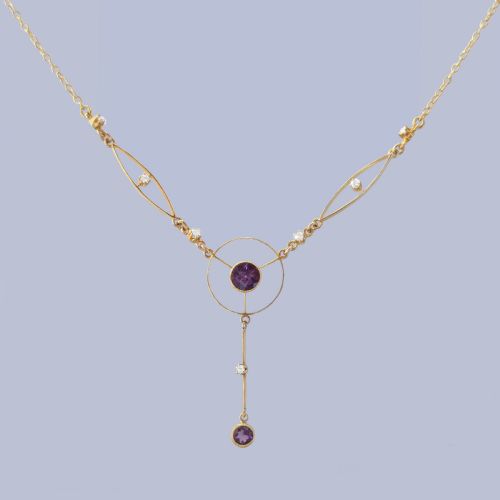
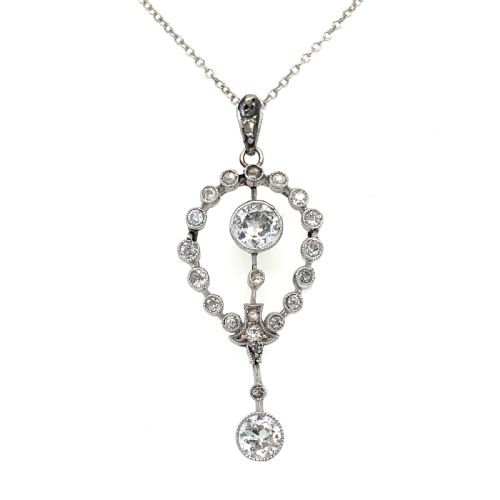
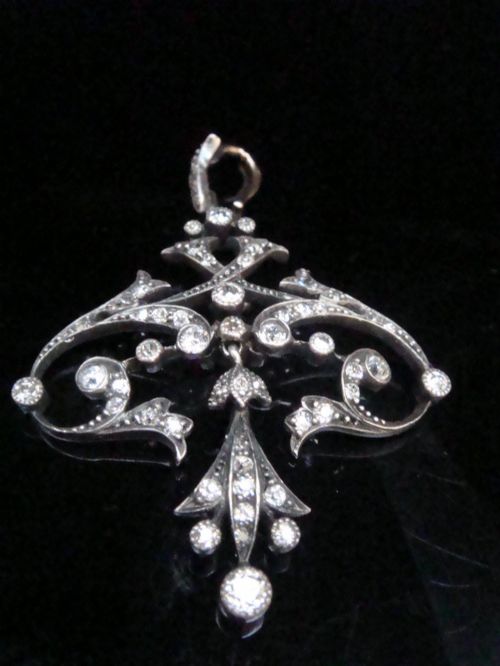
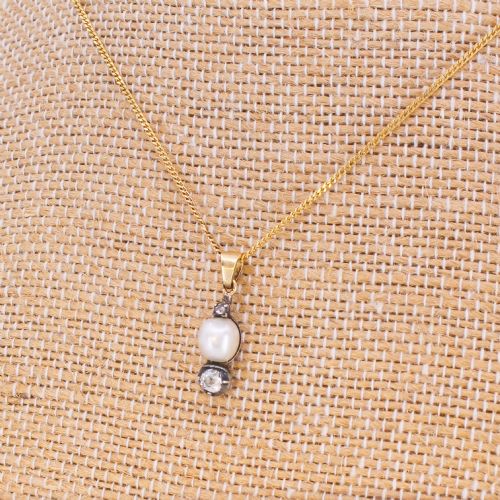
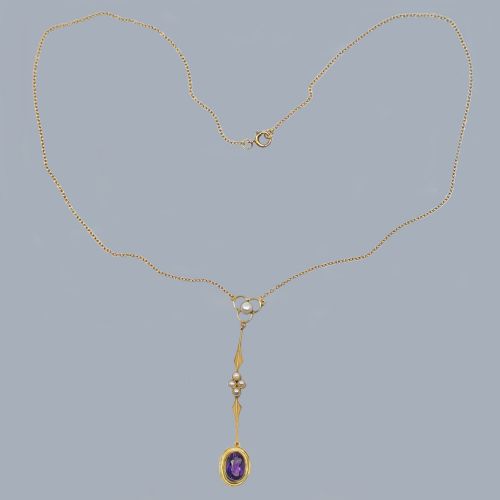
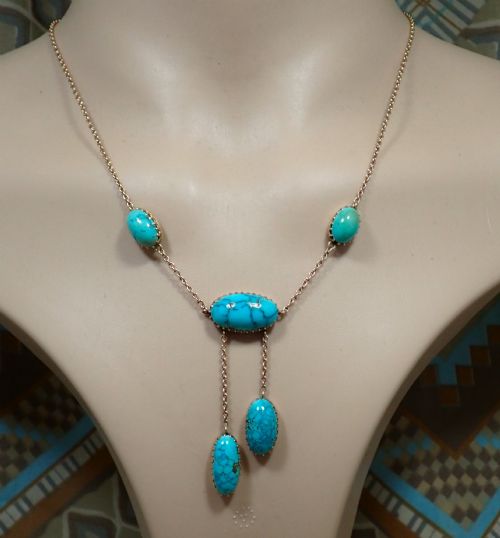
When you search for an edwardian drop pendant, you encounter delicate necklaces and convertible brooch pendants created during the Edwardian era and the 1910s and 1920s. These pieces typically feature a central suspended stone or gemstone cluster hanging below a fine chain or collar.
The most common versions on this page combine lower carat gold, such as 9ct or 15ct, with shimmering aquamarine, pearl, sapphire, garnet, or paste glass. Many pieces arrive as part of integrated necklaces, whilst others function as interchangeable pendants or lavalieres.
Makers of the period favoured light, airy designs that utilised platinum alongside yellow gold to create lace-like frameworks. Floral motifs, foliate drops, and knife-edge bars define the traditional silhouette seen across these examples.
Distinctions in Quality
The finest examples display superior gemstone matching, particularly in multi-stone drops where colour saturation and clarity remain consistent across pearls, aquamarines, and sapphires. Higher-grade pieces utilise 15ct gold or platinum settings with meticulous hand-piercing that creates a seamless, lace-like metal framework.
Lesser pieces often employ 9ct gold with simpler stamped components and paste glass replacements rather than natural gemstones. The precision of the setting work and the delicacy of the knife-edge bars separate standard production from exceptional jewetwork.
Retail Price Guide 2026
Typical UK retail prices for edwardian drop pendant, calculated from the Sellingantiques database of over a million retail prices indexed since 2003. This retail price guide relies exclusively on Sellingantiques data; no external sources or auction records are used, so the figures do not describe the wider market.
The Edwardian Drop Pendant Glossary
- Drop pendant
- A necklace featuring a suspended element that hangs below the main chain line. This format was immensely popular for showcasing single large aquamarines or clustered garnets.
- Lavalier
- A pendant featuring a primary drop suspended from a smaller secondary drop or loop. They frequently incorporate delicate cable chains and central cabochon stones.
- Knife-edge
- A thin bar of metal tapered to a sharp edge viewed from the side, designed to appear virtually invisible whilst holding a suspended stone. This technique creates the illusion that gems float freely.
- Paste glass
- Highly refractive lead glass cut and polished to imitate precious gemstones. Edwardian jewellers used paste in intricate cluster and drop configurations.
- Seed pearl
- Very small natural or saltwater pearls threaded or set closely together. They provide soft white luminescence in floral and foliate Edwardian clusters.
Frequently Asked Questions
How do I wear an antique drop pendant?
These pendants look best on fine chains that sit near the collarbone, allowing the drop element to move freely. Many original pieces come with matching necklaces or convertible brooch fittings.
Pair them with simple necklines to let the intricate wirework and suspended stones remain the focal point of your outfit.
How do I identify Edwardian jewellery?
Look for platinum-topped gold, fine millegrain edges, and airy openwork frames influenced by Garland style aesthetics. Gemstones such as aquamarine, peridot, and seed pearls are characteristic of the period.
Construction techniques rely on hand-piercing and lightweight frames rather than the heavier cast mounts typical of later decades.
Are these pendants fragile?
While Edwardian drop pendants are surprisingly durable, their delicate wirework and seed pearls require mindful handling. Avoid wearing them during physical activities or exposing them to harsh chemical cleaners.
Store them flat in a lined jewellery box to prevent the fine chains from tangling and the delicate drops from bending.