
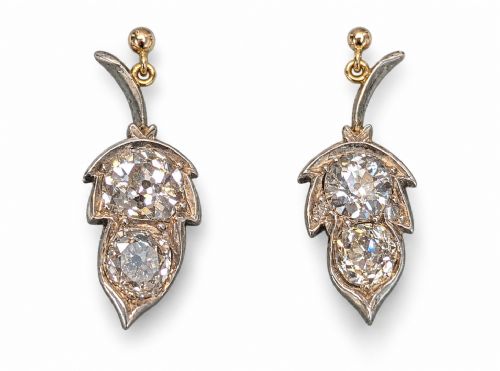
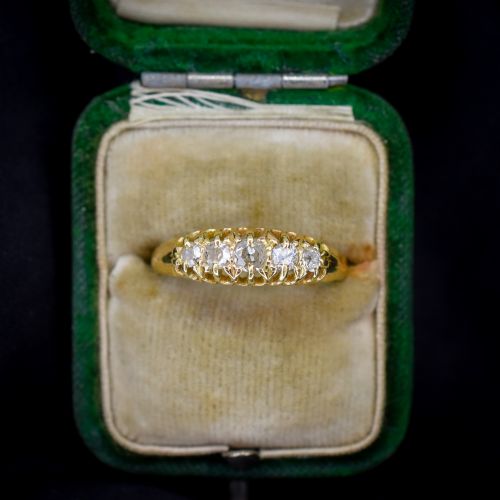
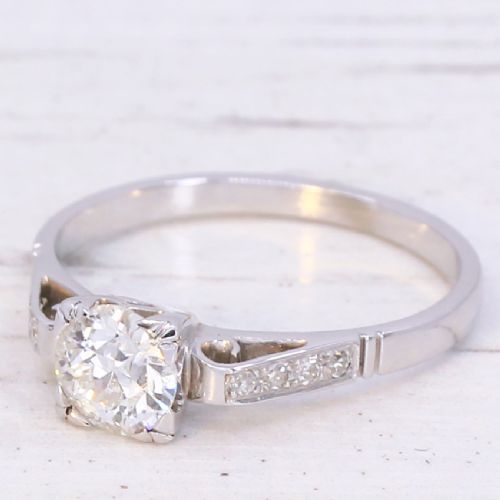
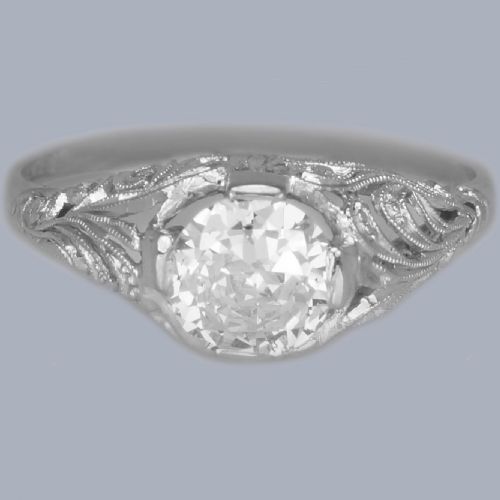


Old European Cut
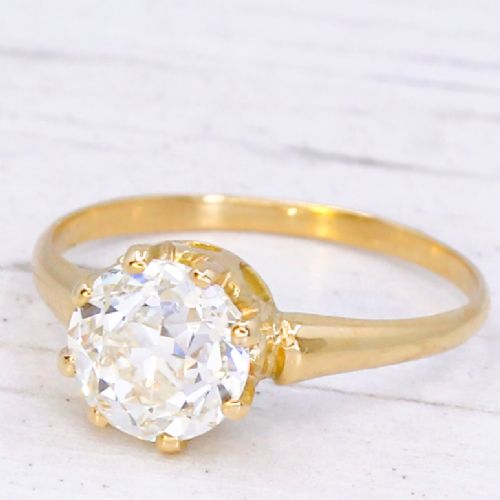
An old european cut stone brings hand-faceted heritage to rings and pendants, offering a deeper culet and softer brilliance than modern brilliants.
Old European cut pieces
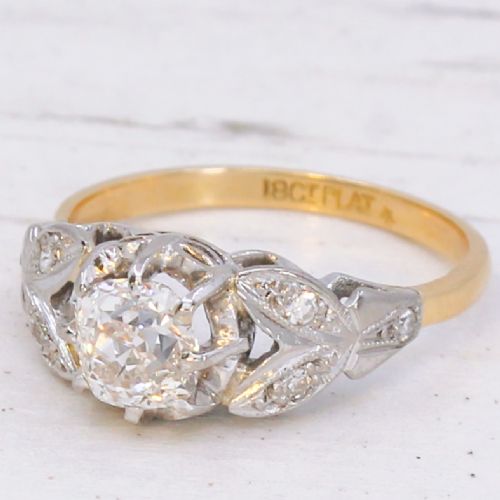
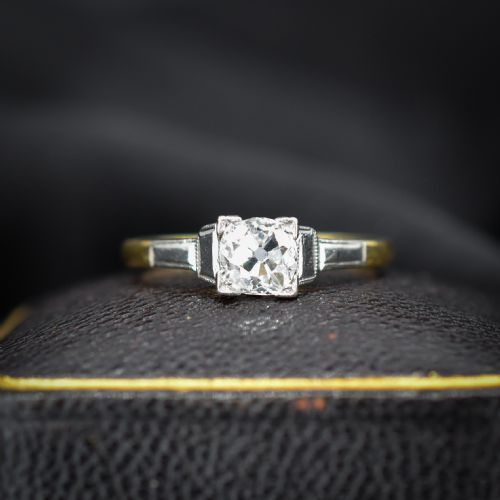
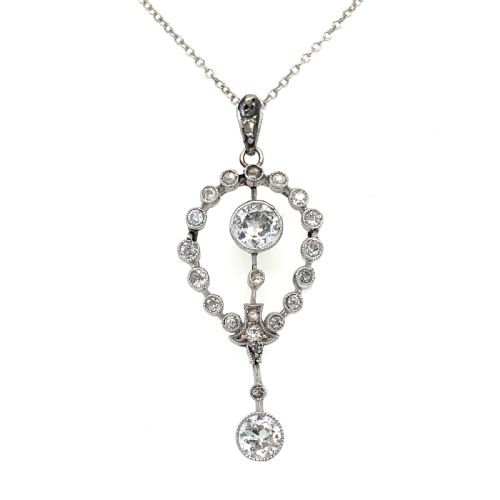
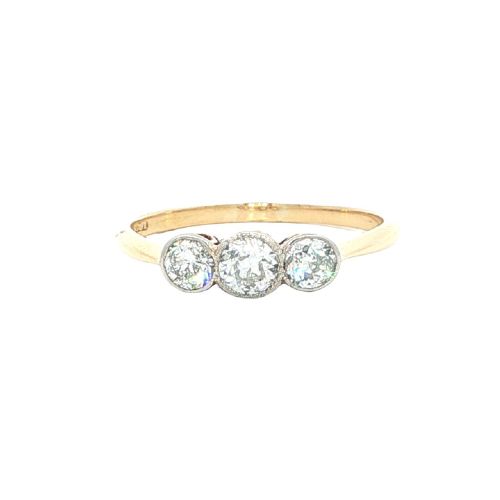
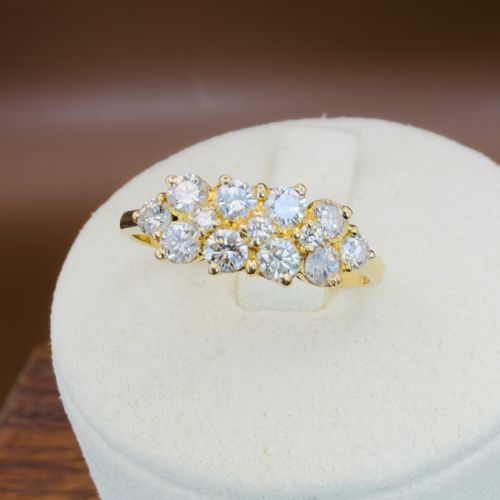
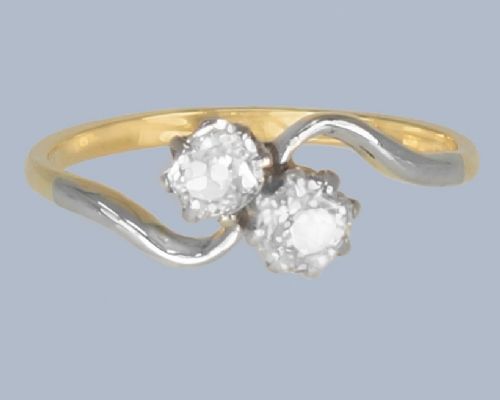
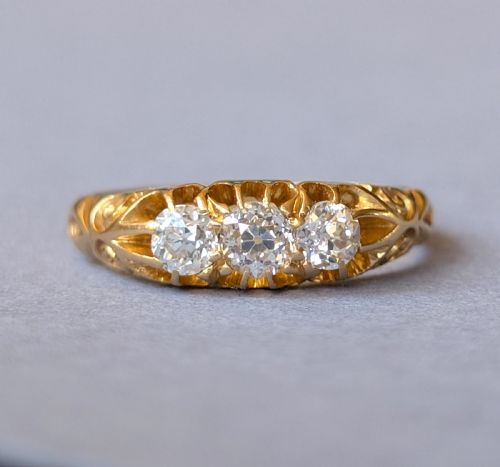
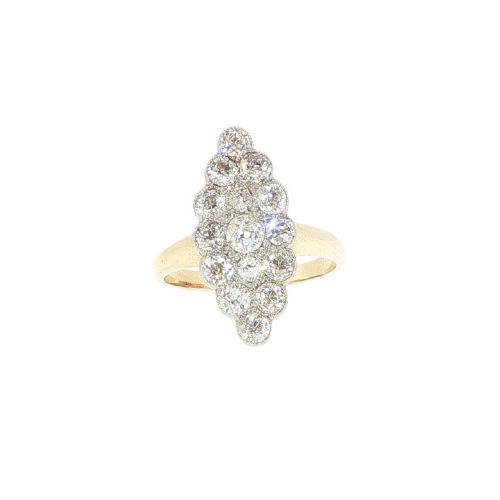
An old european cut search brings together rings, pendants, earrings and bracelets spanning Victorian, Edwardian and Art Deco periods, alongside mid-century examples. Engagement rings dominate the selection, appearing as solitaires, clusters and multi-stone settings.
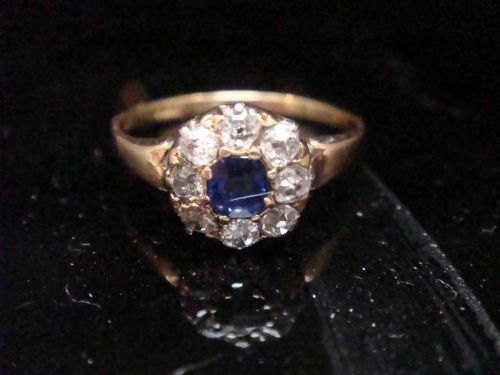
The stones sit within platinum, 18ct yellow gold and occasionally higher or lower gold purities. Pieces frequently combine diamonds with sapphires, rubies, emeralds or tanzanite.
Buyers encounter forms ranging from traditional flowerhead and daisy clusters to gypsy settings, five-stone rows and delicate drop pendants.
Quality differences
The harmony between the diamond's hand-cut proportions and its metal setting dictates visual depth, separating fine artisan work from standard production.
Integration of coloured gemstones, such as emeralds, rubies or sapphires, alongside the central diamond requires careful stone selection and balanced colour saturation.
Retail Price Guide 2026
Typical UK retail prices for old european cut, calculated from the Sellingantiques database of over a million retail prices indexed since 2003. This retail price guide relies exclusively on Sellingantiques data; no external sources or auction records are used, so the figures do not describe the wider market.
Several snake rings slither through the archive, proving Victorians loved wrapping their fingers in diamond-eyed reptiles.
The Old European Cut Glossary
- Culet
- The small facet at the bottom of a gemstone. In older cuts, this facet is often noticeably larger and visible through the table.
- Cluster ring
- A central stone surrounded by a border of smaller gems. This configuration maximises visual impact and was favoured across Victorian and Edwardian periods.
- Gypsy setting
- A ring style where the stone is flush-set directly into the thick metal band. This provides a smooth, secure profile popular in earlier periods.
- Daisy head
- A specific cluster arrangement resembling a flower. Small diamonds or coloured stones encircle a prominent centre stone.
Frequently Asked Questions
How do I date my ring?
Dating relies upon mounting styles, metal combinations and hallmarks where present. Edwardian pieces often utilise platinum-topped gold, while Art Deco items favour geometric platinum work.
Comparing the setting construction and gem arrangements against documented periods helps establish a reliable timeline for each piece.
Are these stones certified?
Many antique pieces retain their original settings and come to market without modern laboratory certificates. Dealers assess stone weights through spread and millimeter measurements.
Evaluation depends on visual inspection under magnification to understand the cut characteristics and mounting integrity.
Can these rings be resized?
Most gold and platinum rings allow for resizing by a skilled jeweller. The feasibility depends on the shank thickness and the presence of channel-set stones or intricate shoulders.
Consulting a specialist ensures the structural integrity of the band remains intact during adjustment.