






Blue Stone Pendant
A blue stone pendant brings together cool colour and historical metalwork, offering an enduring piece of jewellery for daily wear.
Blue Stone Pendant
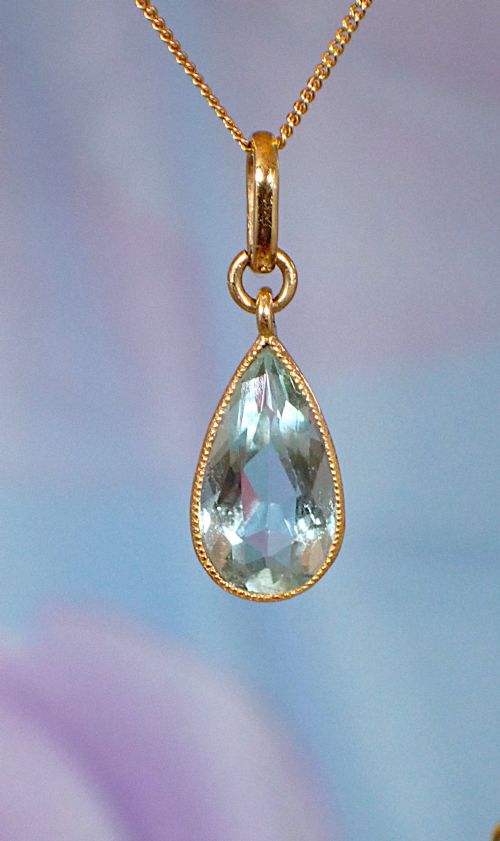
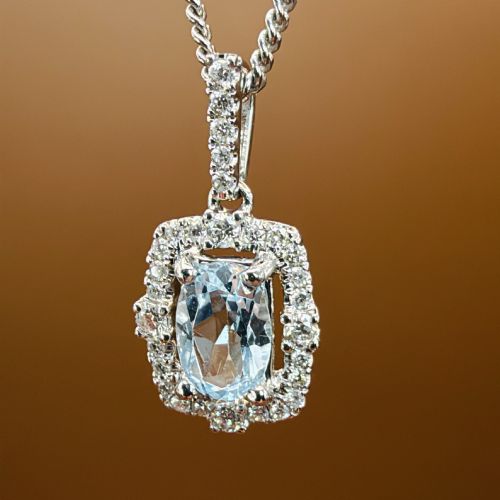
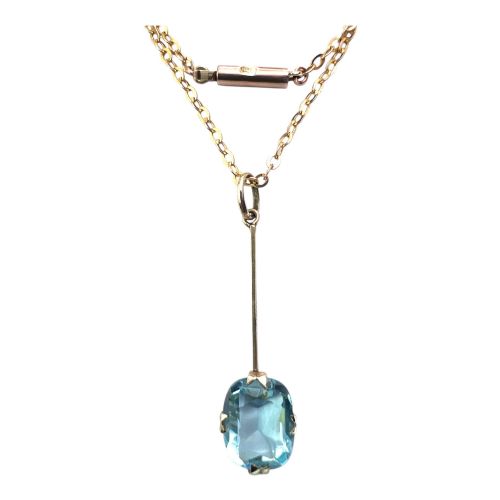
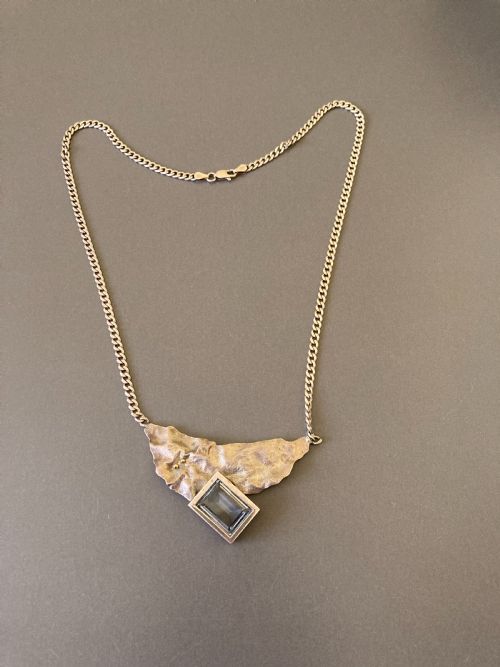
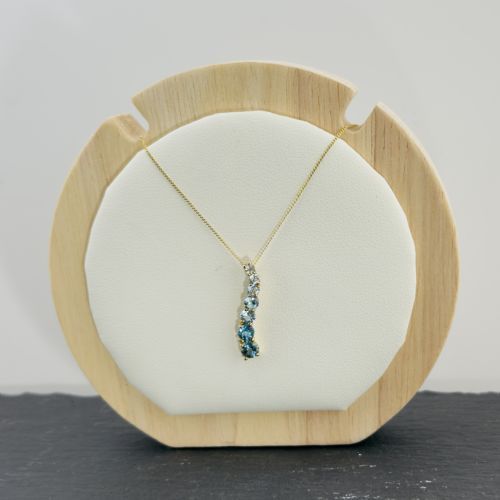
A blue stone pendant is a necklace ornament featuring a central gem or paste in shades of blue, held in precious metal settings. These pieces appear across several eras, ranging from the late nineteenth century through the Edwardian period and into mid-century modernist designs.
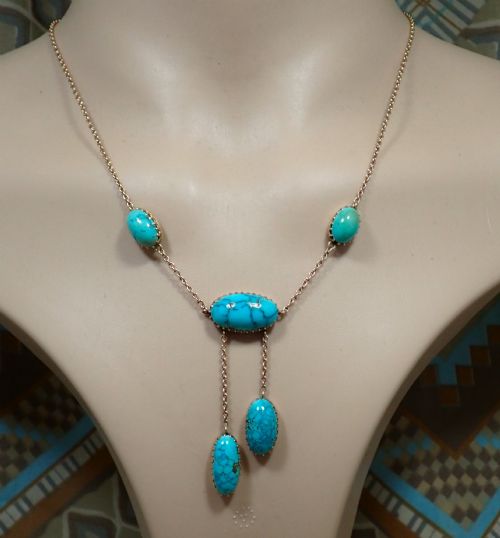
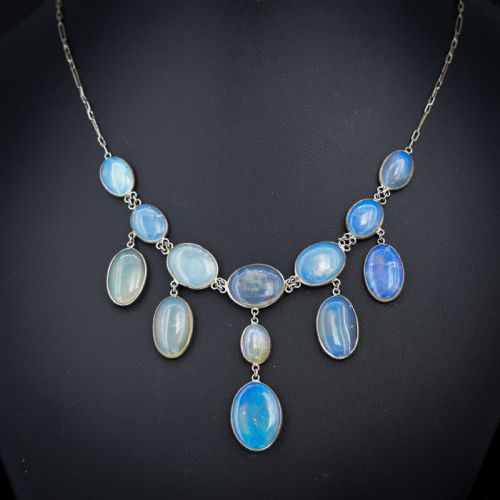
Buyers will encounter various forms on this page, including drop necklaces, cluster pendants, negligee necklaces, and festoon styles. The accompanying chains and mounts often match the period of the central ornament, utilising gold or silver.
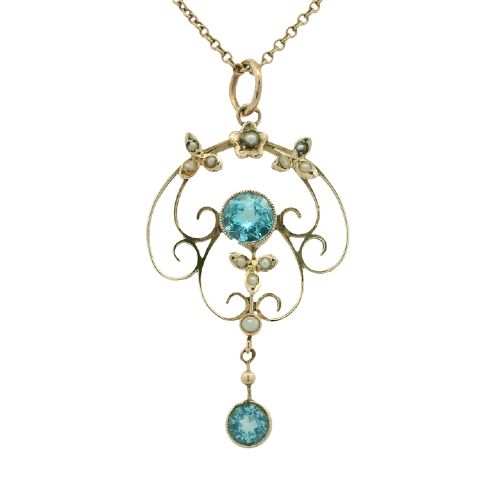
The selection encompasses both delicate Edwardian filigree work and bolder twentieth-century stones like blue topaz, aquamarine, sapphire, and turquoise. Each piece reflects the prevailing aesthetic of its decade, from intricate floral motifs to clean geometric lines.
Materials and construction
Makers set blue stones into yellow gold, rose gold, white gold, or sterling silver using traditional claw, bezel, and collet techniques. Many Edwardian and Victorian examples incorporate natural pearls, diamonds, or paste alongside the primary blue gem to add contrast and texture.
Metals were frequently worked into openwork filigree, festoon chains, or solid backplates depending on the decade of manufacture. Twentieth-century pieces introduce clean bezel mounts and prong settings that maximise light passing through the stones.
Listings span from the late nineteenth century through Victorian, Edwardian, and mid-century twentieth-century periods in gold and silver.
Judging quality in pendants
Quality rests on the clarity and cut of the stone, whether natural aquamarine, sapphire, topaz, turquoise, or historic paste. Better examples show careful hand-setting and secure prongs that integrate smoothly into the overall metal design.
The sophistication of the metalwork distinguishes finer pieces, such as delicate wirework in Edwardian and Arts & Crafts items compared to simpler mass-produced mounts. Preserved original chains and maker integration further elevate a piece.
The Blue Stone Pendant Glossary
- Negligee necklace
- A pendant style featuring two drops suspended at slightly different lengths from a central connector, popular during the Edwardian era.
- Festoon necklace
- A decorative chain design where swags of chain or linked elements drape across the neckline, often holding fringe drops.
- Paste
- Hand-cut and polished lead glass used historically to imitate gemstones, valued in antique jewellery for its own bright refractive qualities.
- Cabochon
- A gemstone shaped and polished with a smooth, rounded convex surface rather than faceted edges.
Blue Stone Pendant: Frequently Asked Questions
How do I date a blue stone pendant?
Dating relies on stylistic clues like Edwardian millegrain work, Victorian rolled gold techniques, or mid-century modernist geometry. Hallmarks and metal purity stamps also help narrow down the decade of manufacture.
Examining the type of chain and clasp provides further context, as original fittings often match the era of the pendant itself.
Are these blue stones natural?
The listings include both natural gemstones such as aquamarine, sapphire, topaz, turquoise, and zircon, alongside historic paste stones. Each material reflects the manufacturing standards of its specific period.
Checking the descriptive details for terms like paste or specific mineral names clarifies the composition of the blue stone in question.
How should I care for antique pendants?
Antique and vintage jewellery requires gentle handling, avoiding harsh chemical dips or ultrasonic cleaners that might damage softer stones like turquoise or pearls. A soft cloth is usually sufficient for routine maintenance.
Store pendants individually in padded boxes to prevent scratching between the metal mounts and the central stones.