






Vintage Aquamarine Drop
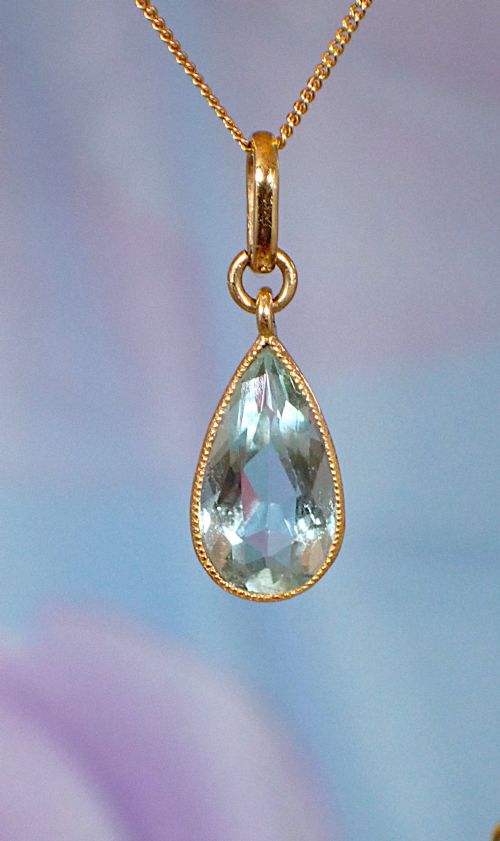
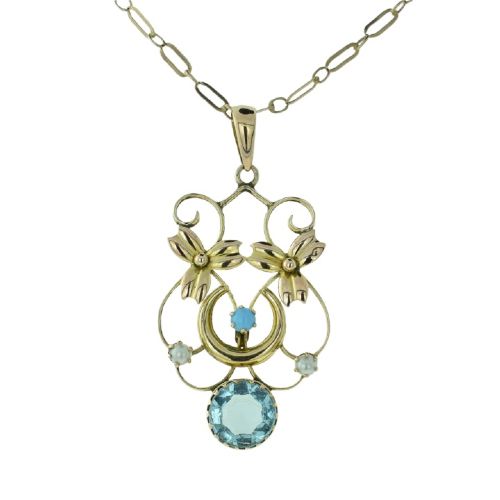
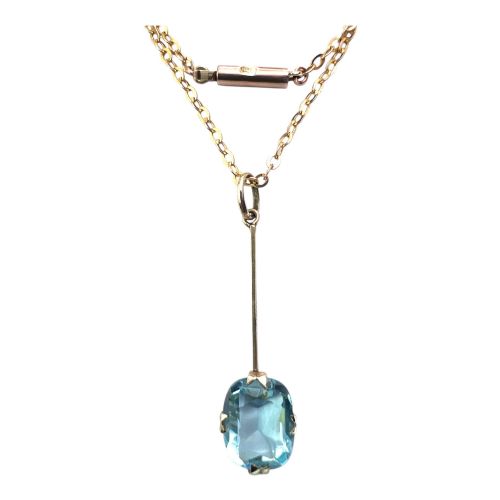
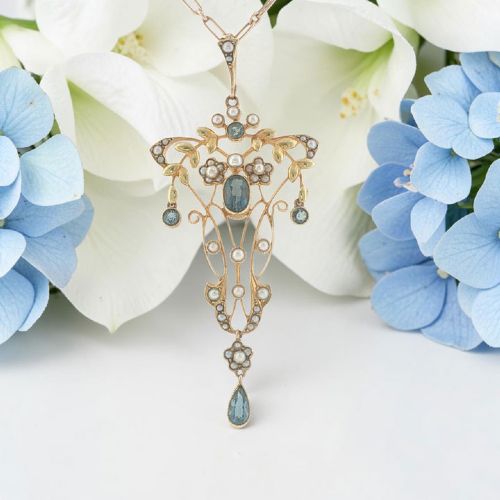
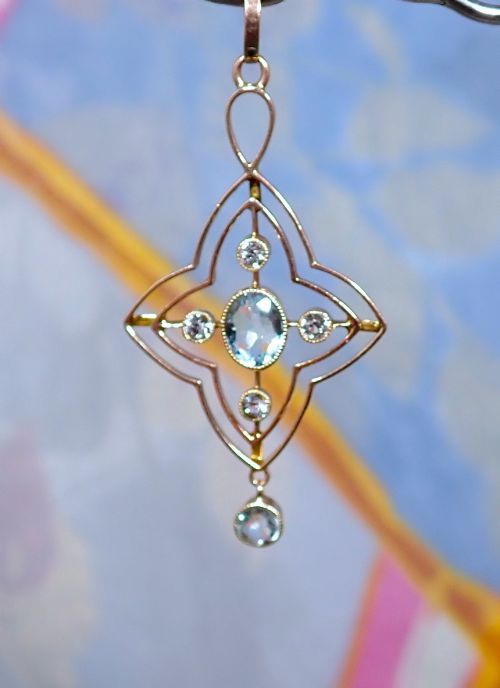
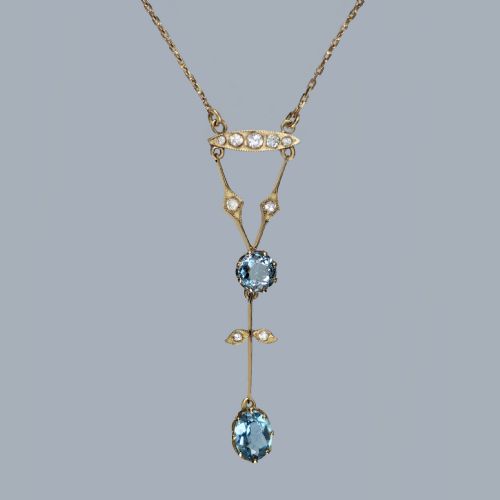
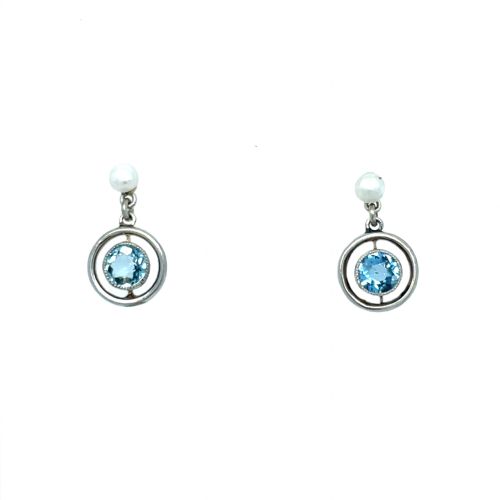
These vintage aquamarine drop pieces span Edwardian necklaces to mid-century earrings, bringing pale blue stones together with delicate precious metals.
Vintage Aquamarine Drop
When you search for vintage aquamarine drop, you encounter a selection of necklaces, pendants, and earrings created across the nineteenth and twentieth centuries. These jewels suspend pale blue beryl stones from chains or hooks, moving gracefully when worn.
The pieces appearing on this page range from early twentieth-century Edwardian designs featuring seed pearls and nine-carat gold to geometric Art Deco platinum creations. Mid-century examples also feature prominently, utilising fourteen-carat and eighteen-carat white gold alongside substantial carat weights.
Earrings and pendant necklaces dominate the selection, often pairing the central aquamarine with diamonds or white sapphires. The forms reflect the prevailing aesthetics of their respective decades, from sinuous floral motifs to structured geometric clusters.
How they were made
Goldsmiths and platinum-smiths set aquamarines into a variety of precious metals, utilising nine-carat, fifteen-carat, and eighteen-carat yellow and rose gold, alongside platinum and white gold. Stones are secured with delicate claw settings or flush mountings that allow light to pass through the pale blue crystal.
Jewellers incorporated accent gems such as diamonds, seed pearls, and blue topaz to frame the central aquamarine drops. Fine chainwork, millegrain edges, and pierced metal galleries complete the construction of these necklaces and earrings.
Periods represented span the late nineteenth century through Edwardian, Art Deco, and mid-century modern eras.
What varies in quality
The standard of craftsmanship shows in the crispness of the metalwork, from hand-beaded millegrain borders to the precision of the stone settings. Better pieces maintain clean soldering joints and secure findings that match the original period of manufacture.
Stone saturation and clarity distinguish individual examples, with some aquamarines offering deep cerulean colour while others present pale, icy water tones. The brilliance of accompanying diamonds and the integrity of natural pearls also influence the character of each drop pendant or earring.
The Vintage Aquamarine Drop Glossary
- Aquamarine
- A pale blue to light green variety of beryl that forms the primary gemstone in these drop necklaces and earrings. Its name derives from seawater, reflecting its characteristic translucent hue.
- Edwardian
- A stylistic period spanning the early twentieth century, known for delicate platinum and yellow gold work, garland motifs, and the frequent pairing of aquamarines with seed pearls or diamonds.
- Art Deco
- A design movement from the nineteen-twenties and nineteen-thirties favouring geometric symmetry, platinum settings, and structured arrangements of aquamarines and baguette-cut diamonds.
- Millegrain
- A decorative technique featuring a line of tiny raised metal beads along the edges of a setting, frequently seen in Edwardian drop pendants.
- Lavalier
- A style of pendant featuring a dangling gemstone or drop suspended from a fine chain, popular during the Edwardian and Art Nouveau eras.
Vintage Aquamarine Drop: Frequently Asked Questions
How do I care for vintage aquamarine drop earrings?
Clean these earrings gently using warm soapy water and a soft brush to remove dust from behind the stone settings. Avoid harsh ultrasonic cleaners, particularly when seed pearls or delicate antique settings are present.
Store pieces individually in soft pouches to prevent the aquamarine facets from scratching softer metals or adjacent jewellery.
Are these aquamarines natural or treated?
The stones seen across these listings include natural aquamarines set during the Edwardian, Art Deco, and mid-century periods. Natural beryl displays subtle variations in internal clarity and tone.
Examination under magnification reveals the natural inclusions typical of antique and vintage gemstones.
What is the difference between an Edwardian and a mid-century drop?
Edwardian drop necklaces typically utilise yellow gold or platinum with flowing floral motifs, seed pearls, and intricate millegrain details. They present an airy, lace-like aesthetic.
Mid-century examples lean towards clean lines, larger carat weights, and white gold or platinum settings that highlight the geometric cut of the aquamarine.
Can I wear a vintage aquamarine pendant every day?
Aquamarine has a good hardness rating on the Mohs scale, making it durable enough for regular wear when mounted in secure settings. However, older chains and delicate Edwardian mountings benefit from gentle handling and occasional checks by a jeweller.
Remove pendant necklaces before sleeping or engaging in strenuous physical activity to protect the fine metalwork.