
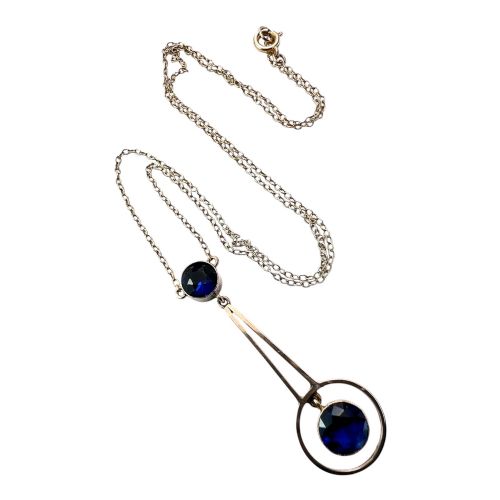
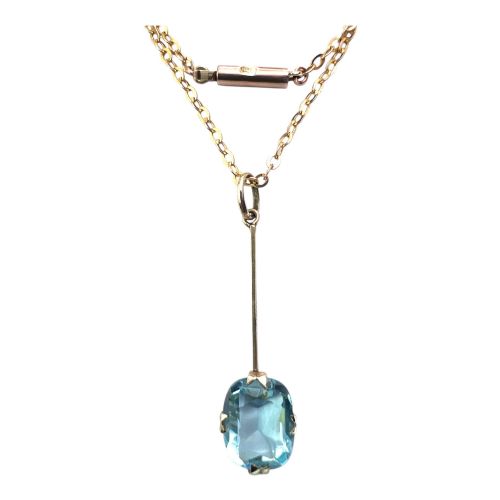


Gold Paste Necklace
A gold paste necklace offers the brilliant sparkle of high-period stones through meticulously cut glass.
Gold Paste Necklace
A gold paste necklace brings together gleaming gold settings and precision-cut glass stones designed to imitate fine gemstones. These pieces span Georgian, Victorian, Edwardian, Art Deco, and 1940s Retro Modern eras, showing how deeply makers valued paste across centuries.
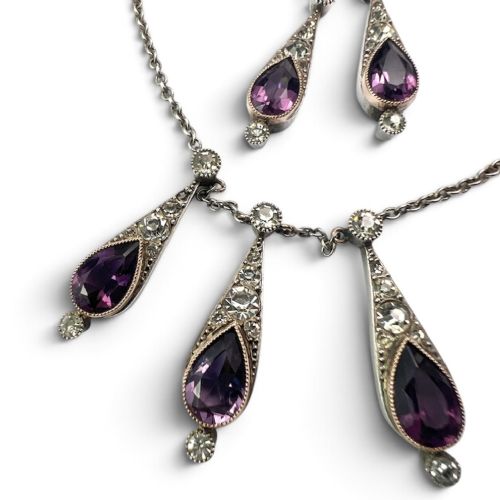
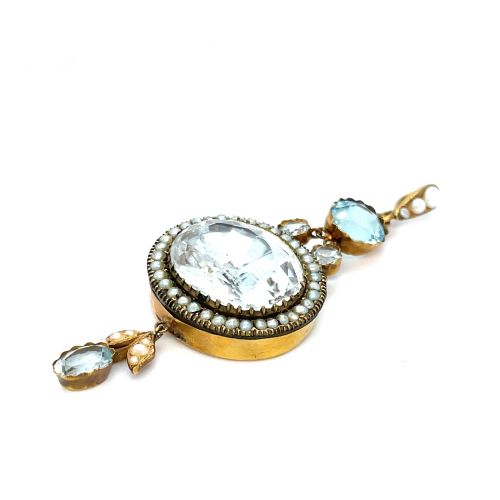
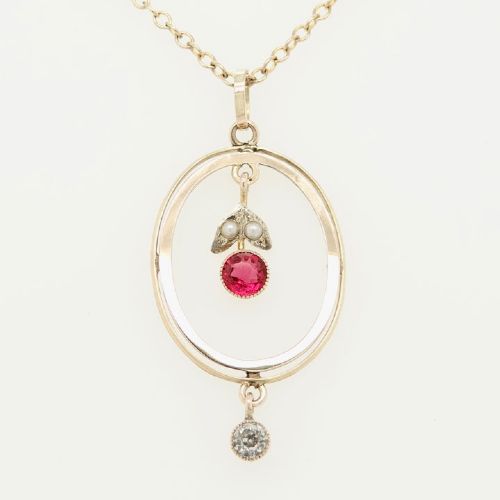
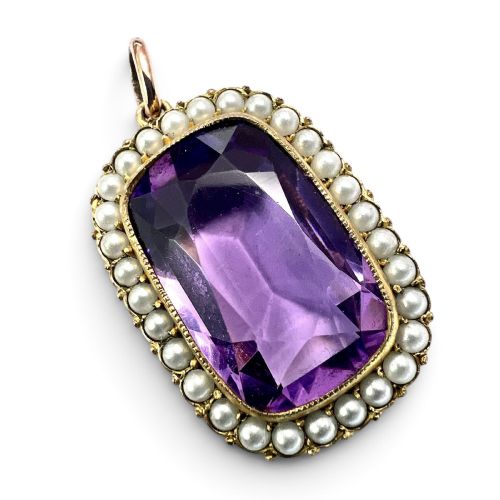
The versions most commonly found here are Edwardian and Victorian drop necklaces and pendants set in nine-carat gold. They frequently feature imitation aquamarine, amethyst, peridot, or seed pearls alongside the sparkling paste stones.
Surviving examples range from delicate Georgian and Victorian rivière lines to elaborate Edwardian drop pendants and complete jewellery sets. Each era applies its own distinct mounting style to hold the faceted glass securely.
Buyers seeking a gold paste necklace encounter everything from simple gold-gilt chains to complex silver-topped gold settings housing foiled stones. The overarching appeal remains the rich combination of warm metal and bright, imitation gems.
Materials and construction
Makers constructed these pieces using yellow, rose, and white gold alongside silver-gilt settings, frequently pairing nine-carat or fifteen-carat gold with foil-backed paste glass. Jewellers often combined gold with silver on the face of the mount to keep diamond-simulating paste stones looking bright against a white metal surface.
Stones were hand-cut from glass and leaded glass, then meticulously set into closed or open-backed metal mounts designed to catch the light. Artisans enhanced the brilliance of coloured paste by placing coloured foil directly behind the glass before securing it in the metal.
Materials recorded across the inventory include nine-carat gold, fifteen-carat gold, silver, rock crystal, and aquamarine.
Distinctions in craftsmanship
Quality separates along the precision of the stone cutting and the integrity of the metalwork, where hand-faceted glass with crisp edges outshines softer, moulded alternatives. Superior pieces feature clean prong work or closed-back settings that hold each paste stone firmly without obscuring its facets.
The sophistication of the design dictates the upper tier of these pieces, such as articulated rivière links and multi-stone giardinetti motifs rather than simple stamped drops. Finer examples also retain their original foil linings intact behind the glass, preserving the intended depth of colour.
The Gold Paste Necklace Glossary
- Paste
- Hand-cut and polished lead glass used to imitate precious gemstones. It has a high refractive index that gives it considerable sparkle.
- Rivière
- A necklace consisting of a continuous line of gemstones or paste stones of similar size or graduating smoothly. They sit closely around the base of the neck.
- Foil back
- A thin sheet of reflective metal placed behind a paste stone inside its setting to enhance its colour and brilliance. This technique is particularly common in Georgian and early Victorian pieces.
- Giardinetti
- A jewellery design motif translating to little garden, depicting a small basket or vase filled with flowers. In paste necklaces, these floral arrangements utilise various coloured glass stones.
- Seed pearl
- Very small natural or cultured pearls used as delicate accents surrounding central pendants or strung alongside paste drops. They add a soft texture that contrasts with the faceted glass.
Gold Paste Necklace: Frequently Asked Questions
Are paste stones made of plastic?
Paste stones are made of dense, heavy glass rather than plastic. They feel cool to the touch and possess a genuine hardness that resists casual scratching.
Under a loupe, genuine paste reveals tiny air bubbles and hand-cut facets rather than the mould lines typical of synthetic modern plastics.
Can I wear my gold paste necklace daily?
Daily wear is possible if you treat the piece with care, removing it before sleeping, swimming, or exercising. Glass paste is softer than diamond and can chip if struck hard against surfaces.
Keep the necklace stored flat in a lined box away from other items to prevent the metal and stones from scratching one another.
How do I date a paste necklace?
Dating relies on the metal alloy colour, the cut of the stones, and the mounting style used by the jeweller. Georgian pieces often feature closed-backed foil settings in rose gold, while Edwardian designs favour delicate nine-carat yellow gold and seed pearls.
Art Deco and 1940s examples show geometric arrangements, stronger colour contrasts, and cleaner lines reflecting the shifts in twentieth-century fashion.