


Edwardian Aquamarine Pendant
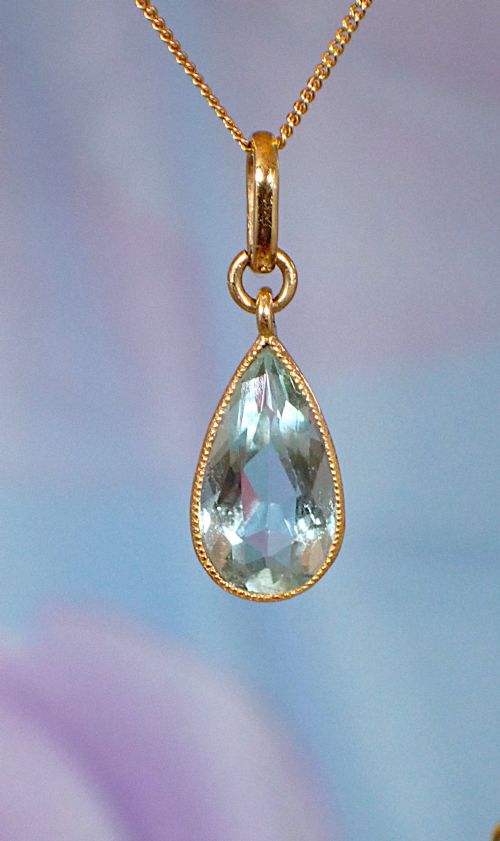
An edwardian aquamarine pendant brings pale blue light together with delicate gold or platinum work.
Edwardian Aquamarine Pendant
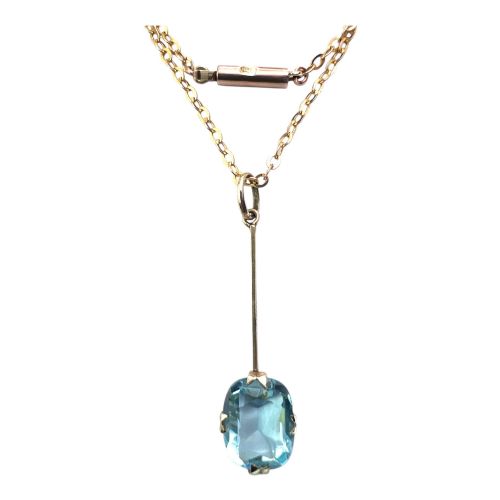
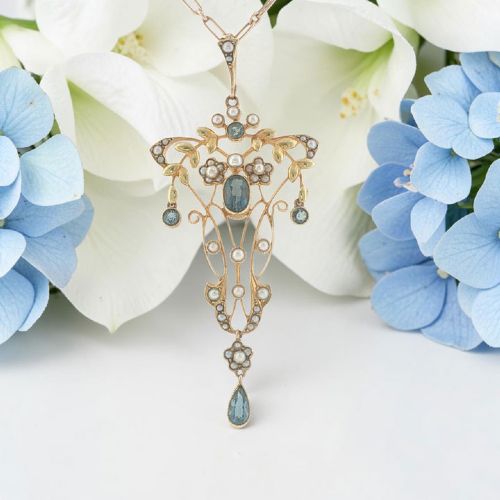
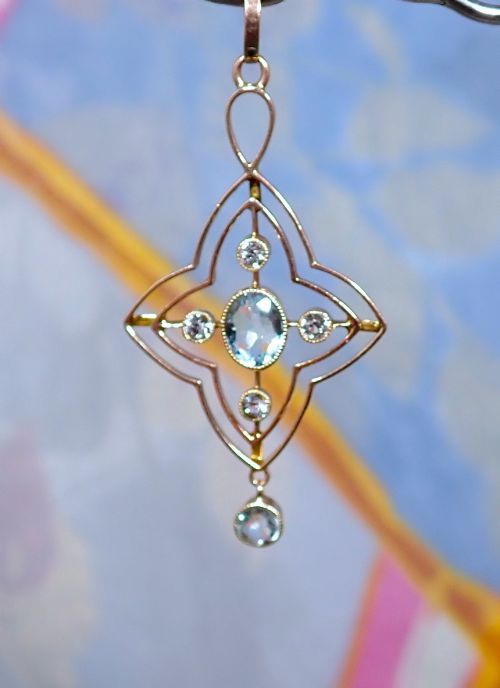
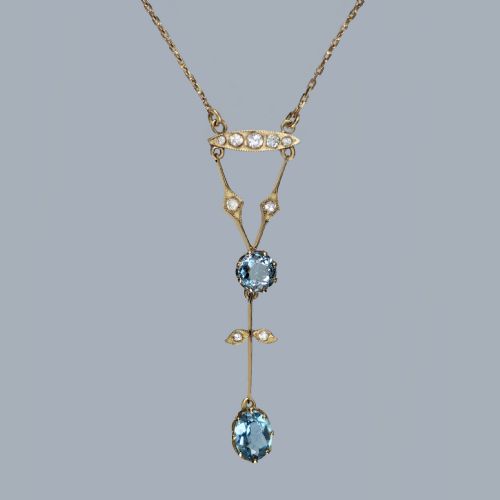
When you search for an edwardian aquamarine pendant, you encounter drop necklaces and pendant necklaces designed in the early decades of the twentieth century. These pieces centre on cool blue beryl stones suspended from fine chains, often accompanied by secondary gems.
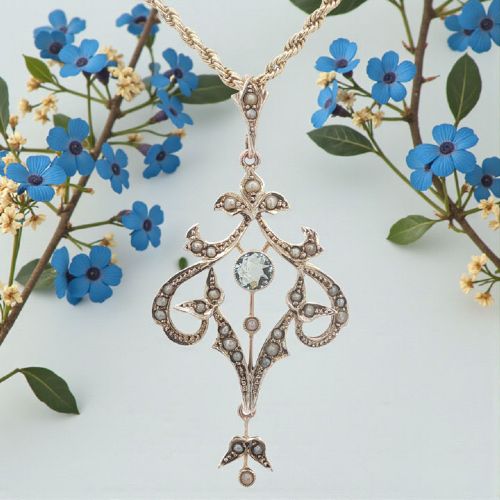
You are most likely to meet 9ct gold versions featuring aquamarines paired with seed pearls or small diamonds. These items reflect the lighter aesthetic that emerged towards the end of the nineteenth century and continued into the nineteen-twenties.
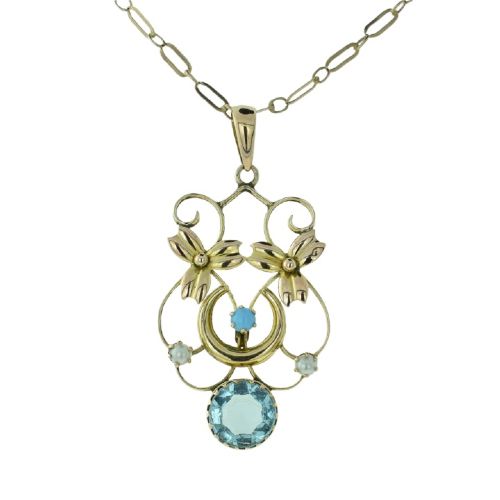
The forms range from simple drop pendants to complex Art Nouveau designs incorporating sinuous metalwork and foliate motifs. Such items served as fashionable neckwear for day and evening wear during the Edwardian period.
Materials and Construction
The metalwork relies on 9ct and 15ct gold, alongside platinum, shaped into knife-edge drops, delicate bezels, and openwork frames. Jewellers utilised seed pearls and diamonds to accent the pale blue central aquamarines.
Techniques from the period include millegrain setting, where tiny beads of metal finish the edge of a setting, and hand-pierced gallery work. These methods created lightweight, intricate structures that held faceted and cabochon stones securely.
Edwardian Aquamarine Pendant Retail Price Guide 2026
Typical asking prices for edwardian aquamarine pendant among the pieces listed under this phrase on Sellingantiques today, from the lower quarter to the upper quarter. They describe what is for sale here now, not the wider market.
Materials recorded in current stock include 9ct rose and yellow gold, 14ct and 18ct gold, platinum, diamonds, and tourmalines.
Assessing Quality
The clarity and saturation of the central aquamarine set the baseline for a piece, alongside the precision of the surrounding metalwork. Stones with deeper blue or evenly distributed pale colour command attention.
The integrity of the original mount, including the survival of matched seed pearls and secure claw or bezel settings, separates well-preserved examples from those with replaced components.
The Edwardian Aquamarine Pendant Glossary
- Aquamarine
- A pale blue to light greenish-blue variety of beryl used as the primary gemstone in these pendants. It derives its name from seawater.
- Seed pearl
- A very small, natural or cultured pearl used in delicate clusters and borders around the central stone. These tiny pearls define the period aesthetic.
- Millegrain
- A decorative technique involving a row of small metal beads along the edge of a setting. It softens the transition between metal and stone.
- Lavalier
- A pendant featuring a stone or ornament suspended from a small drop. This style gained popularity during the Edwardian and Art Nouveau eras.
Edwardian Aquamarine Pendant: Frequently Asked Questions
How do I care for an antique aquamarine pendant?
Clean the piece gently using warm soapy water and a soft brush, avoiding harsh chemical dips that might damage seed pearls or soft metals. Store the necklace flat in a lined box to prevent the chain from tangling and the stones from scratching.
Inspect the claw settings periodically with a loupe to ensure the aquamarine remains secure. Professional checks help maintain the integrity of delicate Edwardian wirework.
Were these pendants worn daily?
Edwardian women wore delicate pendant necklaces for afternoon calls and evening events, matching the lighter fabrics of the era. The introduction of platinum allowed jewellers to create stronger mounts suitable for more frequent wear.
Many pieces transition easily from daytime attire to evening wear due to their versatile scale and pale colour palette. They remain practical accessories for modern social occasions.
How can I tell if the stones are original?
Original Edwardian pieces typically show consistent wear across the metal and matching patination on the seed pearls or diamonds. Settings should completely match the geometry and manufacturing techniques of the period.
Stones like white sapphire or tourmaline sometimes accompany aquamarine in these designs, reflecting period gemstone choices. Alterations often show mismatching metal colour or modern replacement prongs.
What is the difference between Edwardian and Art Nouveau styles here?
Edwardian designs often feature symmetrical garlands, bows, and platinum lace framing the aquamarine. These motifs draw on eighteenth-century elegance adapted for early twentieth-century tastes.
Art Nouveau versions embrace asymmetrical, whiplash lines and organic plant forms wrapping around the central beryl. Both styles frequently utilised seed pearls to soften the overall outline.