




Light Blue Gemstone Necklace
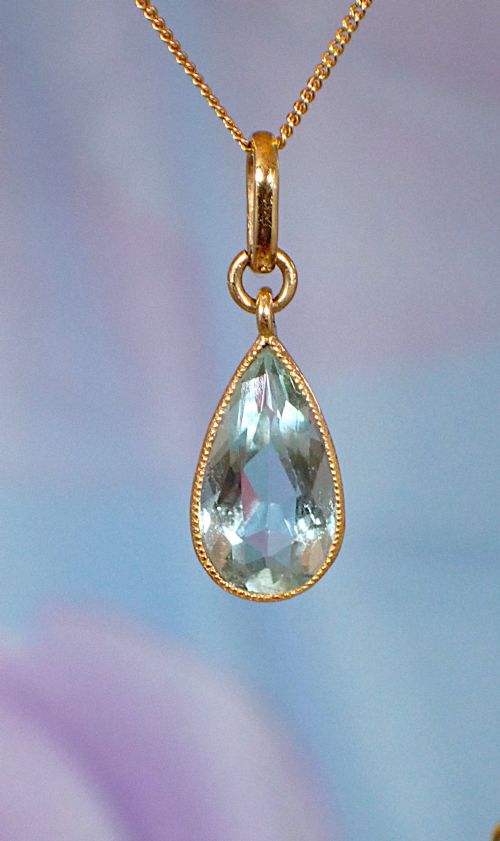
A light blue gemstone necklace brings together pale beryl and precious metal in a pendant drop designed to catch the light at the collarbone.
Light Blue Gemstone Necklace
When you search for a light blue gemstone necklace, you encounter delicate neck ornaments centred on aquamarine and blue topaz stones set in gold or platinum. These pieces appear across Victorian, Edwardian, Art Deco, Retro and mid-century periods, taking the form of pendants, drops and fitted chains.
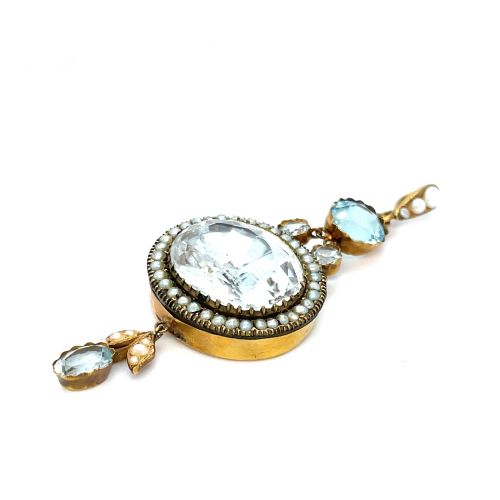
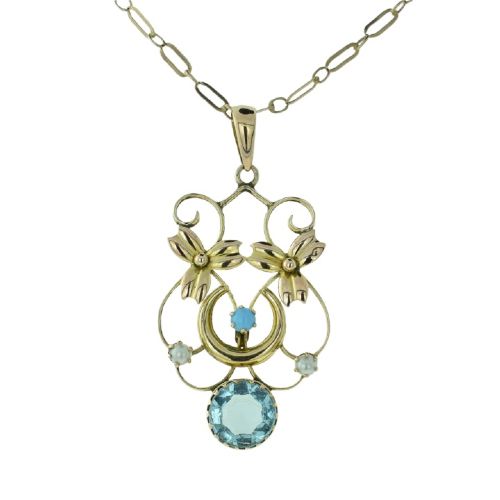
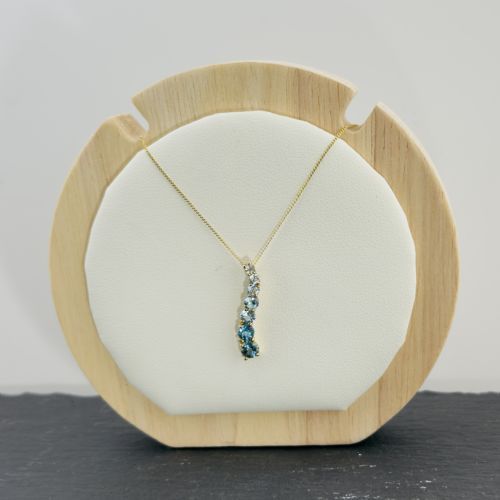
The most frequent examples on this page date from the Edwardian era and the mid-twentieth century, combining aquamarine with seed pearls or diamonds in yellow gold, rose gold or platinum mounts. Simpler modern classic blue topaz designs also feature alongside ornate period work.
How they were made
Goldsmiths worked aquamarine and blue topaz into 9ct, 14ct, 15ct and 18ct gold, as well as platinum and white gold, securing stones with delicate claws or bezels. Seed pearls and diamonds frequently accompany the main blue gemstone as subtle accents.
Period pieces employ traditional hand-working techniques, including foil backing behind quartz or crystal to enhance colour, alongside open-backed settings that allow light to pass directly through the transparent beryl.
Materials recorded across the inventory include aquamarine, blue topaz, diamond, seed pearl, turquoise, platinum, rose gold and yellow gold.
What varies in quality
The distinction between standard examples and superior pieces rests on the depth of the gemstone's colour, the clarity of the crystal and the weight of the gold or platinum mount. Larger carat weights in the central aquamarine paired with well-matched diamond accents elevate a piece considerably.
Craftsmanship in the metalwork marks the upper tier of the range, visible in finely detailed Edwardian wirework, pierced Art Deco geometric frames or balanced Art Nouveau curves rather than heavy, generic castings.
The Light Blue Gemstone Necklace Glossary
- Aquamarine
- A transparent pale blue variety of beryl that forms the primary gemstone in the majority of these necklaces. Its name derives from the Latin for seawater.
- Foil back
- A historical technique where a thin reflective sheet of coloured foil is placed behind a gemstone or rock crystal to intensify its optical depth and hue.
- Seed pearl
- A very small natural or cultured saltwater pearl, often drilled and strung or threaded onto fine wire to create delicate floral and geometric borders in Edwardian jewellery.
- Platinum
- A dense, silvery-white precious metal prized for its strength, which allowed jewellers to construct exceptionally fine, secure settings for diamonds and aquamarines during the early twentieth century.
- Drop pendant
- A necklace design where a secondary ornamental element hangs suspended below the main chain or collar, shifting with the wearer's movement.
Light Blue Gemstone Necklace: Frequently Asked Questions
How do I date a gold aquamarine pendant?
Dating relies on stylistic clues such as the flowing organic curves of Edwardian and Art Nouveau work, the geometric symmetry of Art Deco, or the heavier yellow and white gold settings of the mid-century period. Hallmarks stamped on the reverse of the pendant or on the clasp provide official assay office stamps and date letters where present.
Examining the cut of the gemstone also helps, as older hand-cut stones often exhibit softer facets and irregular proportions compared to crisper modern cutting styles.
Can I wear my antique blue gemstone necklace daily?
Aquamarine and topaz are durable enough for regular wear, rating high on the Mohs hardness scale, but antique pieces require thoughtful care. Pearls, when present alongside the main stone, are soft and sensitive to perfumes, cosmetics and moisture, so the necklace should be put on last after dressing.
Store the piece flat in a lined jewellery box to prevent the chain from tangling and to protect delicate claw settings from undue pressure.
What is the difference between aquamarine and blue topaz?
Aquamarine is a naturally occurring beryl with a soft, watery, pale cyan hue that often exhibits slight greenish undertones. Blue topaz is also naturally occurring but frequently heat-treated or irradiated to achieve a brighter, more uniform cornflower blue colour.
Under magnification, aquamarines may show characteristic tubular liquid inclusions, whereas topaz displays different internal crystal growth patterns.
How should I clean a gold and gemstone pendant?
Clean your necklace gently using warm water with a mild dish detergent and a soft-bristled brush to remove dust from behind the stone settings. Avoid ultrasonic cleaners if the piece contains seed pearls or foil-backed stones, as moisture and vibration can damage historical adhesives and foils.
Pat the jewellery completely dry with a soft lint-free cloth before storing it away.