

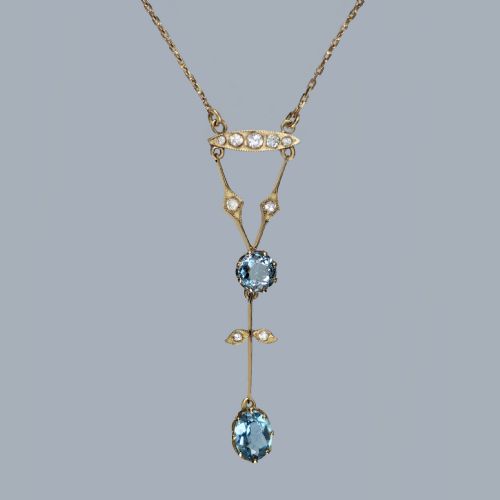


Antique Aquamarine Necklace
An antique aquamarine necklace brings together pale blue beryl and period precious metals to form a delicate drop pendant.
Antique Aquamarine Necklace
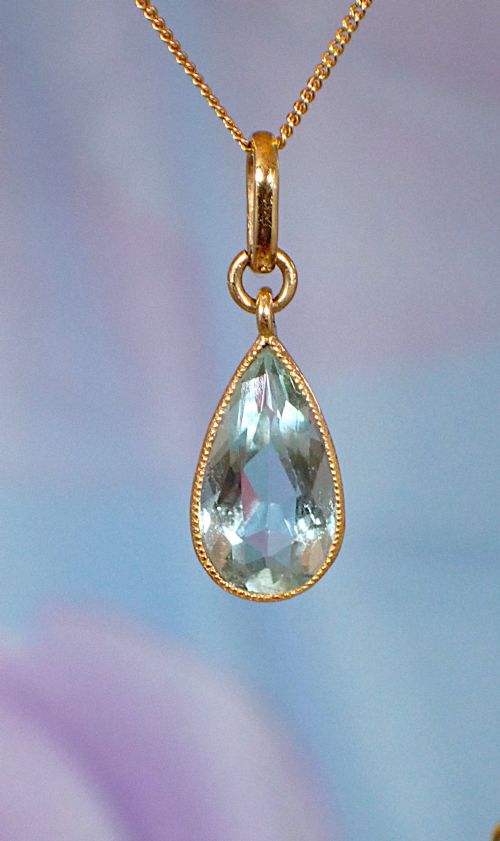
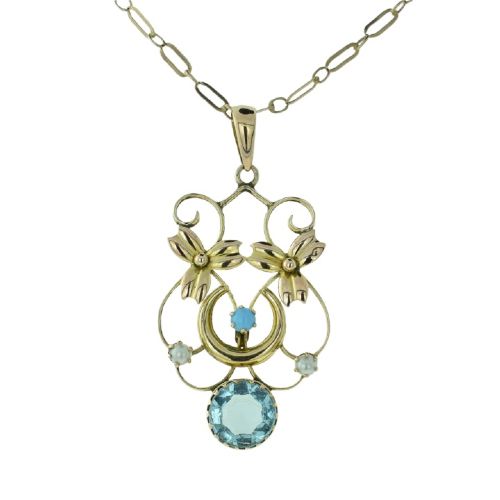
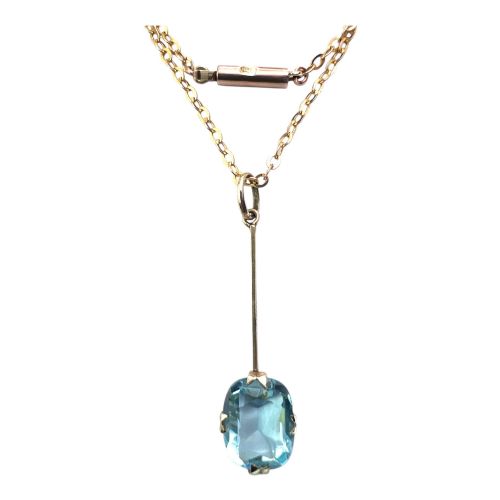
An antique aquamarine necklace typically presents as a pendant suspended from a fine chain, often taking the form of a drop or lavalier design. These pieces span the Victorian, Edwardian, Art Nouveau and Art Deco periods, alongside later twentieth-century examples.
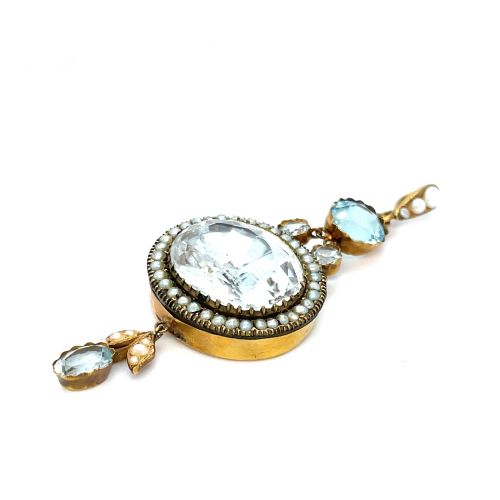
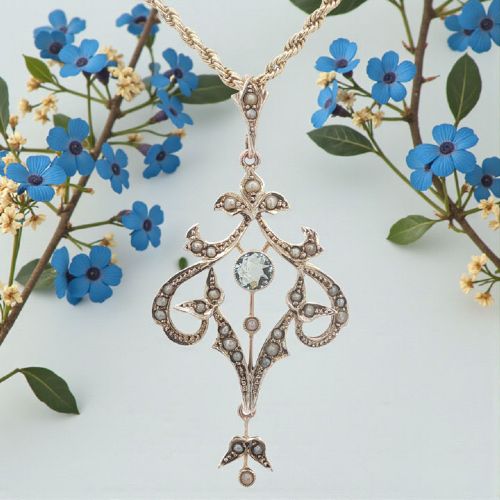
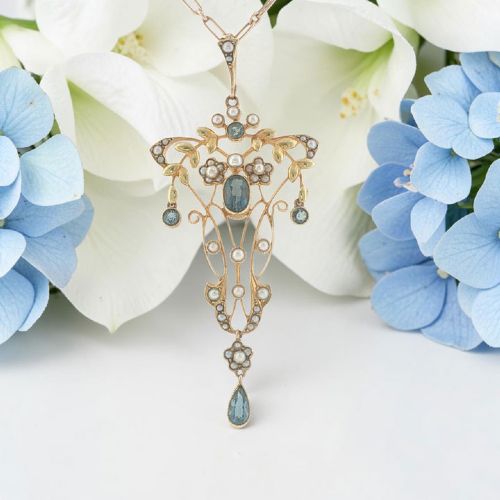
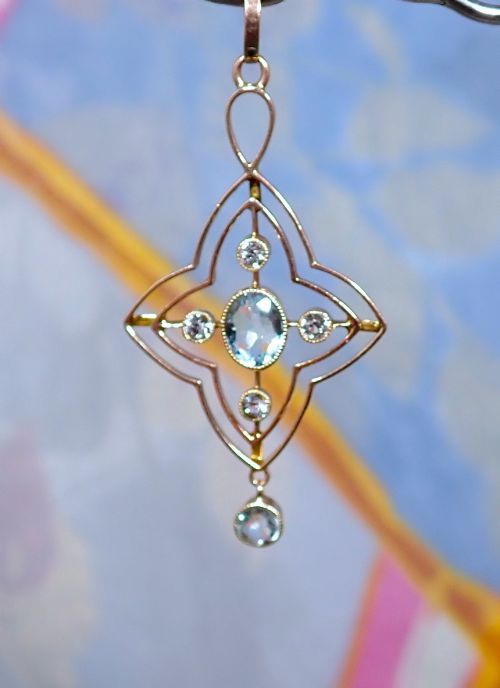
Edwardian interpretations dominate the available selection, frequently combining pale blue central stones with intricate openwork mounts. Pieces from this era frequently utilise 9ct or 15ct gold settings arranged in symmetrical drop configurations.
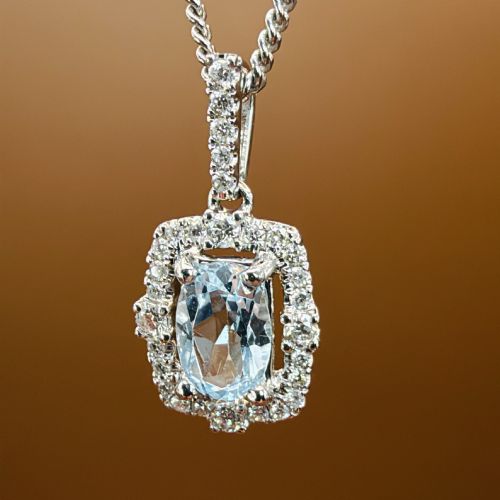
Earlier Victorian works and later Art Deco items also appear, introducing alternative stone cuts and geometric arrangements. The primary focus remains the cool blue beryl, whether as a modest solitaire or flanked by diamonds and pearls.
Assessing Quality
The clarity and saturation of the central aquamarine dictate the visual impact of the piece. Stones with a deep, clean cyan hue command greater attention than paler, milkier specimens.
The finesse of the metalwork distinguishes standard production from finer artisan pieces. Delicate piercing, secure stone setting and harmonious integration of seed pearls or diamonds elevate the overall execution of the pendant.
Platinum appears alongside yellow gold in several Edwardian and Art Deco pieces, highlighting a transition in mounting preferences.
The Antique Aquamarine Necklace Glossary
- Aquamarine
- A pale blue to light greenish-blue variety of beryl utilised as the primary gemstone in these pendants. Its name derives from the Latin for seawater.
- Lavalier
- A pendant style featuring a central drop suspended from a smaller motif or directly from the chain, popular during the Edwardian and Art Nouveau eras.
- Seed Pearl
- Tiny, naturally occurring pearls utilised in Edwardian and Victorian jewellery to accent central stones and add delicate texture to gold mounts.
- Foil Back
- A historical technique where a thin sheet of reflective metal is placed behind a gemstone to enhance its brilliance and colour.
- Millegrain
- A decorative jewellery technique involving a line of tiny metal beads along the edge of a setting, common in Edwardian and platinum pieces.
Antique Aquamarine Necklace: Frequently Asked Questions
How do I care for an antique aquamarine necklace?
Clean the piece gently using warm soapy water and a soft brush, avoiding harsh chemical dips that might harm softer accompanying stones like pearls.
Store the necklace flat in a lined box to prevent the chain from tangling and to protect delicate claw settings from pressure.
Are these necklaces suitable for daily wear?
Aquamarine is a durable gemstone with a good hardness rating, making it suitable for regular wear if treated with appropriate care.
Historic mountings, particularly delicate Edwardian seed pearl settings, require a more mindful approach and should be removed during physical activities.
How can I tell an Edwardian piece from a Victorian one?
Edwardian necklaces frequently feature platinum-topped gold, airy openwork motifs and bright white accent stones like diamonds and seed pearls.
Victorian pieces often display heavier gold weights, foil-backed stones or more solid foliate designs before the lighter platinum trend emerged.
What is an Art Nouveau pendant design?
Art Nouveau jewellery draws inspiration from natural, organic forms, featuring flowing asymmetrical lines, whiplash curves and floral motifs.
These pieces often combine 15ct gold with aquamarines and seed pearls to create sinuous, botanical drops without rigid symmetry.