



Aquamarine Drop Necklace
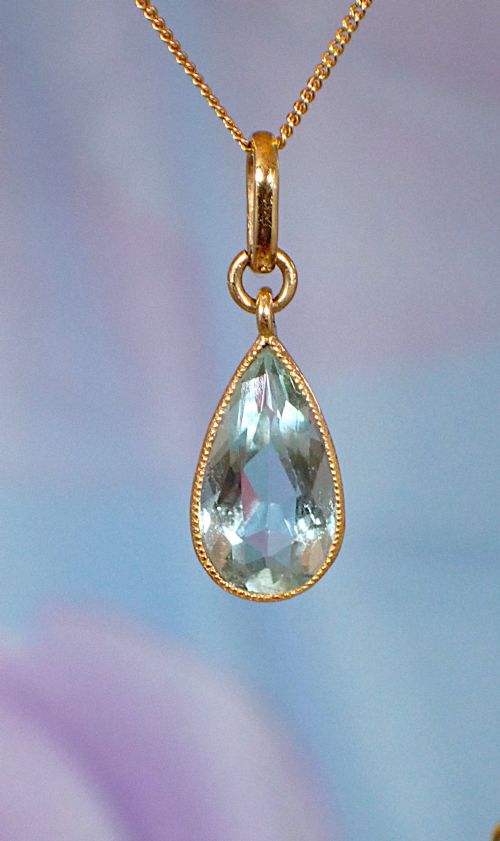
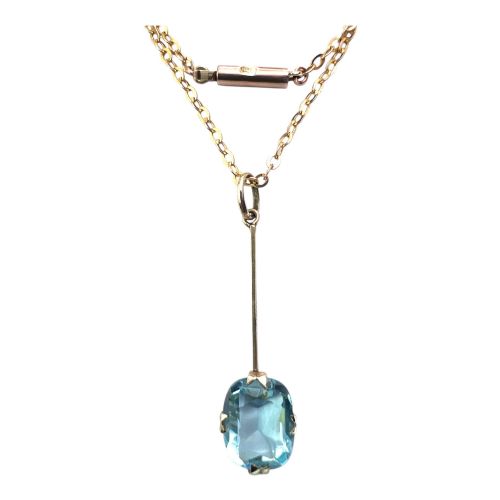
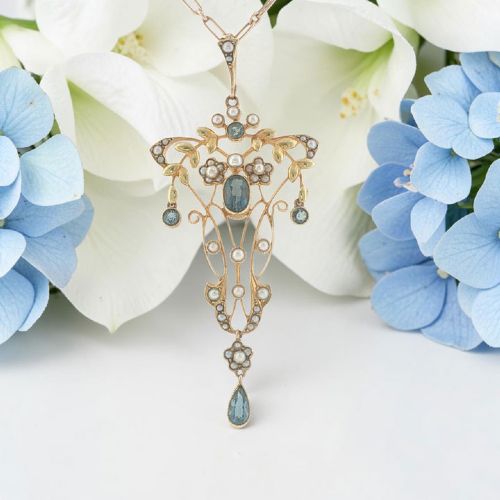
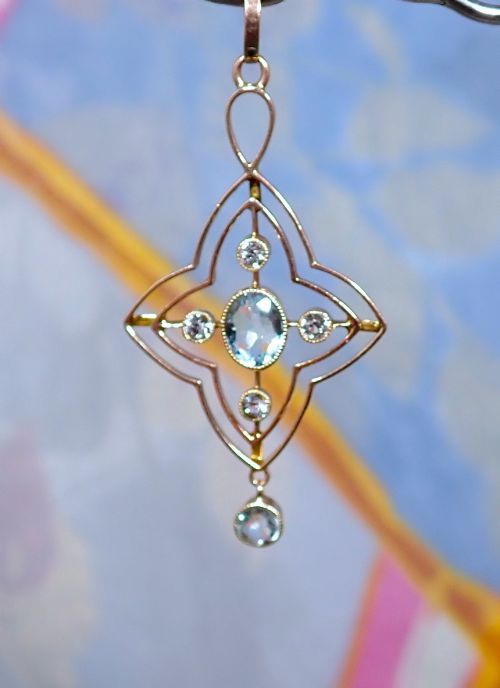
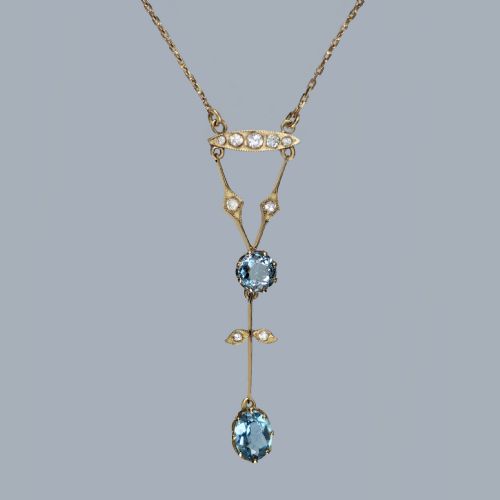
An aquamarine drop necklace suspends pale blue beryl from precious metal, bringing delicate colour to the collarbone.
Aquamarine Drop Necklace
An aquamarine drop necklace is a pendant suspended from a chain, designed to draw the eye downward with a central beryl stone. These pieces emerge most frequently from the Edwardian period, often pairing pale blue gems with delicate frames.
The inventory on this page spans Victorian, Edwardian, Art Deco, and mid-century eras. Pendants and necklaces take forms such as lavaliers, foliate drops, and knife-edge designs.
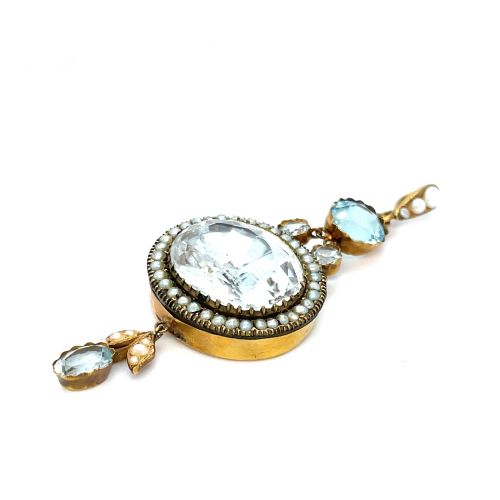
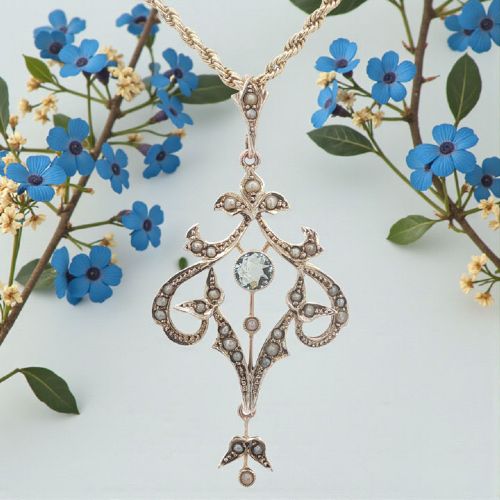
Makers of these necklaces combined aquamarines with supporting gems like seed pearls, diamonds, sapphires, and tourmalines. The metalwork reflects the shifting aesthetics of the early twentieth century, moving from organic curves to geometric lines.
Materials and Techniques
Goldsmiths utilised 9ct gold, 15ct gold, 18ct gold, and platinum to house the stones. Metal purity and colour varied by decade, with rose gold and yellow gold prominent in earlier pieces and white gold or platinum favoured later.
Setting techniques involved securing faceted or foil-backed aquamarines alongside seed pearls and diamonds. Jewellers arranged stones in openwork frames, lavaliers, and multi-drop configurations using hand-soldered links and fine chains.
Markers of Quality
Quality rests in the harmony of the design and the purity of the metalwork. Pieces from the Edwardian era demonstrate fine wirework and delicate settings that hold seed pearls securely alongside the central beryl.
The presence of complementary stones such as demantoid garnets, diamonds, or white sapphires elevates a piece. Heavier carat weights in platinum and higher gold grades separate standard production from exceptional examples.
The Aquamarine Drop Necklace Glossary
- Aquamarine
- A pale blue to light green variety of beryl used as the primary gemstone in these pendants. It takes its name from the Latin for seawater.
- Seed Pearl
- A very small, natural or cultured pearl used extensively in Edwardian jewellery as a delicate accent. These pearls are typically half-drilled and pegged.
- Lavalier
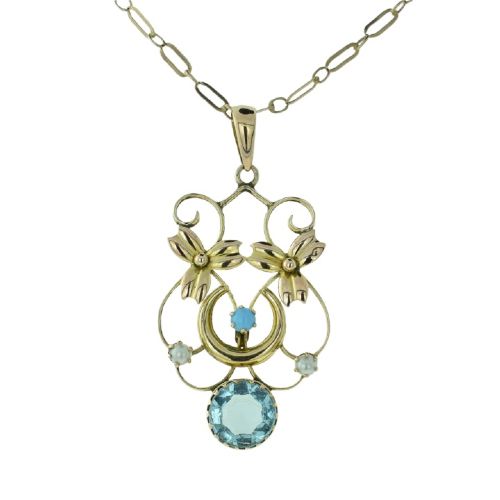
- A pendant necklace featuring a central dangling drop, popular during the Edwardian and Art Nouveau periods. The design often incorporates asymmetrical or fluid botanical lines.
- Foil Back
- A technique where a thin sheet of metallic foil is placed behind a gemstone to enhance its brilliance and colour. This method appears in Victorian pieces.
- Knife Edge
- A jewellery technique featuring thin, tapered bars of metal that give settings a rigid yet slender profile. It creates an airy effect around the central stone.
Aquamarine Drop Necklace: Frequently Asked Questions
What periods do these necklaces come from?
The pieces span from the Victorian era through the Edwardian period and the 1920s Art Deco movement.
Later examples extend into the mid-century period, showing shifts in metal choice and gemstone cut.
How do I care for an antique aquamarine necklace?
Store the necklace flat in a lined box to prevent the chain from tangling and the stones from scratching.
Clean the metal and beryl with warm soapy water and a soft brush, avoiding harsh ultrasonic cleaners that might dislodge seed pearls.
Are the pearls natural or cultured?
Period pieces from the Edwardian and Victorian eras commonly utilise natural seed pearls in their clusters and drops.
These tiny pearls are hand-strung or pegged into intricate gold or platinum frameworks.
What is the difference between a pendant and a lavalier?
A pendant generally hangs simply from a fixed bail on a chain, focusing attention on a single stone or cluster.
A lavalier incorporates one or more dangling elements suspended below the main focal point for added movement.