
Gold and Pearl Necklace
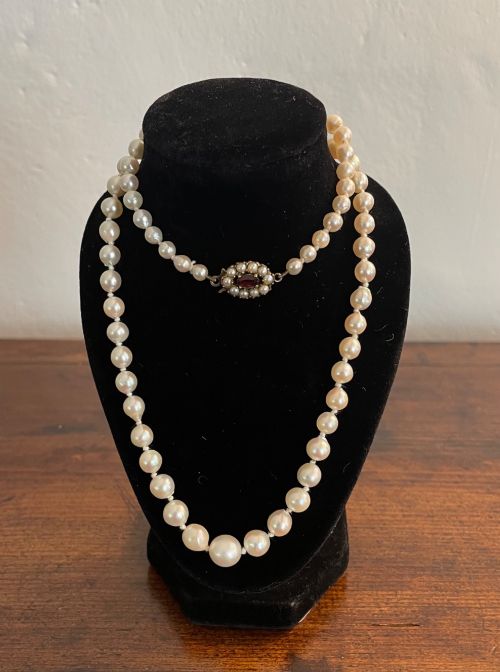
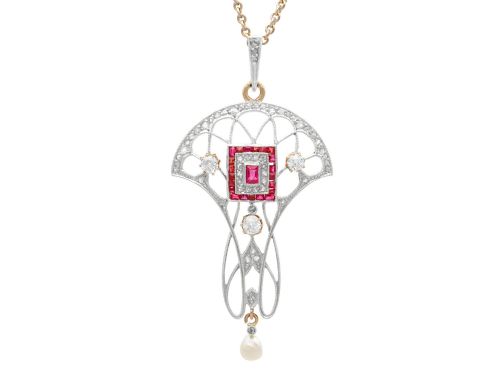
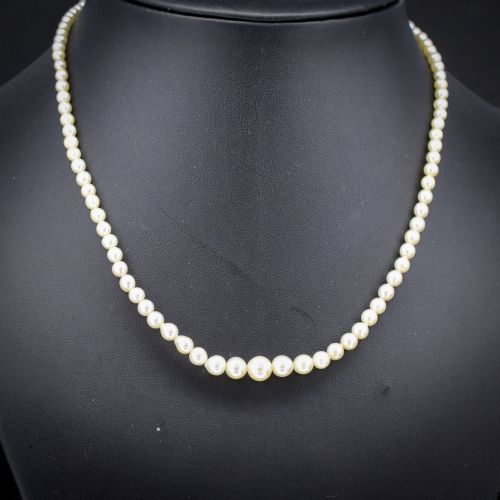
A gold and pearl necklace brings together warm precious metal and organic lustre, spanning delicate Edwardian pendants and substantial mid-century strands.
Gold and Pearl Necklace
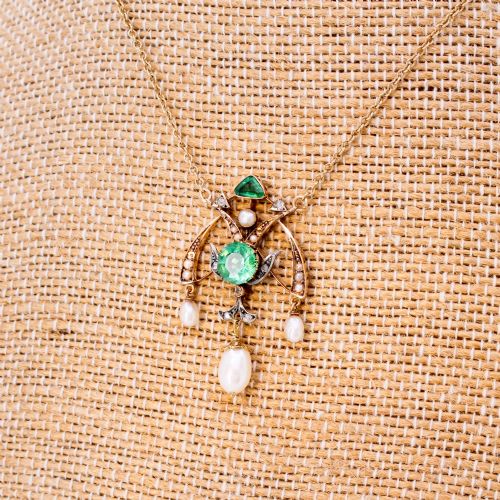
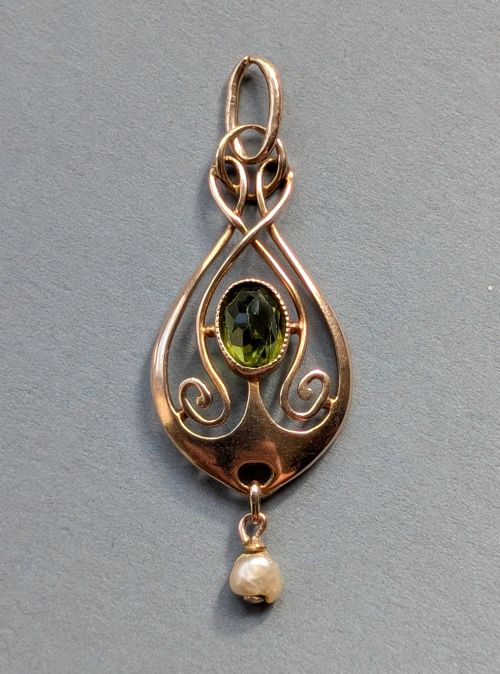
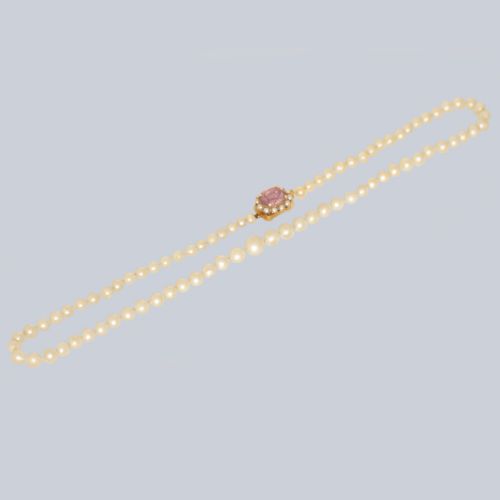
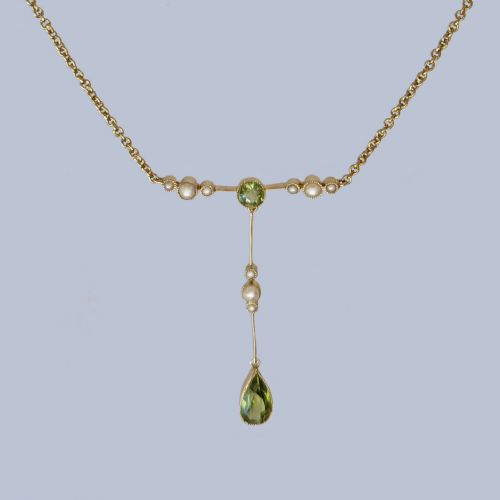
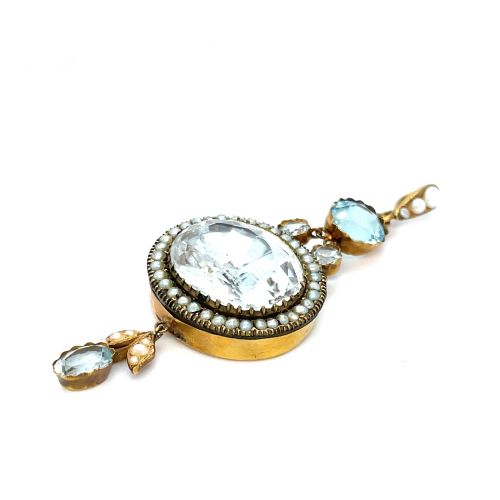
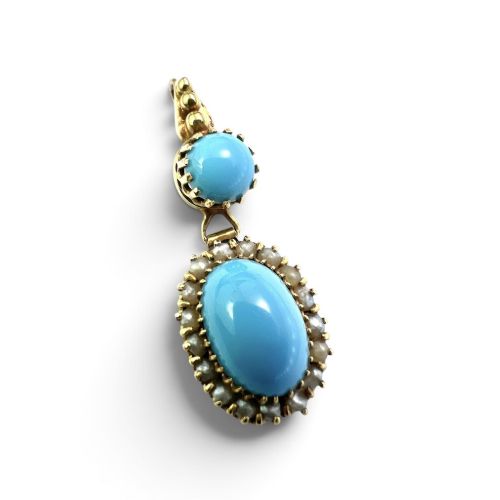
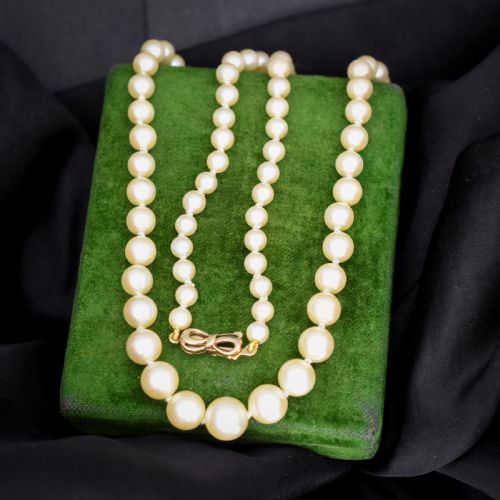
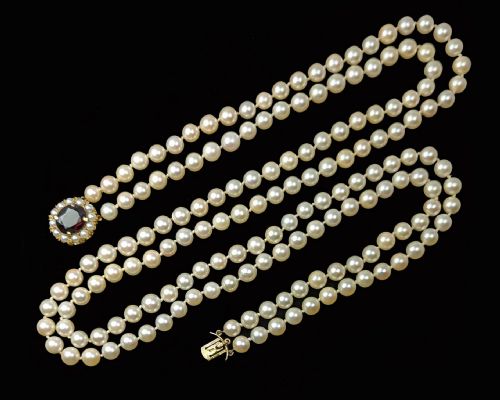
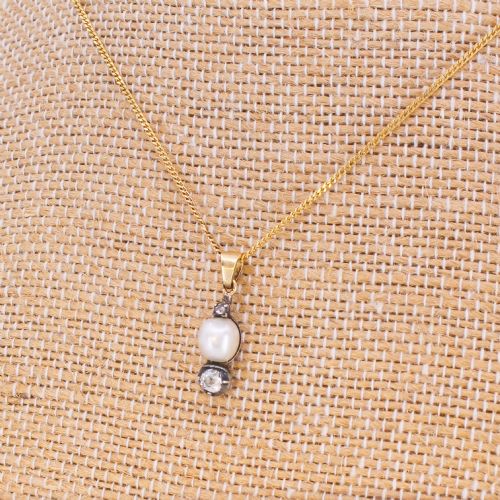
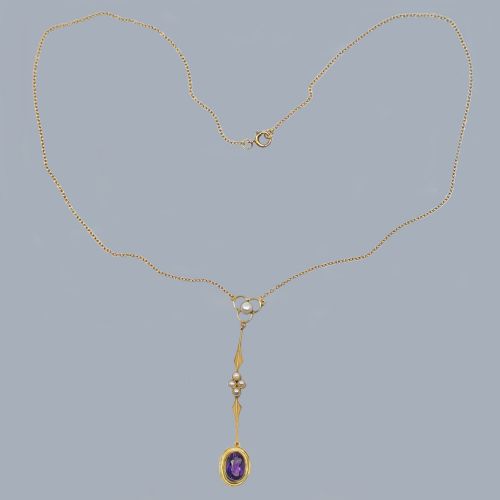
A gold and pearl necklace encompasses a diverse array of historical jewellery, from Victorian cluster pendants to multi-strand cultured pearl necklaces secured with gold clasps. The forms range from delicate lavalier pendants hung on fine chains to longguard chains and graduated beaded strands.
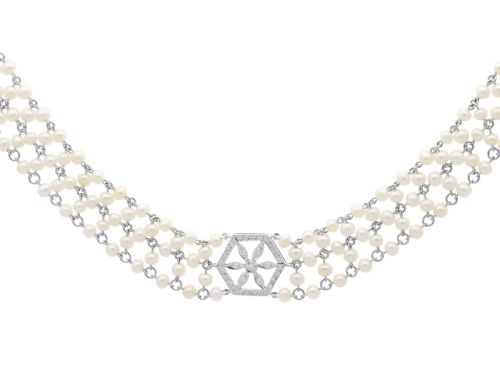
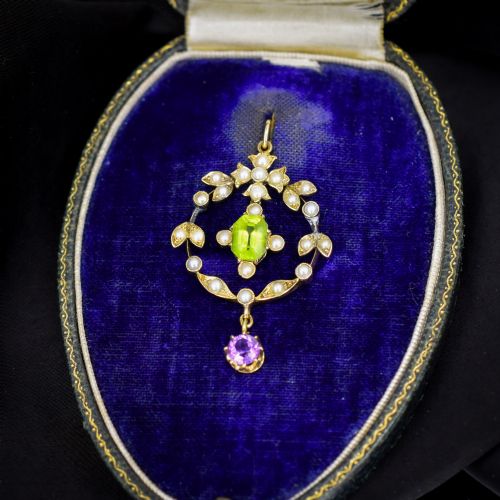
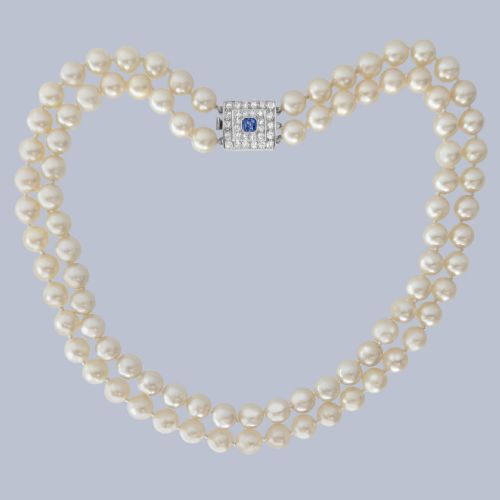
Pieces from the Edwardian and Art Nouveau periods frequently pair seed pearls with coloured gemstones like peridot, amethyst and turquoise in yellow gold settings. Later mid-century examples lean towards multi-strand cultured pearls finished with diamond-set white gold or yellow gold clasps.
How they were made
The construction of these items relies on traditional goldsmithing techniques working primarily in 9ct, 15ct and 18ct gold, alongside white gold variations in later decades. Seed pearls and natural or cultured pearls are meticulously drilled and strung on durable cords or integrated into elaborate bezel and collet metal settings.
Artisans combined metalwork with gemstone setting, employing delicate millegrain edges and openwork frames during the Edwardian era. Clasps on mid-century strands often incorporate diamonds and secure mechanisms, reflecting both decorative intent and functional engineering.
Among the delicate floral motifs, a charming insect fly charm pendant brings an unexpected touch of Victorian whimsy to the collection.
What varies in quality
The distinction between tiers rests upon the origin and uniformity of the pearls, whether natural, seed, or cultured with consistent grading and lustre. Superior examples also demonstrate refined metalwork, such as higher purity gold content like 15ct or 18ct rather than 9ct, and intricate hand-finished settings.
Artistic execution and the integration of complementary coloured gemstones, such as matched peridots, amethysts or emeralds, elevate the piece. The condition of the original setting, the integrity of restrung strands, and the presence of certified pearl reports further define the calibre of the item.
Murrle Bennett
The Gold and Pearl Necklace Glossary
- Seed pearl
- Very small, naturally formed or cultured pearls historically used in delicate cluster settings and intricate floral motifs. They provide a fine, textured background for larger gemstones.
- Lavalier
- A pendant style featuring a central stone or drop suspended from a chain, popular during the Edwardian and Art Nouveau periods. These designs often incorporate flowing, asymmetrical metalwork.
- Longguard chain
- A long, continuous gold chain worn draped around the neck, often featuring slide mechanisms and used to suspend pocket watches or pendants. They frequently span thirty inches or more.
- Collet
- A band or collar of metal that holds a gemstone in place by its girdle, securing it to the jewellery mount. It forms a neat, polished border around the stone.
- Millegrain
- A decorative jewellery technique featuring a line of tiny, raised metal beads along the edges of a setting. This adds a delicate, textured finish typical of Edwardian craftsmanship.
Gold and Pearl Necklace: Frequently Asked Questions
How do I care for antique pearls?
Pearls are organic gems that require gentle handling, avoiding harsh chemicals, perfumes and ultrasonic cleaners. Wipe them softly with a damp cloth after wearing to preserve their natural lustre.
Store them separately from other jewellery to prevent scratching the surface nacre. Periodic professional restrung maintenance ensures the silk or synthetic thread remains secure over time.
What is the difference between seed pearls and cultured pearls?
Seed pearls are exceptionally tiny pearls, often natural, which were widely utilised in Victorian and Edwardian cluster jewellery and delicate pendant designs. Cultured pearls are grown with human intervention around an irritant nucleus, yielding larger, uniform spheres.
Whilst seed pearls create a fine, textured mosaic effect, cultured pearls form the classic graduated strands and statement clasps seen in mid-century pieces.
How can I date an Edwardian pearl pendant?
Edwardian pieces typically feature platinum or high-karat gold worked into light, airy garland motifs, bows and delicate openwork frames. The incorporation of seed pearls alongside aquamarines, peridots or amethysts is characteristic of the period around nineteen hundred to nineteen ten.
Maker marks, gold purity stamps such as 15ct, and accompanying gemstone reports help confirm the specific manufacturing era.
Can these necklaces be worn every day?
Many sturdy gold and pearl necklaces tolerate regular wear provided they receive proper care and occasional safety checks on the clasp and stringing. Multi-strand cultured pearl necklaces from the mid-century are particularly robust when restrung professionally.
Frail antique seed pearl pendants with delicate gold wirework benefit from more careful, occasional rotation to protect the historical materials.