

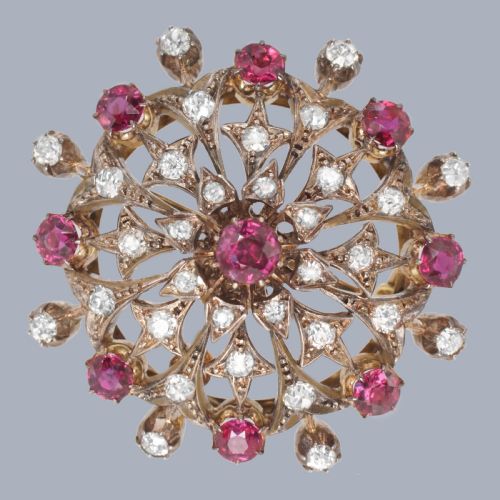


Yellow Gemstone Pin
A yellow gemstone pin brings together warm gold work and coloured stones to wear on a lapel or fastening.
Yellow Gemstone Pin
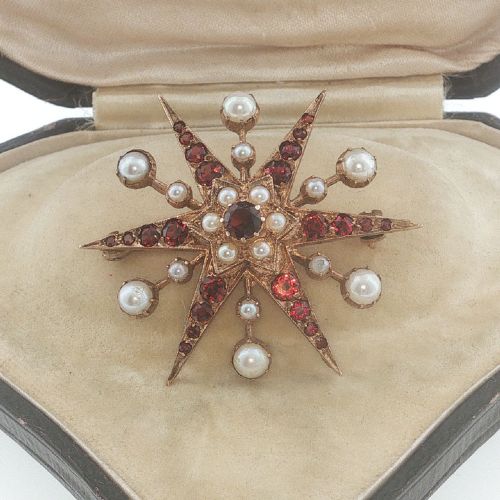
A yellow gemstone pin covers various forms of brooches and pendants shaped as bars, clusters, stars and crescents. These jewels span the Victorian, Edwardian and Art Deco periods, stretching through mid-century vintage designs.
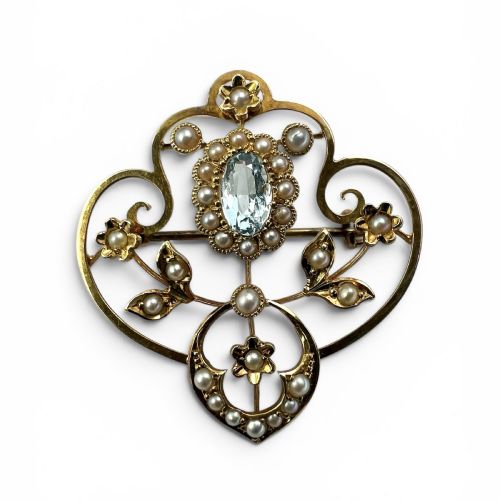
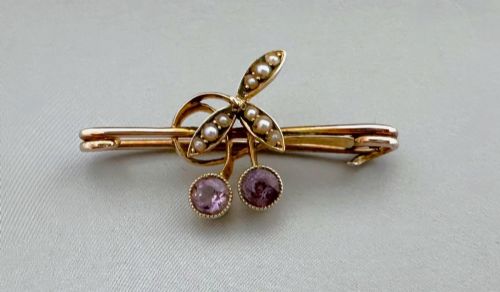
The version most commonly seen on this page is a 9ct or 15ct yellow gold bar or cluster brooch set with peridots, topazes, garnets or aquamarines. Many pieces combine these coloured stones with seed pearls or small diamonds to frame the central gem.
Makers and jewellers also shaped yellow gold into figurative subjects such as turtles, frogs and crowns during the late nineteenth and mid-twentieth centuries. These items function equally as pendants or traditional dress pins.
How they were made
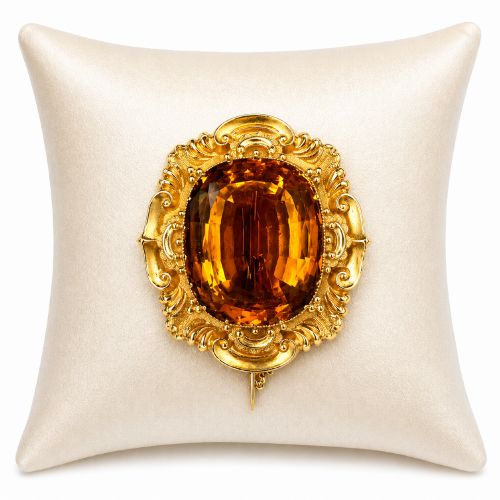
Goldsmiths utilised 9ct, 15ct, 18ct and 21ct yellow gold to form the structural mounts, settings and wirework of each brooch. Stones including chrysoberyl, citrine, amethyst and malachite were cut into ovals, rounds and cabochons to sit securely within claws or bezels.
Cluster and starburst designs incorporate seed pearls and small diamonds threaded or bead-set around the primary yellow or green gems. Bar brooches place single stones or multi-gem arrangements horizontally across gold pins fitted with safety catches or C-clasps.
Among the creatures guarding these pages, a diamond-set frog brooch shares space with a pearl-shelled turtle.
What varies in quality
The standard of a yellow gemstone pin depends on the weight and purity of the gold mount and the saturation of the central stone. Heavier 15ct and 18ct gold settings provide greater structural integrity than lighter 9ct equivalents.
Quality also rests on the matching of natural pearls and the precision of the stone setting. Hand-carved or substantial gems like large aquamarines, topazes and citrines elevate the overall presence of the jewel.
E. Wolfe & Co.·Asprey's
The Yellow Gemstone Pin Glossary
- Bar brooch
- A narrow horizontal pin featuring one or more gemstones set along a central metal bar. This form was especially popular during the Victorian and Edwardian eras.
- Seed pearl
- A tiny, naturally small pearl used in clusters or borders around larger coloured stones. Jewellers drilled and threaded these small pearls onto fine wire or silk.
- Chrysoberyl
- A golden-green or yellow mineral valued for its high refractive index and durability. It appears frequently in late nineteenth-century bar brooches.
- C-clasp
- An early form of brooch fastening shaped like the letter C without an automatic locking mechanism. Many antique pins rely on this simple closure alongside a pin stem that extends past the safety point.
- Cabochon
- A gemstone shaped and polished with a smooth, rounded domed surface rather than faceted edges. This cut highlights stones like malachite, opal and star sapphires.
Yellow Gemstone Pin: Frequently Asked Questions
How do I wear a antique brooch safely?
Secure the pin through heavy fabrics like wool coats, knitted scarves or structured jacket lapels rather than delicate silks. Ensure the safety catch or C-clasp holds the pin stem firmly in place.
For convertible pieces that also function as pendants, remove the pin mechanism or tuck it behind a chain when hanging the jewel from a necklace.
What is the difference between Victorian and Edwardian pins?
Victorian brooches generally feature heavier gold weights, deeper coloured stones like garnets and amethysts, and dense cluster or floral arrangements. These pieces date from the nineteenth century and often include secure tube hinges.
Edwardian designs tend to look lighter and more delicate, favouring aquamarines, peridots and seed pearls set in yellow gold crescents or openwork frames. This later period embraces airy, lace-like motifs.
Are these gemstones treated or natural?
Many Victorian and Edwardian coloured stones are natural examples of peridot, aquamarine, topaz and garnet. Some specific listings include independent gem reports confirming untreated rubies or sapphires.
Seed pearls and natural pearls found in these settings originate from salt or freshwater sources typical of nineteenth and early twentieth-century jewellery production.
How should I clean my gold and gemstone brooch?
Wipe the gold metal and durable stones gently with a soft, lint-free microfibre cloth to remove daily dust and oils. Avoid submerging organic elements like seed pearls or softer stones in liquid cleaners or ultrasonic baths.
Store the pin flat in a lined jewellery box away from other pieces to prevent the metal pin from scratching softer gems.