
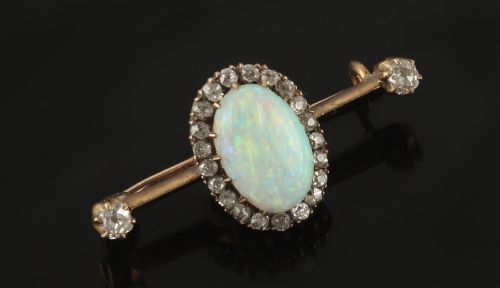


Antique Opal Brooch
An antique opal brooch brings together luminous colour play and historical goldwork, offering a distinctive piece of wearable heritage.
Antique Opal Brooch
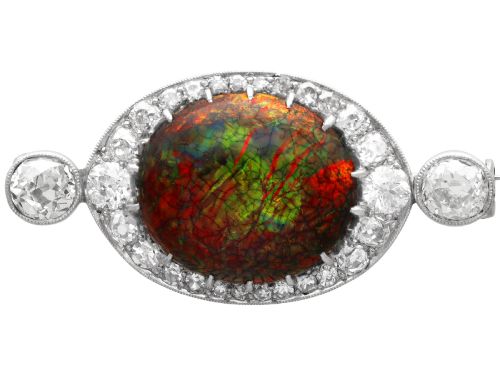
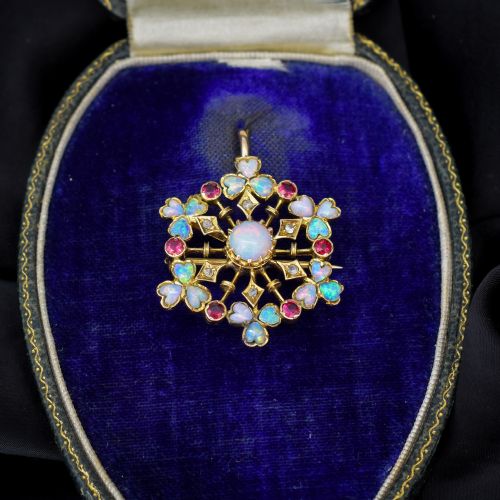
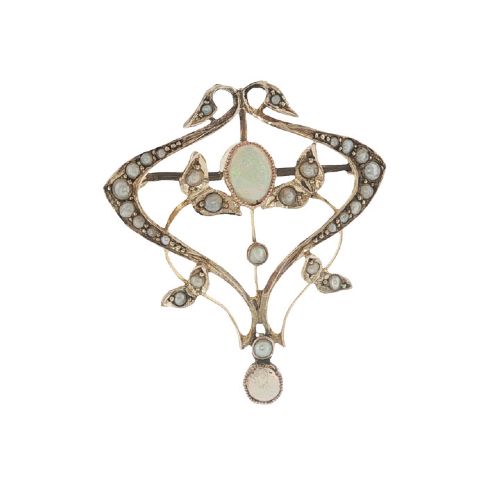
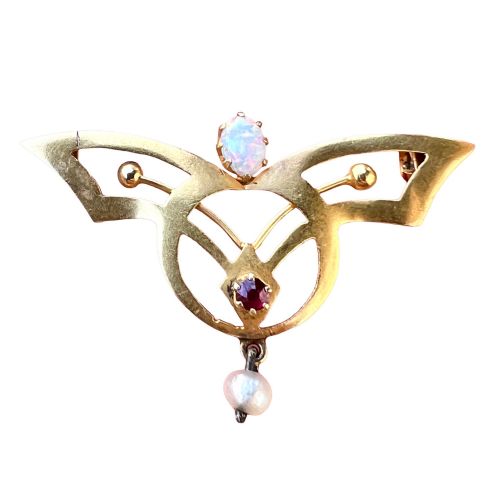
An antique opal brooch captures the shifting spectral hues of the gemstone, set within gold, silver, or platinum mounts. Buyers looking for an antique opal brooch will find pieces ranging from simple bar designs to complex multi-gem clusters.
The Victorian and Edwardian eras dominate the selection, bringing floral, crescent, and insect motifs to the forefront. These jewels often double as pendants, offering versatility alongside period character.
Makers paired opals with diamonds, rubies, and pearls to enhance the play of colour in the central stone. Natural solid opals appear alongside doublets in the historical record, set in metals ranging from nine-carat to eighteen-carat gold.
Materials and construction
Goldsmiths utilised yellow gold, rose gold, and white gold alongside silver and platinum to frame the stones. Metal purity spans from nine-carat to eighteen-carat gold, often paired with silver settings to brighten diamond clusters.
Setting techniques include grain setting for small diamonds and secure collet or bezel work for the central opals. Jewellers integrated pearls, rubies, garnet, turquoise, and enamel to complement the primary gemstone.
Metals recorded include nine-carat, fifteen-carat, and eighteen-carat gold, alongside silver and platinum.
Evaluating quality and craftsmanship
Quality rests in the intensity and spread of colour play across the opal surface, alongside the structural integrity of the mounting. Stones with vibrant spectral flashes command greater attention than muted examples.
Subtlety of design and the integration of supporting gems such as rose-cut diamonds or natural pearls elevate a piece. Maker signatures, such as work by the Gaskins, and assay office marks add documented provenance to the craftsmanship.
the Gaskins
The Antique Opal Brooch Glossary
- Doublet
- A composite gemstone made of two joined layers, typically a thin slice of natural opal glued to a darker backing. This technique strengthens the stone and deepens the perceived colour play.
- Bar brooch
- A slender horizontal metal pin designed to secure garments, frequently mounted with a central gem cluster or floral motif. This form was especially popular during the Victorian and Edwardian periods.
- Assay office
- An official body that tests the purity of precious metals and stamps them with hallmarks. Chester and other cities operated these offices to certify gold and silver standards.
- Crescent brooch
- A piece of jewellery shaped in a curve, often associated with the late nineteenth and early twentieth centuries. Makers frequently set these frames with alternating pearls and opals.
Antique Opal Brooch: Frequently Asked Questions
How do I date an antique opal brooch?
Dating relies on stylistic clues such as the organic whiplash lines of Art Nouveau or the geometric precision of Edwardian platinum work. Hallmark stamps and assay marks also provide reliable production dates.
Material choices further help narrow the period, as white gold and platinum became common in the early twentieth century, while yellow and rose gold dominated Victorian pieces.
Are opals in antique brooches natural?
Many pieces feature natural solid opals, while historical records also show doublets used in period settings. Natural stones display genuine play of colour formed within the earth.
Checking the side profile of the stone helps reveal whether it is a solid piece or a composite doublet structure.
Can I wear an antique opal brooch daily?
Opals are softer than diamonds, requiring some care during regular wear to prevent surface scratches or impact damage. Pinning the brooch to sturdy fabrics helps secure the weight of the metal and stones.
Storing the piece in a dedicated box away from hard jewellery prevents accidental abrasion when not being worn.
What metals were used in these brooches?
Goldsmiths worked primarily in yellow and rose gold, ranging from nine-carat up to eighteen-carat purity. Silver and platinum were also utilised, particularly in Edwardian designs to enhance diamond settings.
Metal colour often reflects the prevailing fashion of the decade in which the jewel was made.