
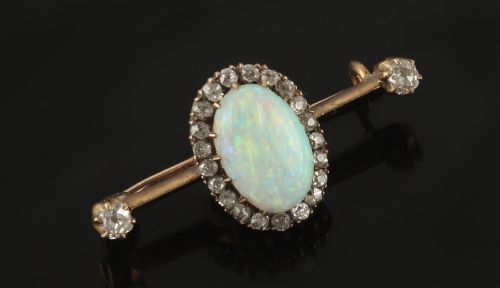


Edwardian Opal Brooch
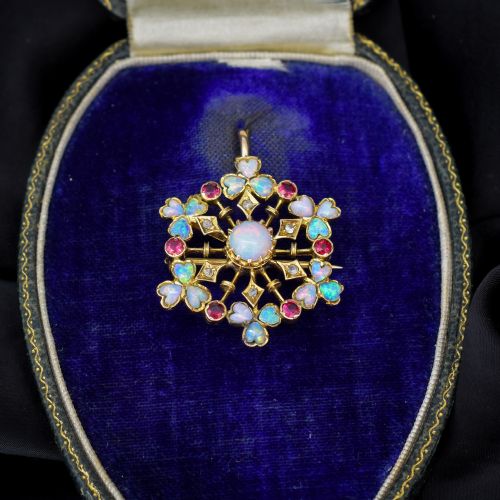
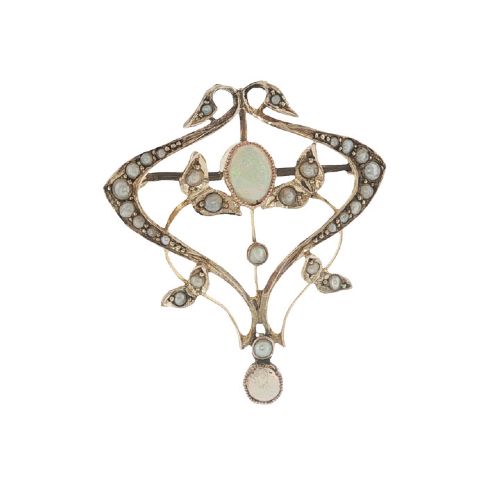
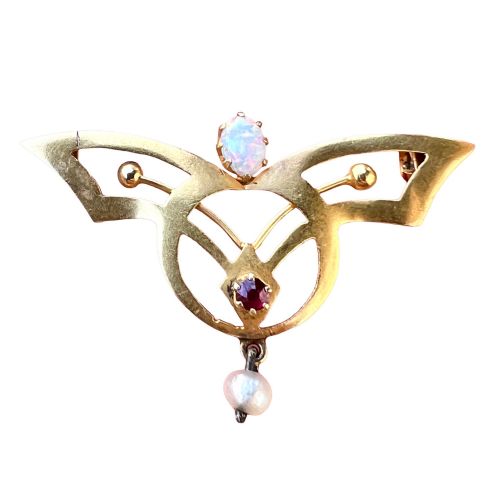
An edwardian opal brooch brings together luminous play-of-colour stones and delicate gold work, offering a touch of early twentieth-century elegance.
What these brooches are
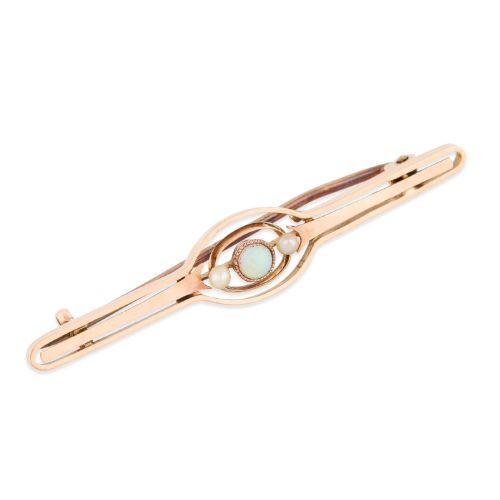
You will most commonly meet bar brooches and pendant brooches set in yellow gold or 18ct gold. These items frequently incorporate supporting gems such as diamonds, pearls, rubies, and demantoid garnets.
The style spans both traditional Victorian motifs and flowing Art Nouveau aesthetics. Origins range across the turn of the twentieth century, reflecting the transition of decorative tastes.
How they were made
Maker workshops utilised 18ct gold, 15ct gold, 9ct gold, and platinum as foundations for these jewels. Gemstones were hand-set into custom bezels or secured with delicate claw settings.
Gems including opals, rose-cut diamonds, seed pearls, rubies, and demantoid garnets were arranged alongside enamel work. Metal components were shaped by hand to create slender bar frames and intricate pendant drops.
What varies in quality
The play-of-colour within the opal sets the visual standard for each piece, with vibrant flashes across the stone marking superior examples. The presence of fine supporting gems like rose-cut diamonds and demantoid garnets elevates the work.
Structural refinement in the gold or platinum metalwork distinguishes finer items. Delicate pierced details and secure, well-integrated settings show the hand of a skilled maker.
The Edwardian Opal Brooch Glossary
- Bar brooch
- A slender horizontal pin featuring central gemstone decoration. This form was widely worn on lapels and collars during the period.
- Play-of-colour
- The optical phenomenon where spectral colours shift across the surface of an opal as the stone moves in the light. This is the defining characteristic that collectors value most.
- Rose-cut diamond
- A vintage diamond cut featuring a flat base and a domed crown with triangular facets. This cut produces a soft, candlelit gleam rather than modern brilliance.
Frequently Asked Questions
How do I wear an antique brooch safely?
Secure the pin by fastening it through tightly woven fabrics that can properly support the weight of the gold and gemstones. Utilising a safety chain or locking clasp provides extra security while wearing the piece.
Store the brooch in a dedicated box when not being worn to prevent scratches on the softer opal stones.
Are opals fragile to care for?
Opals contain natural water content and require gentle handling to avoid damage from harsh chemicals, sudden temperature changes, or heavy impacts. Clean them gently with a soft cloth rather than chemical dips.
Keep these jewels away from ultrasonic cleaners and extreme dryness to preserve their internal structure and vibrant colours.
How can I tell Victorian from Edwardian pieces?
Victorian items often lean towards heavier, sentiment-driven designs with robust gold settings and traditional motifs. Edwardian pieces frequently introduce lighter platinum elements and flowing Art Nouveau lines.
Examining the metal alloy markings and overall gemstone arrangement helps clarify the period of manufacture.
Can pendant brooches convert easily?
Many antique designs feature a hidden or fold-down loop that allows the piece to function as both a brooch and a pendant. This versatility was popular among makers who wanted to offer multiple ways to display the stones.
Check the reverse of the frame to locate the hinged bail or loop mechanism.