
Antique Opal Jewellery
Antique opal jewellery brings together iridescent play-of-colour and precious metals from the Victorian, Edwardian, and Art Deco eras.
Antique Opal Jewellery
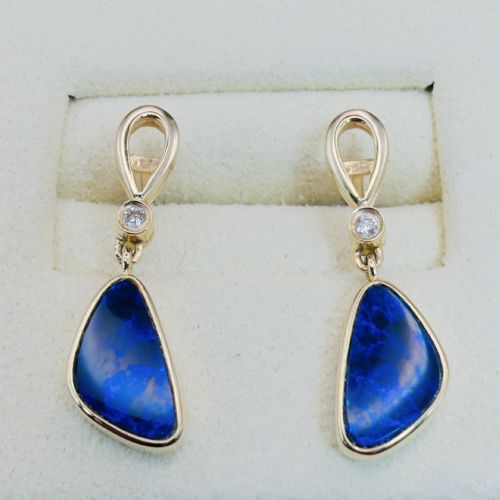
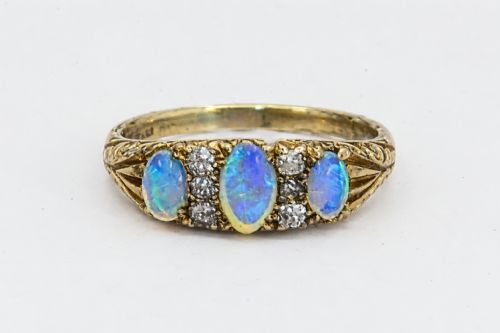
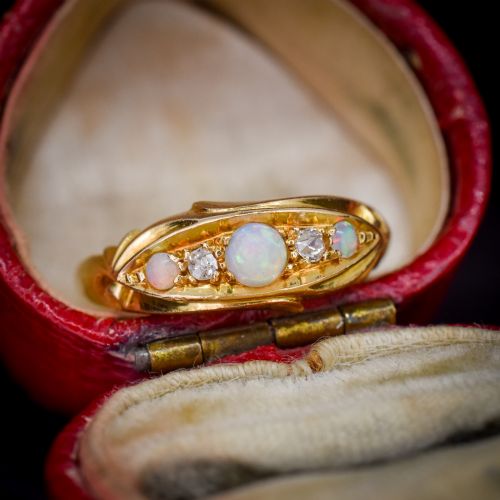
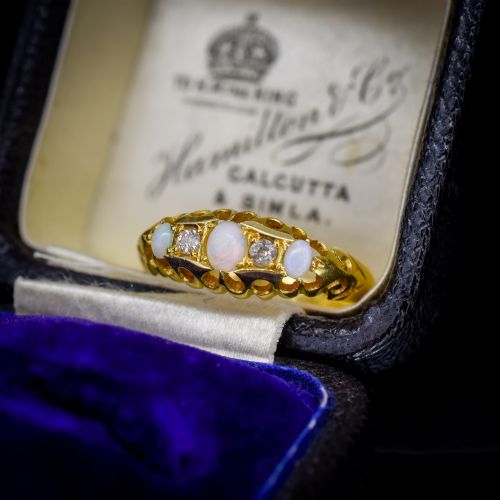
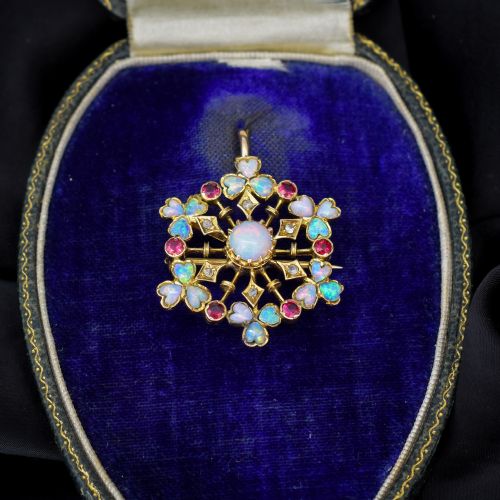
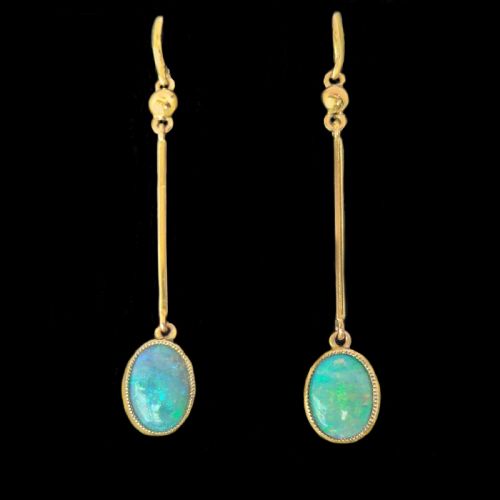
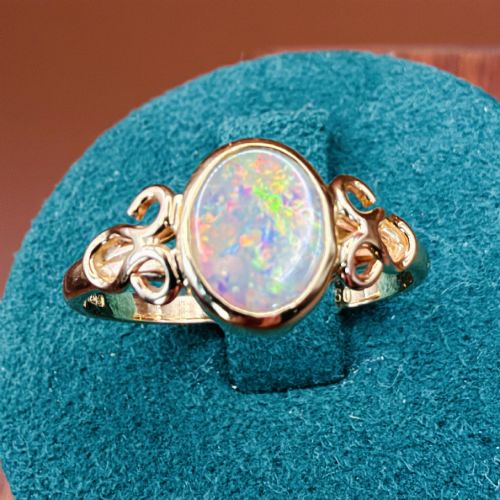
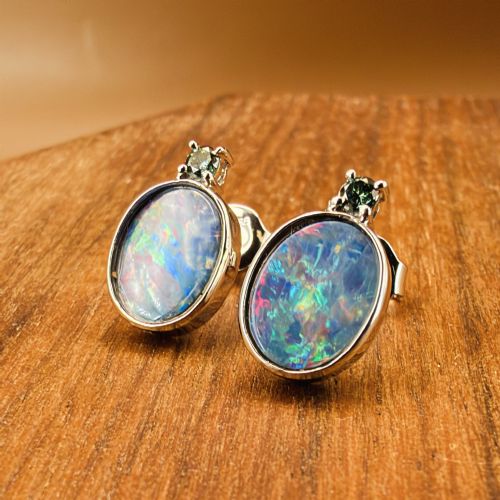
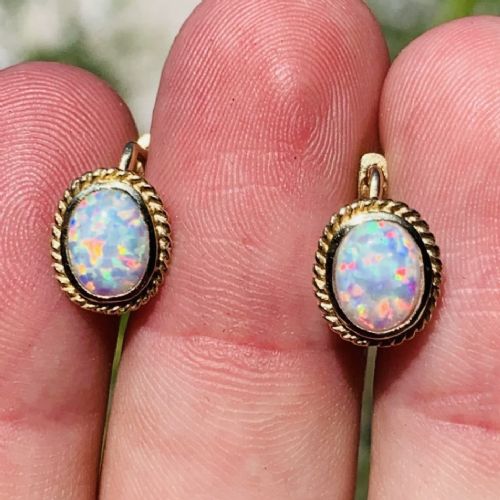
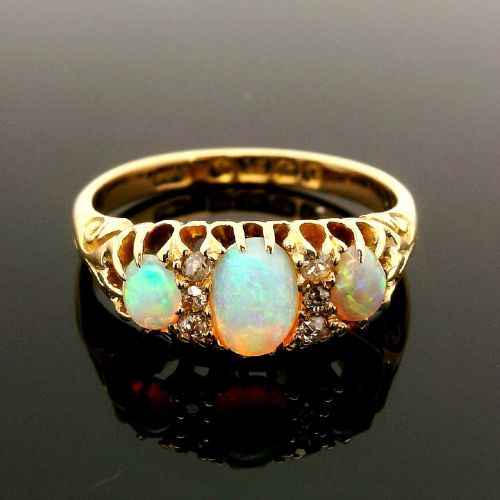
When you search for antique opal jewellery, you encounter pieces spanning from the nineteenth century through the mid-twentieth century, including Victorian, Edwardian, and Art Deco designs. The selection consists principally of rings, pendants, necklaces, brooches, and earrings created in gold and silver.
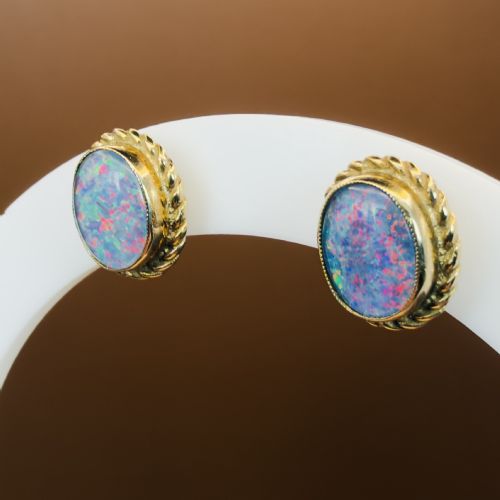
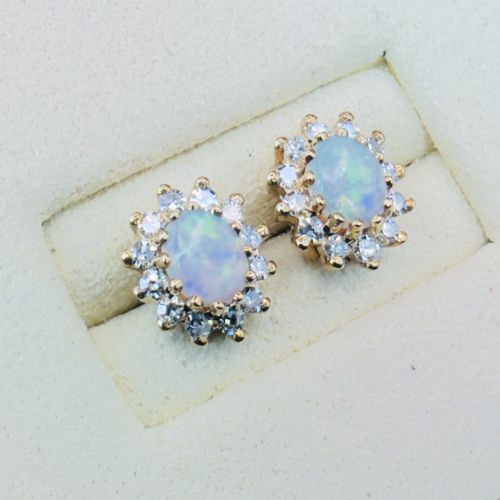
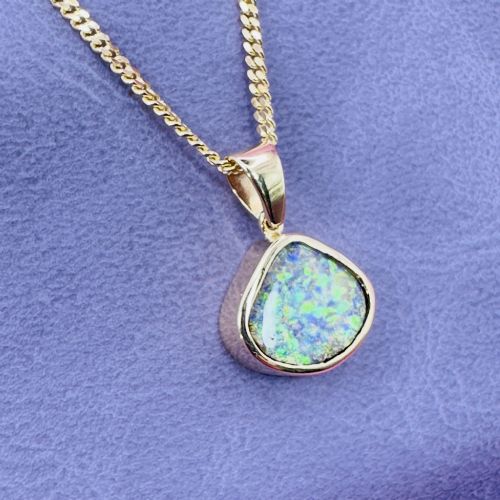
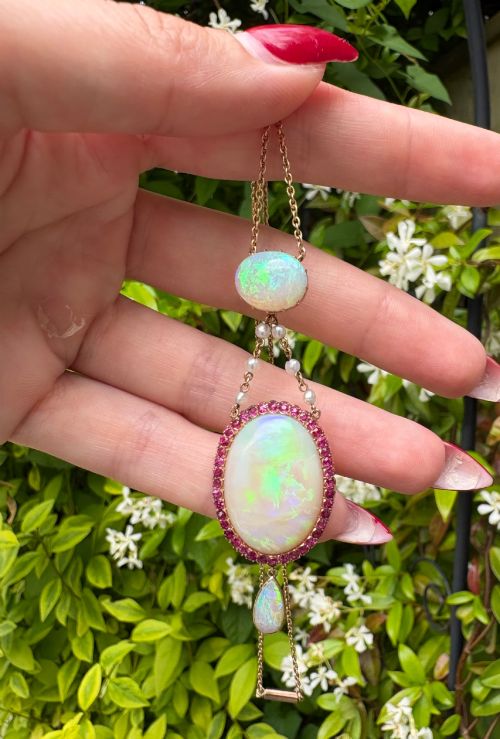
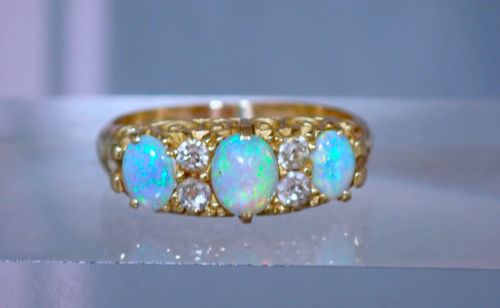
The most common formats on this page are boat rings, cluster rings, and stone solitaires featuring cabochon-cut opals paired with diamonds, rubies, pearls, or turquoises. Pendants and necklaces from the Edwardian and Arts and Crafts periods also appear regularly, often incorporating delicate fringe work or bezel settings.
How they were made
These items utilise yellow gold, white gold, rose gold, and silver as structural mounts, frequently in 9ct, 15ct, or 18ct purities. Stones are shaped into cabochons to display play-of-colour, then held in claw or bezel settings alongside diamonds, rubies, and seed pearls.
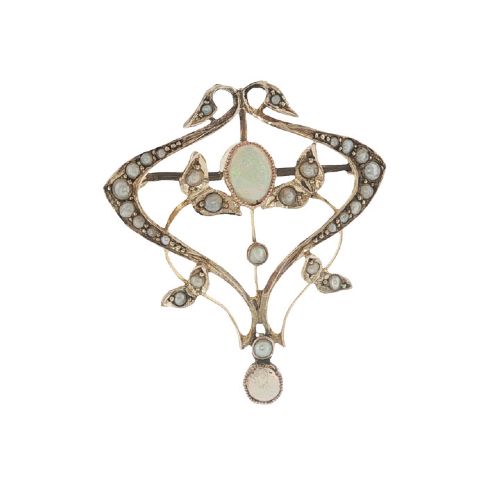
Craftsmen during the Arts and Crafts and Art Nouveau periods employed hand-worked silver settings, sometimes combining solid opals, doublets, or blister pearls within organic, foliate motifs. Assay office hallmarks stamped into the metal often record specific towns like Birmingham or Chester alongside precise dates.
Antique Opal Jewellery Retail Price Guide 2026
Typical asking prices for opal jewellery among the pieces listed under this phrase on Sellingantiques today, from the lower quarter to the upper quarter. They describe what is for sale here now, not the wider market.
Materials recorded across the listings include 18ct gold, 9ct gold, silver, opals, diamonds, rubies, pearls, and turquoise.
What varies in quality
Quality rests primarily in the optical performance and stability of the stone, specifically the vibrancy of the play-of-colour across the surface of the opal. Solid natural stones command attention over doublets, while the depth and spread of secondary gems like diamonds influence the overall design.
The precision of the metalwork also distinguishes pieces, from hand-finished Arts and Crafts silver mounts to robust 18ct gold claw and bezel settings. Hallmark clarity and the survival of original components like clasps or chain lengths contribute further to the distinction between items.
Knoll and Pregizer·The Gaskins·WH Haseler for Liberty and Co
The Antique Opal Jewellery Glossary
- Cabochon
- A gemstone cut with a smooth, convex domed surface rather than faceted edges. This style is standard for opals because it highlights their internal play-of-colour.
- Boat ring
- A boat-shaped ring setting featuring a curved cluster of stones that tapers at the ends. This silhouette is typical of the Georgian and Victorian eras.
- Opal doublet
- A composite gemstone made from a thin slice of natural opal glued to a dark backing material to enhance the perceived body tone and colour play.
- Play-of-colour
- The optical phenomenon where spectral colours flash across a gemstone as it moves under light. It forms the defining visual characteristic of quality opals.
- Festoon necklace
- A decorative necklace featuring draped chains, swags, or suspended drops of metal and gemstones. Edwardian examples frequently incorporate opal fringes.
Antique Opal Jewellery: Frequently Asked Questions
What periods do these pieces come from?
The inventory spans the Victorian, Edwardian, and Art Deco periods, alongside pieces dated to the nineteenth and mid-twentieth centuries.
Craftsmanship reflects the aesthetic shifts from ornate Victorian cluster designs through delicate Edwardian filigree to geometric Art Deco styling.
How do I care for antique opals?
Opals contain natural water content and require gentle handling to avoid sudden temperature shocks or harsh chemicals.
Store them away from extreme heat and remove rings before washing hands or undertaking manual work.
Are these opals solid or doublets?
The listings include both solid natural opals and composite stones such as opal doublets. Doublets use a thin slice of opal over a dark backing to strengthen the stone and deepen the colour display.