


Vintage Opal Necklace
A vintage opal necklace brings together shimmering play-of-colour and historic metalwork, offering wearable pieces from the Edwardian era to the mid-century.
Vintage Opal Necklace
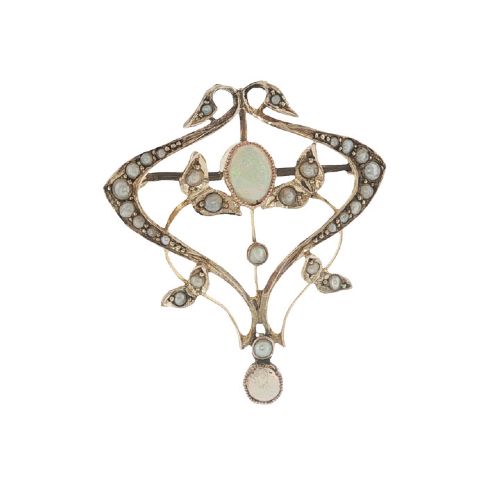
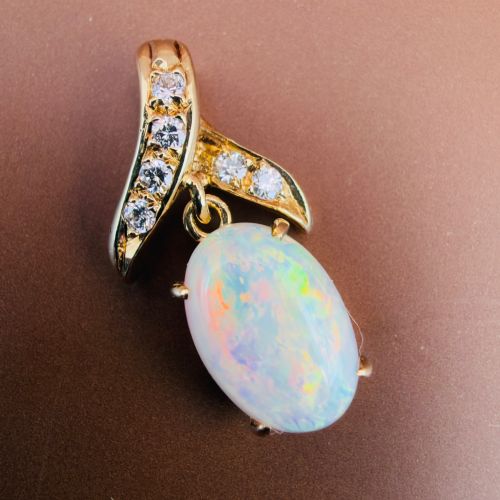
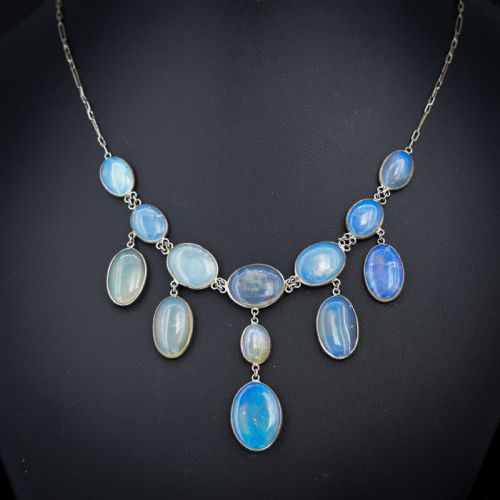
Buyers encounter delicate Edwardian fringe necklaces alongside striking Art Deco diamond and opal clusters. Mid-century examples frequently showcase large solitaire stones set in 9ct gold or white gold mountings.
How they were made
Goldsmiths and silversmiths utilised yellow gold, white gold, platinum, and sterling silver to house the stones. Metal choices range from traditional 9ct and 15ct gold to platinum mountings designed to secure intricate cluster arrangements.
Settings frequently incorporate supporting gems such as diamonds, pearls, rubies, and rock crystal. Stones appear as cabochons, solid opals, doublets, and opal beads, paired with hand-finished filigree or Arts and Crafts metalwork.
Listings feature pieces spanning the Edwardian era through the 1960s, rendered in silver, gold, and platinum.
What varies in quality
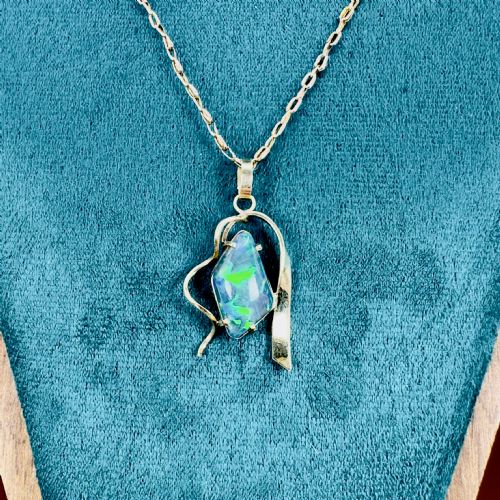
Quality rests primarily on the optical characteristics of the stone, specifically the intensity and breadth of the play-of-colour across the surface. Black opals and fire opals with vivid spectral flashes command attention alongside large milk opals and opal doublets.
The sophistication of the surrounding metalwork also distinguishes individual pieces. Substantial gold or platinum settings, intricate filigree, and the integration of fine diamonds or natural pearls elevate the overall execution.
the Gaskins·WH Haseler for Liberty and Co
The Vintage Opal Necklace Glossary
- Cabochon
- A gemstone shaped with a smooth, rounded, convex top rather than faceted edges. This cut is standard for opals to display their internal colour play.
- Fringe necklace
- A necklace design featuring hanging drops or pendants suspended at intervals along the main chain. Edwardian makers often utilised this style for delicate neckwear.
- Opal doublet
- A composite stone made of a thin slice of natural opal glued to a dark backing material. This construction enhances the perceived depth and body colour of the stone.
- Festoon
- A decorative chain or garland design that drapes across the neckline. These pieces frequently incorporate central pendants or suspended gemstone drops.
Vintage Opal Necklace: Frequently Asked Questions
How do I care for a vintage opal necklace?
Opals contain water within their structure, making them softer than many other gemstones. Protect the stone by avoiding harsh chemicals, ultrasonic cleaners, and sudden temperature extremes.
Store the necklace in a fabric-lined box away from direct sunlight and harder jewellery items to prevent surface scratching.
How do I tell an Edwardian opal necklace from a 1950s piece?
Edwardian necklaces typically rely on platinum or yellow gold with intricate millegrain work, delicate chains, and flowing floral or ribbon motifs. Pearls and diamonds frequently accompany the central stones in these lighter mountings.
In contrast, 1950s examples often feature heavier 9ct gold settings, bolder solitaire stones, and clean geometric lines or pronounced cluster arrangements.
What is the difference between a solid opal and a doublet?
A solid opal consists entirely of natural opal material cut and polished from rough stone. These pieces display the natural body colour and play-of-colour throughout the main body of the gemstone.
An opal doublet pairs a thin genuine opal layer with a dark backing, such as ironstone or obsidian, which deepens the visual appearance of the stone's colour flashes.