



Oval Opal Pendant
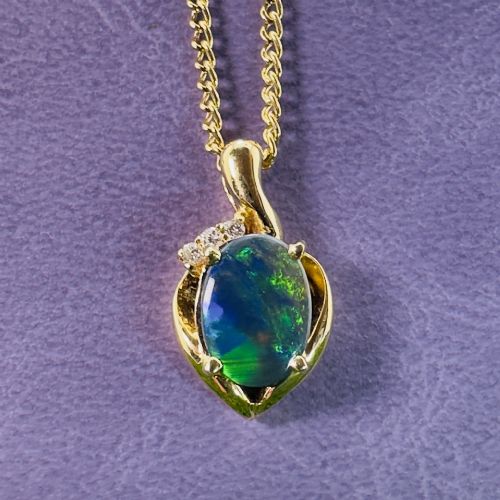
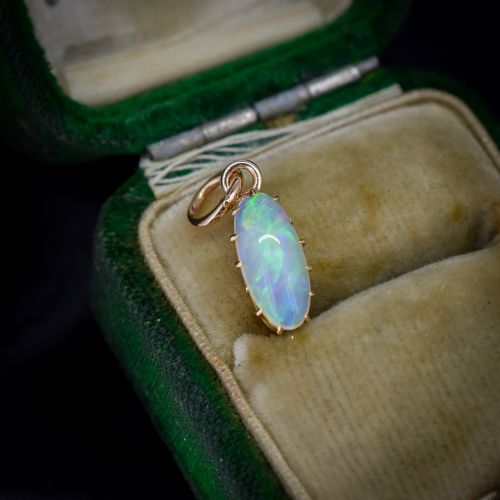
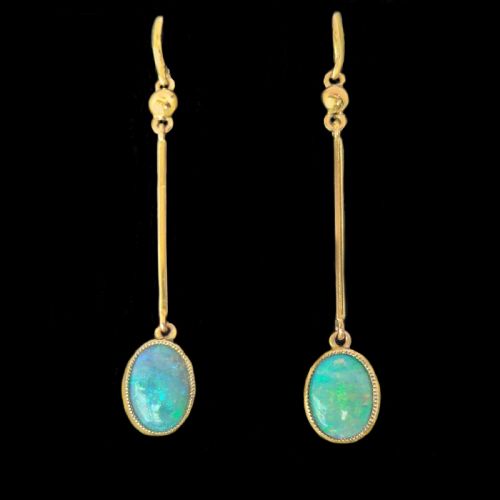
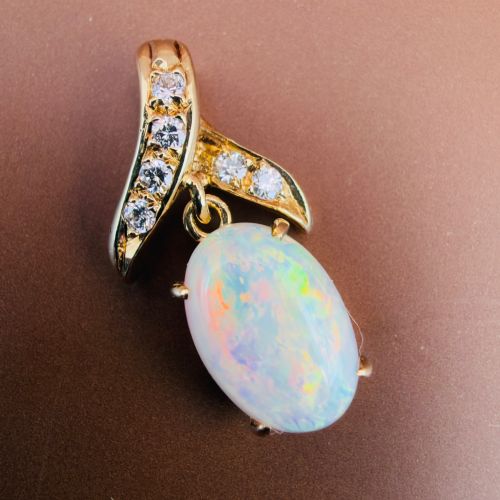
An oval opal pendant brings a flash of fire to the neckline, drawing the eye with the shifting play of colour inside each cabochon stone.
Oval Opal Pendant
An oval opal pendant centres on a polished cabochon stone, often paired with diamonds in cluster or solitaire settings. These pieces span from Edwardian work to mid-century designs, each holding the characteristic play of colour within the stone.
The selections on this page highlight both 9ct and 18ct gold mounts, alongside 14ct variations. Formats range from simple solitaire drops to elaborate filigree frames and diamond-accented clusters.
How they were made
Jewellers shaped precious metals such as 9ct, 14ct, and 18ct gold to house the characteristic cabochon opals. Stones were secured in traditional bezel or claw settings, sometimes accompanied by melee diamonds in cluster arrangements.
Techniques varied from simple cast and polished gold mounts to detailed filigree work. Heavier constructions utilise substantial gold weights to support larger black or fire opals.
Oval Opal Pendant Retail Price Guide 2026
Typical asking prices for oval opal pendant among the pieces listed under this phrase on Sellingantiques today, from the lower quarter to the upper quarter. They describe what is for sale here now, not the wider market.
Listings feature yellow gold alongside diamond accents in Edwardian and mid-century styles.
What varies in quality
Quality rests primarily on the vibrancy and intensity of the opal's play of colour, alongside stone size and depth of hue. Black opals and stones with vivid flashes across the spectrum generally command greater attention than paler varieties.
The weight and refinement of the metal setting also distinguish the pieces. Heavier gold mounts and intricate filigree work indicate higher craftsmanship compared to simpler production.
The Oval Opal Pendant Glossary
- Cabochon
- A gemstone shaped and polished with a smooth, rounded surface rather than faceted. This style allows opals to display their internal play of colour to maximum effect.
- Play of colour
- The optical phenomenon where spectral colours flash across the stone as the angle of light shifts. This visual property defines the appeal of every quality opal.
- Filigree
- Delicate ornamental work made from fine gold wire soldered into openwork patterns. It appears frequently in vintage mountings to frame the central stone.
- Solitaire
- A single gemstone set on its own within a piece of jewellery. In these listings, a solitary opal serves as the focal point of the pendant.
Oval Opal Pendant: Frequently Asked Questions
How do I care for my opal pendant?
Opals contain water within their structure and score lower on the hardness scale than diamonds. Store them away from extreme heat or sudden temperature changes to prevent drying and cracking.
Clean the metal and stone gently using a soft cloth and warm soapy water. Avoid ultrasonic cleaners, harsh chemicals, and prolonged immersion.
Are these pendants all solid opal?
The listings comprise solid natural opals rather than assembled triplets or doublets. Each cabochon exhibits the genuine shifting play of colour inherent to the mined material.
Heavier examples feature substantial natural black or fire opals secured in gold mounts. Examination of the side profile typically reveals the solid dome of the stone.
What is the difference between fire opal and black opal?
Fire opals display warm body colours ranging from yellow to orange and red, often with bright internal flashes. They bring a distinct warmth to mid-century designs.
Black opals feature a dark body tone, whether grey or deep black, which intensifies the play of colour across the surface. This dark background creates high contrast for the spectral flashes.
How can I date an antique opal pendant?
Dating relies on stylistic markers such as Edwardian filigree work versus mid-century cluster settings. Metal marks and construction methods also provide clues to the decade of manufacture.
Edwardian pieces often showcase intricate wirework, while 1950s examples lean towards bold solitaire drops or heavy diamond surrounds. Comparing the mount style to known periods clarifies the timeline.